

















The Capital Markets Authority (CMA), in collaboration with the Ministry of Finance, Planning and Economic Development, has started profiling state-owned enterprises to determine which of them could raise capital through listing on the stock market.
The initiative is part of efforts to deepen Uganda’s capital markets and mobilise long-term financing needed to support the country’s economic transformation, while reducing pressure on the national budget.
Uganda Securities Exchange (USE), the country’s only operational stock exchange, currently has 19 listed companies. Nine of these are cross-listed companies from the Nairobi Securities Exchange. Collectively, companies listed on the market have raised more than Shs2 trillion since the establishment of the CMA 30 years ago.
However, officials say the amount remains modest when compared with the size of Uganda’s economy, which is currently estimated at about US$73 billion, equivalent to roughly Shs250 trillion.
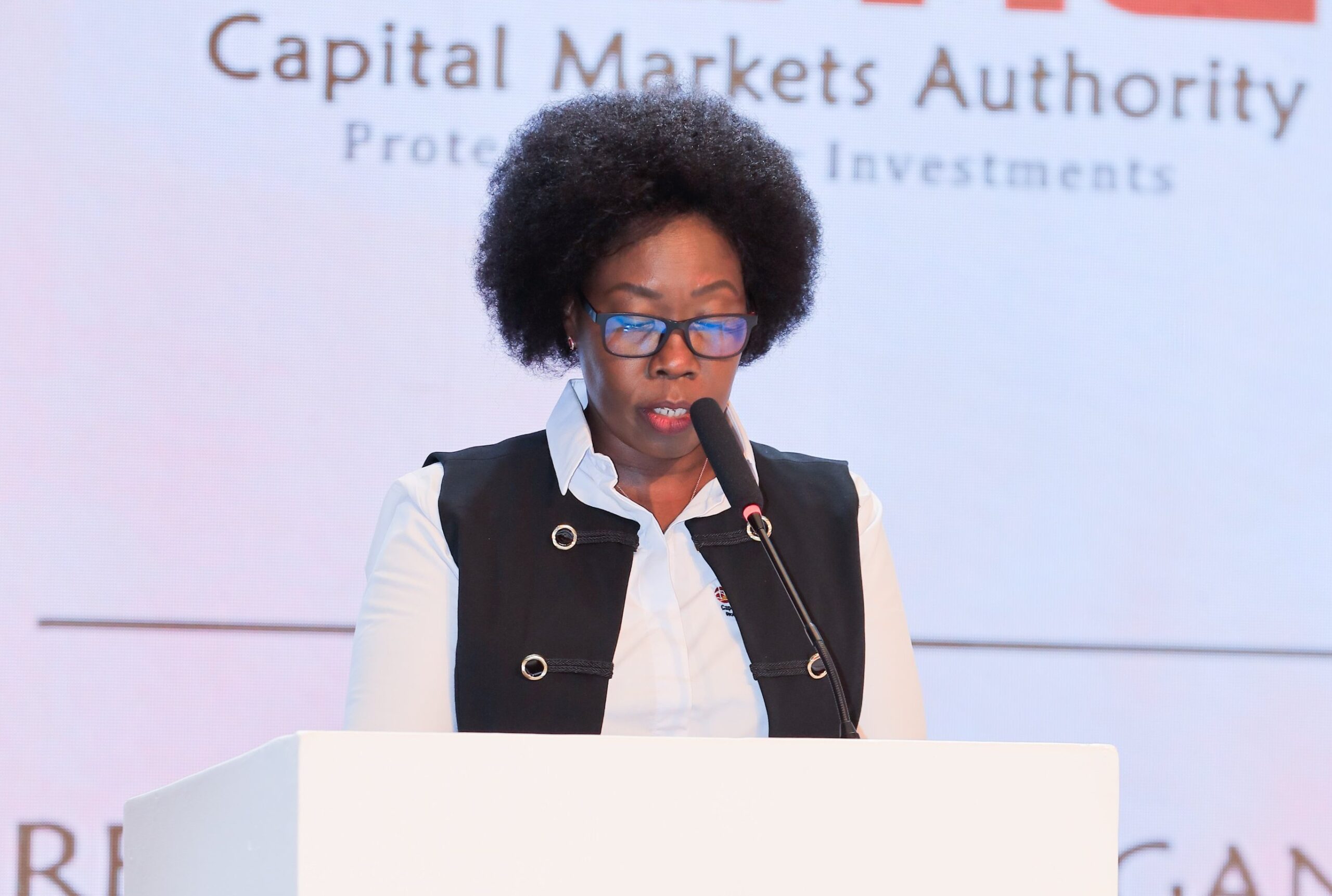
Speaking during an event marking 30 years of the CMA, its Chief Executive Officer, Josephine Okui Ossiya, said capital markets must play a much bigger role in mobilising financing if Uganda is to achieve its ambitious economic growth targets.
Ossiya said the government’s Tenfold Growth Strategy, which seeks to expand Uganda’s economy to US$500 billion by 2040, will require the country to rapidly expand the sources of long-term financing available to businesses and government.
She said widening the capital market to include more companies, including viable state-owned enterprises, would provide an important avenue for raising the resources required to finance long-term development.
According to Ossiya, commercial banks remain one of the most accessible sources of financing, but their lending is largely suited to projects capable of generating returns within short and medium-term periods.
She said Uganda therefore needs stronger sources of patient capital to finance projects such as roads, railway networks, electricity generation and other infrastructure that require significant investment and take longer to generate returns.
Ossiya also pointed to the growing pool of domestic savings as an opportunity for expanding capital market financing.
She said assets under management by pension schemes, collective investment schemes and other institutional investors have grown to about Shs45 trillion. However, much of this money continues to be invested in relatively short and medium-term instruments, particularly government treasury bills and bonds, rather than directly supporting long-term infrastructure development.
With traditional sources of long-term financing, including foreign development assistance, becoming increasingly constrained, Ossiya said Uganda must strengthen its domestic capital markets to bridge the financing gap.
Of the approximately Shs45 trillion managed by pension schemes and related investment institutions, the National Social Security Fund (NSSF) accounts for about Shs32 trillion. Collective investment schemes and retirement benefits schemes hold more than Shs7 trillion, while additional funds are managed by insurance companies and other institutional investors.
NSSF Managing Director Patrick Ayota, however, raised concerns about the government’s continued reliance on domestic borrowing through treasury bills and bonds offering high interest rates.
Ayota said government securities offering returns of more than 15 percent, with some longer-term bonds approaching 17 percent, make it difficult for other investment opportunities in the capital markets to compete for institutional funds.
He urged financial sector players to push for changes in government borrowing policies, arguing that the state should consider financing options that support the development of the wider capital market.
Ayota said NSSF’s primary responsibility is to maximise returns for its members and that the fund will naturally continue investing in government securities as long as they offer attractive returns.
The Ministry of Finance, Planning and Economic Development says it is exploring measures to accelerate the development of Uganda’s capital markets, including increasing the number of companies able to raise funds through the stock exchange.
Joseph Enyimu, Commissioner in the Economic Development Policy and Research Department, said the ministry would work with the CMA to strengthen the capacity of private companies to access capital markets, particularly through bond issuance and stock market listings.
Other financing options under consideration include public-private partnerships, Islamic finance instruments such as Sukuk, green bonds and mechanisms for directing pension fund investments towards infrastructure projects.
CMA Board Chairman Saul Sseremba said Uganda’s capital market has made significant progress over the past three decades, with the total market capitalisation of listed shares rising to about Shs22 trillion.
Despite this growth, Sseremba said the market remains small relative to the size of Uganda’s economy, indicating that its expansion has not kept pace with the country’s broader economic growth.
He challenged the CMA and government to accelerate development across the capital markets sector, particularly by taking advantage of technology to expand participation, improve access and attract more businesses and investors.
The officials said expanding the capital market would not only provide alternative sources of financing but also help mobilise domestic savings for productive investment, reduce dependence on bank lending and ease pressure on government resources.













 English