

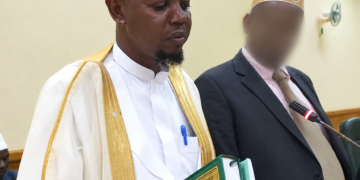










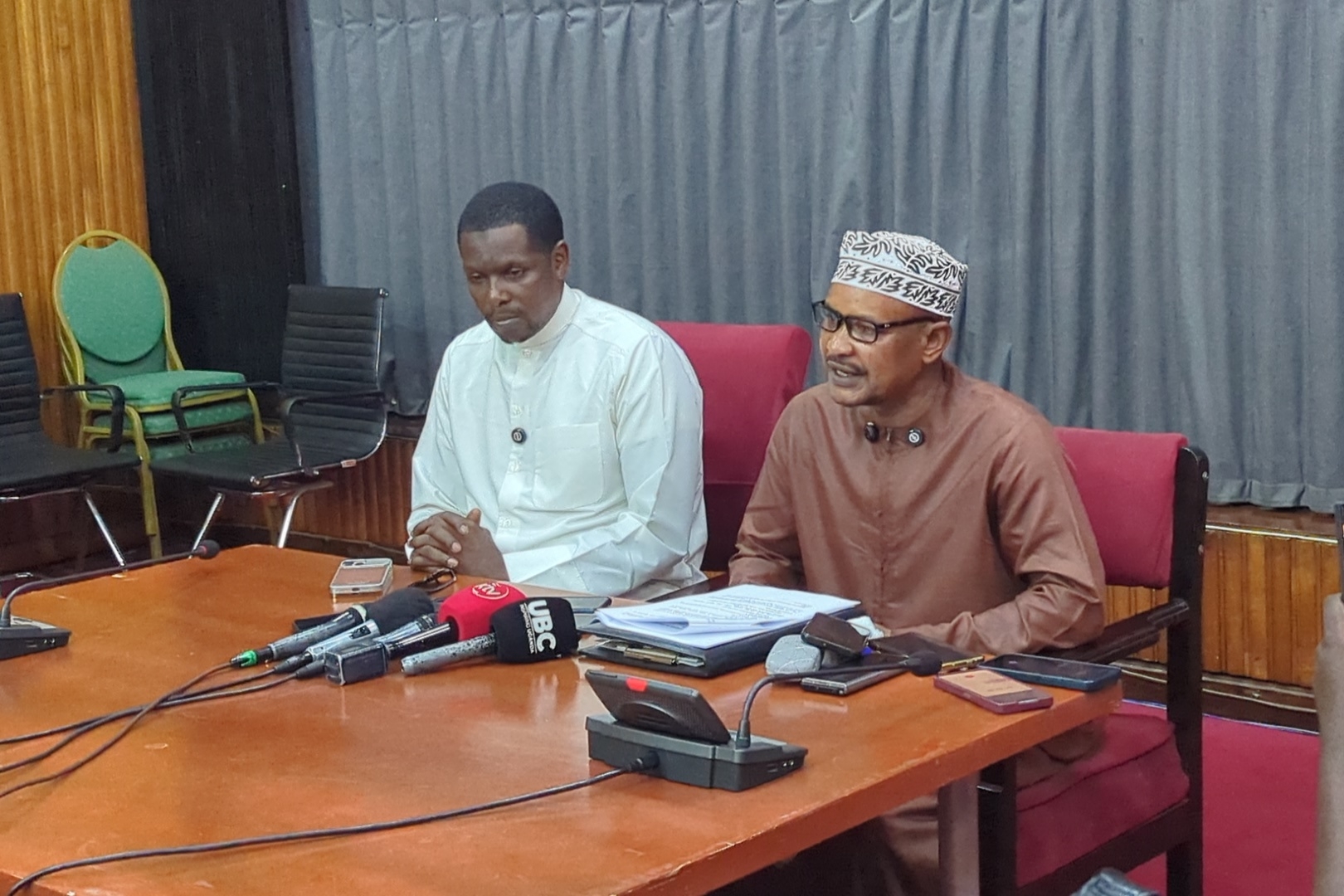
The Imam of Parliament, Hon. Kaka Luwega Ismail Uthman, has apologised to Ugandans who have been offended by statements made by some Muslim clerics, stressing that Islam does not permit abuse, ridicule or discrimination against people of other faiths.
Kaka, who is also the Member of Parliament for Kakuto County in Tororo District, said some of the language used by religious leaders during sermons does not reflect the teachings of Islam, which promote peaceful coexistence, respect and responsible engagement with others.
“I apologise to all Ugandans who have been attacked, abused and ridiculed by some of our leaders. Those actions are not of Islam since our religion teaches us to co-exist with other people regardless of their religion,” he said.
He made the remarks during a press conference at Parliament while responding to concerns over verbal attacks against people of other religions by some Muslim scholars.
Kaka called on sheikhs, imams and Islamic teachers to exercise greater responsibility when delivering religious teachings, particularly in their choice of language and the manner in which they address people with whom they disagree.
He said religious differences should never be used to justify insults, humiliation or attacks on a person’s dignity.
“A sheikh can be firm without being abusive. A sheikh can correct without humiliating. A sheikh can condemn an action without destroying the dignity of a person. He can disagree without creating hatred,” Kaka said.
The legislator based his appeal on the Qur’an, citing Chapter 16, Verse 125, which calls on Muslims to invite others to the way of Allah with wisdom, good instruction and the best manner of engagement.
He said the manner in which religious teachings are delivered is as important as the message itself, warning that irresponsible preaching can deepen divisions within society.
“Our words should educate people, soften their hearts, encourage repentance and bring them closer to Allah,” he said.
Kaka also cited the story of Prophet Musa and his brother Harun, who, according to Islamic teachings, were instructed by Allah to speak gently to Pharaoh despite his oppression.
“If Allah instructed Musa and Harun to speak gently to Pharaoh, how much more should we consider our language when speaking to our fellow Muslims, our neighbours and our communities?” he asked.
Calls For Action Against Irresponsible Preaching
Kaka clarified that his call for respectful preaching should not be interpreted as an appeal for Muslim leaders to compromise their faith or remain silent about wrongdoing.
He said Islamic leaders have a duty to defend their beliefs and correct what they consider wrong, but should do so in accordance with the principles of the Qur’an and Sunnah.
“It does not mean that we call falsehood truth. It does not mean that we abandon Tawheed. It does not mean that we stop correcting wrongdoings. It means that we deliver the truth in the manner of the Qur’an and Sunnah,” he said.
He also challenged Muslim leadership structures to take greater responsibility for addressing concerns raised over the conduct and language of some clerics.
Kaka called on the Uganda Muslim Supreme Council, the office of the Supreme Mufti, regional and district Da’wah structures, Islamic institutions and councils of scholars to provide guidance, counselling and reconciliation and, where necessary, take appropriate institutional action.
“We must not ignore the concerns being raised by Muslims and other wider Ugandans in public regarding the conduct, the language and the methods of some of our religious leaders,” he said.
Kaka said his office would engage Muslim leaders to develop acceptable standards for public preaching and promote language that protects the dignity of all people.
He added that if the relevant Muslim institutions failed to address the concerns, his office would take steps to initiate the process, while respecting the constitutional independence of Islamic institutions.
Religious Freedom Comes With Responsibility
Kaka further emphasised that freedom of religion and worship is constitutionally protected in Uganda, citing Article 29(1)(c), which guarantees the freedom to practise and manifest one’s religion, including the right to profess, maintain and promote a religious belief.
However, he said the constitutional protection should not be interpreted as a licence to incite violence, promote discrimination, issue threats, defame individuals or violate the rights of others.
“Under the Constitution of the Republic of Uganda, freedom of religion and worship is protected. But it is not an unlimited right,” he said.
The Imam urged Muslims to recognise their responsibility as members of the wider Ugandan society and ensure that Islamic teachings contribute to peace, justice, morality, social responsibility and national unity.
“As Muslims, we are part of the wider Ugandan family. Our calling must contribute to peace, morality, social responsibility, justice and national unity,” he said.
Kaka called on Muslims to use their faith to build bridges between communities rather than deepen religious divisions, while respecting people of different beliefs.
He said he would continue working with Muslim scholars, Islamic institutions and other Ugandans to promote responsible religious leadership, peaceful coexistence and national development.






 English