



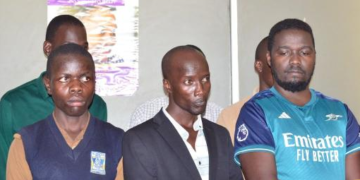










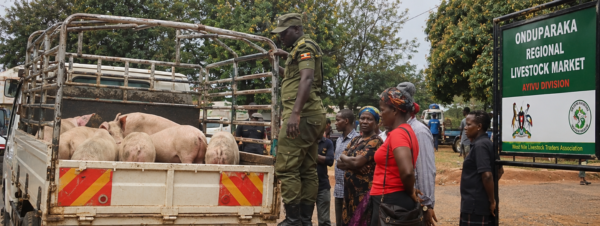
Six livestock dealers have been intercepted in Arua while allegedly attempting to cross into the Democratic Republic of Congo (DRC) with more than 20 pigs, in violation of measures introduced to prevent the spread of Ebola Virus Disease.
The traders, most of whom are women, are reportedly from Pader and Agago districts in the Acholi sub-region. They were stopped by a security team near the Uganda-DRC border in Arua City on Monday and directed to take their animals to the regional livestock market at Onduparaka.

The Onduparaka market, which handles cattle, goats, sheep and pigs, was established in June by the West Nile Livestock Traders Association following the closure of livestock markets along the DRC border.
The border restrictions were introduced as a precaution against the spread of Ebola, which has affected parts of eastern DRC.
In August, the West Nile Livestock Traders Association entered into a memorandum of understanding with the 4th UPDF Division Security Command, giving it responsibility for regulating the movement of livestock into West Nile from other parts of Uganda. The arrangement also requires traders to sell their animals at designated markets instead of crossing into the DRC.
The association acquired more than 10 acres of land at Onduparaka Trading Centre in Ayivu Division to establish the regional market. Under the new arrangement, livestock brought from other parts of the country is offloaded at the market, where Congolese buyers can purchase the animals after completing the required clearance procedures.
Livestock trade has become increasingly lucrative in West Nile and across the border in the DRC. Traders reportedly travel from areas including Pader, Agago, Soroti, Katakwi, Kaberamaido, Lango, Buliisa, Hoima and Kyenjojo to source animals at relatively lower prices before selling them in West Nile or to Congolese buyers.
Prices for some animals can reportedly rise to about Shs2 million in the DRC, compared with roughly Shs1 million in some source markets, encouraging traders to seek buyers across the border.
However, the growing profits have also encouraged some traders to disregard the established security and health protocols. Authorities say some traders have attempted to cross into the DRC with livestock, while others move around the border area with animals as they wait for customers.
Patrick Okiror Rosea, the chairperson of the West Nile Livestock Traders Association, condemned the attempt to cross the border, saying traders are required to sell their animals through the regional market.
“We have told them that they can bring their animals here to the regional market and sell them,” Okiror said.
Johnson Sande Odongo, one of the traders from Pader who was intercepted with his pigs, said they attempted to cross into the DRC because animals fetch better prices there.
He said the higher price was necessary to offset the substantial cost of transporting the pigs from Pader to Arua.
Another trader, Eveline Alimo Princes from Agago, said some traders have been struggling to meet their basic needs while waiting for their animals to be sold.
She said some have resorted to spending nights on verandas because they cannot afford accommodation during their stay in Arua.
Richard Andama, Executive Director of West Nile Compensation Advocacy and a development partner supporting the Onduparaka regional livestock market, urged livestock dealers from outside West Nile to comply with the established trading procedures.
He said following the regulations would help protect traders, prevent livestock theft and reduce the risk of transmitting animal and human diseases along the border.
The Onduparaka regional livestock market is expected to play a growing role in regulating livestock trade between Uganda and the DRC as health authorities and security agencies continue to enforce restrictions aimed at containing the Ebola threat.





 English