















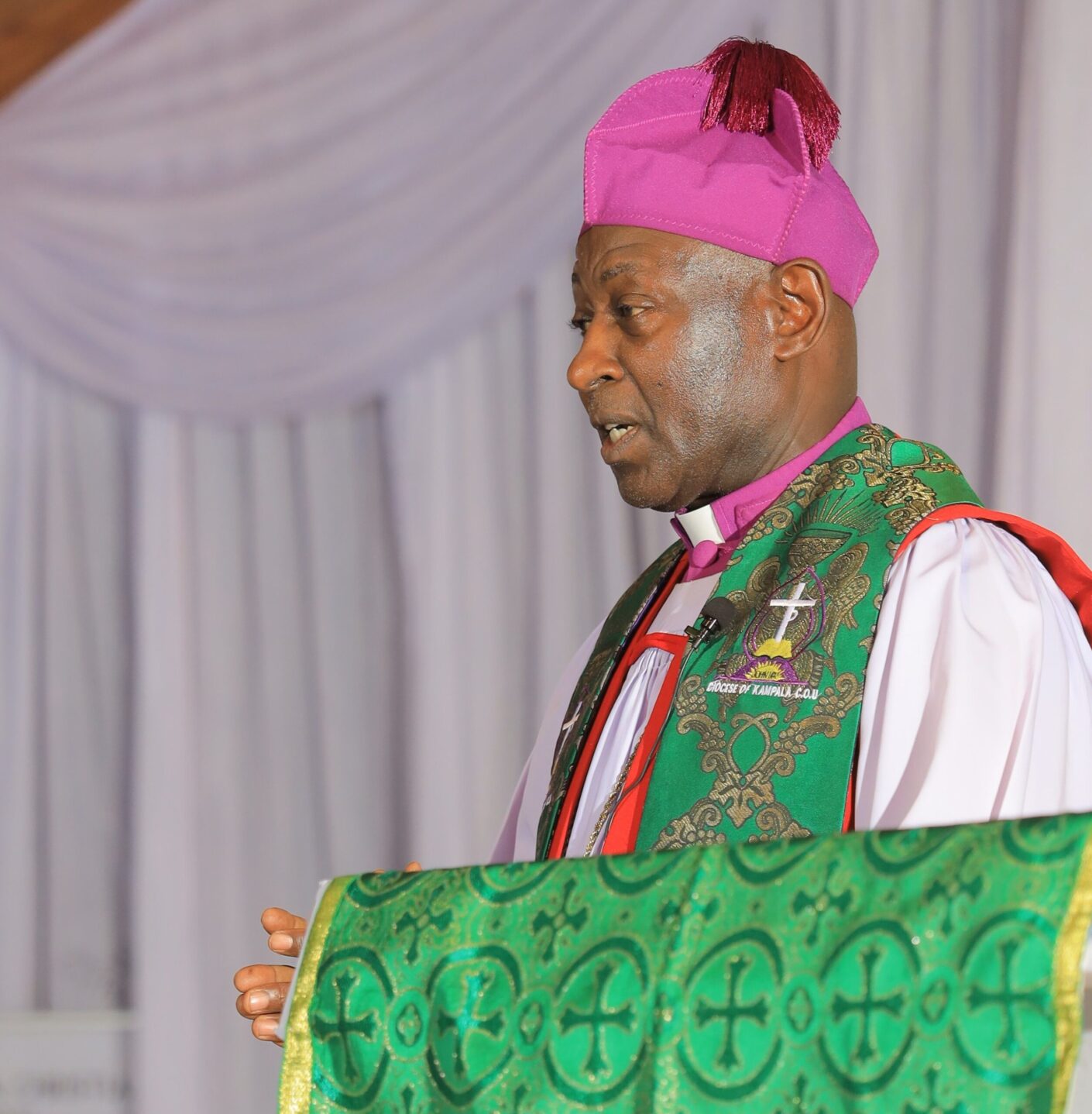
The Church of Uganda could soon revive its long-delayed constitutional review after Archbishop Dr. Stephen Kaziimba Mugalu asked the Provincial Assembly to lift a two-year suspension that has stalled one of the church’s most significant governance reform processes.
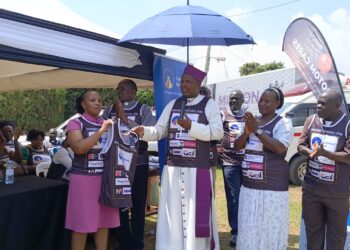
Speaking during the opening of the 28th Provincial Assembly, the church’s highest decision-making organ, Archbishop Kaziimba requested a closed-door session with delegates, where he appealed for prayerful consideration of ending the suspension to allow an independent study of the proposed constitutional amendments to proceed.
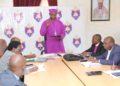
According to delegates attending the assembly, the Archbishop explained that the Provincial Assembly Standing Committee had failed to establish the independent task force previously mandated to conduct the study because of concerns that reopening the debate prematurely could deepen divisions within the church. He also cited inadequate preparation by the Provincial Secretariat and financial constraints that delayed implementation of the assembly’s earlier resolution.
The constitutional review was suspended during the 27th Provincial Assembly after delegates became sharply divided over a series of proposed amendments touching on church governance, episcopal elections, retirement age for bishops, and ownership of church property.
Rather than debate the proposals, the assembly resolved to postpone consideration until an independent study examined the constitutional and governance structures of the province. The Standing Committee had been directed to commission the study by December 31, 2024, after which an extraordinary Provincial Assembly would consider both the findings and the proposed amendments.
Kaziimba reportedly told delegates that the Standing Committee is now seeking permission from the current assembly to lift the suspension, allowing the incoming committee to constitute a task force that will conduct the long-awaited review and present recommendations to the next Provincial Assembly.
Delegates indicated that the proposal is likely to receive broad support, noting that tensions surrounding the reforms have considerably eased compared to two years ago.
If the suspension is lifted, the constitutional amendments themselves will not be debated during the current assembly. Instead, the church will first complete the independent study before the reforms return for formal consideration at a future sitting.
The constitutional review originated during the 26th Provincial Assembly, which resolved that the Church of Uganda Constitution and Canons required revision to remove inconsistencies, clarify governance structures and address emerging administrative challenges.
Following extensive consultations with diocesan synods, the review committee compiled recommendations covering at least 18 major areas after several proposals generated significant debate.
Among the most far-reaching recommendations is a proposal to expressly establish the Constitution as the supreme law governing the Church of Uganda. The review committee argued that although the Canons provide for church governance, the Constitution itself does not explicitly define its legal supremacy.
Another major proposal seeks to reform the nomination and election of bishops, an issue that has repeatedly sparked disputes in dioceses including Kumi, Muhabura, Luweero and Namirembe. In some instances, Christians challenged episcopal elections in civil courts after rejecting nominated candidates.
To reduce future disputes, the review committee recommended expanding bishop nomination committees to include representatives from the provincial level, arguing that bishops serve not only dioceses but also the wider province and may eventually become Archbishop. The House of Bishops has already endorsed that recommendation.
The review also proposes increasing the retirement age for bishops from 65 to 70 years, while maintaining 45 years as the minimum age for nomination. The proposed change would apply only to future bishops.
Another proposal that attracted considerable debate seeks to centralise ownership of church land and property under the Registered Trustees of the Church of Uganda, represented by serving bishops, instead of leaving ownership with individual dioceses.
The Church of Uganda last amended its Constitution in 2016, while its Canons were most recently revised in 2018.
Nnaabagereka Calls For Financial Independence
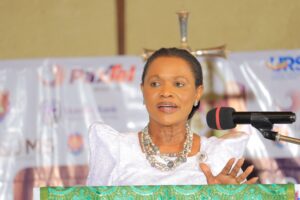
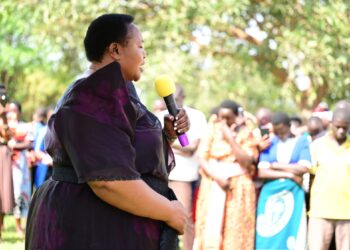
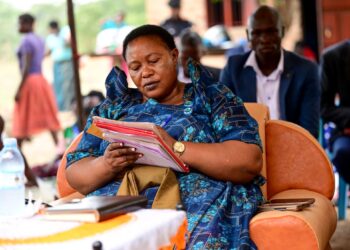
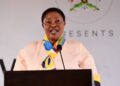
Meanwhile, Buganda Kingdom’s Nnaabagereka Sylvia Nagginda challenged the Church of Uganda to accelerate efforts towards financial self-reliance, warning that declining donor funding requires the church to strengthen sustainable sources of income.
Addressing the opening session of the Provincial Assembly, she urged every level of the church—from the province to individual congregations—to establish income-generating ventures capable of supporting ministry and long-term growth.
“The world now prefers mutual partnerships over dependency,” she said, encouraging dioceses, archdeaconries and parishes to invest prudently while remaining guided by biblical principles and good stewardship.
She congratulated Archbishop Kaziimba and the House of Bishops for successfully clearing the Church House loan, describing the achievement as a demonstration of resilience, responsible leadership and faith.
Her remarks come at a time when the Church of Uganda is adapting to changing patterns of international support. Overseas funding has steadily declined over the years, while the church has also declined financial assistance from organisations whose policies conflict with its biblical teachings, particularly on homosexuality.
The resulting financial pressure has affected operations across several dioceses, with some struggling to remit their statutory contributions to the provincial administration. Archbishop Kaziimba has previously expressed concern over the growing arrears, urging dioceses to strengthen local revenue generation.
To address the challenge, the church has intensified investments in commercial agriculture, property development and other business ventures. It is also exploring opportunities in carbon markets while encouraging dioceses to plant trees on idle church land as both an environmental conservation measure and a future source of income.
Beyond economic sustainability, the Nnaabagereka commended the Church of Uganda for maintaining what she described as a firm biblical position on marriage and family values, while calling on church leaders to exercise wisdom when appointing leaders.
She also urged church-founded schools to prioritise character formation alongside academic excellence, arguing that Uganda cannot address challenges such as corruption without strengthening moral values among young people.
Nagginda endorsed the Church of Uganda Strategic Planning Framework 2025–2030, particularly its emphasis on improving household incomes and community livelihoods and urged dioceses to translate the strategy into practical programmes.
She further supported Archbishop Kaziimba’s proposal to establish a church medical insurance scheme and suggested that offerings collected during St. Luke’s Day celebrations be channelled into a medical fund to support vulnerable patients receiving care at church-owned health facilities.
The Nnaabagereka also called on the church to strengthen its response to domestic violence and family breakdown through expanded counselling services, safe spaces for survivors, advocacy against gender-based violence and regular marriage enrichment programmes.
On environmental conservation, she urged dioceses to champion climate action through tree planting, rainwater harvesting, renewable energy adoption and climate-smart agriculture, saying stewardship of creation remains a biblical responsibility.
The opening ceremony was also attended by Equity Bank Uganda Managing Director Gift Shoko, who announced plans to deepen the bank’s partnership with the Church of Uganda by supporting investment, agriculture and education projects aimed at strengthening the church’s long-term financial sustainability.
In his remarks, Archbishop Kaziimba paid tribute to the Nnaabagereka for her contributions to public health, moral formation and national development, highlighting her support for immunisation campaigns, HIV/AIDS programmes, the Ekisaakaate initiative and her commitment to promoting prayer and family values.
ENDS.




 English