
















A viral social media video alleging that bags of Tororo Cement weigh far less than the standard 50 kilograms has triggered widespread public concern, reigniting debate about product quality, consumer protection, and the safety of Uganda’s construction industry.
The video, which has been widely shared across social media platforms, shows a man weighing what he claims are randomly selected bags from a newly delivered consignment of Tororo Cement.

According to the footage, the bags register between 40 and 42 kilograms instead of the expected 50 kilograms.
While the authenticity of the video and its claims has not been independently verified, the allegations have prompted calls for an urgent investigation by the Uganda National Bureau of Standards (UNBS) and other regulatory agencies.
If confirmed, the alleged weight discrepancies would have implications extending beyond individual consumers.
Cement is one of the most critical materials in construction, with engineers and contractors relying on standardized bag weights when calculating the quantities required for foundations, columns, beams, slabs, and other structural components.
A reduction of approximately 8 to 10 kilograms per bag could affect material estimates, increase project costs, and potentially compromise construction quality if builders unknowingly use less cement than specified.
For homeowners and contractors, such discrepancies could also translate into significant financial losses. On a large project requiring hundreds or thousands of bags, even a small shortfall per bag could amount to several tonnes of missing material.
However, experts caution that the strength of concrete depends not only on the weight of cement supplied but also on proper mix design, material quality, and construction practices.
Any conclusions about structural safety would therefore require laboratory testing and technical investigations rather than assumptions based solely on the viral video.
The video has generated thousands of reactions online, with many Ugandans demanding accountability and transparency.
Among those commenting publicly was retired Assistant Inspector General of Police Asan Kasingye, who described the allegations as potentially serious.
“This looks a serious issue in our building industry. @TororoCement. What’s your say?” he posted on X.
His remarks echoed broader public concern that, if the allegations are substantiated, they could undermine confidence in one of the country’s key construction materials.
As of publication, Tororo Cement had not publicly responded to the allegations circulating on social media.
Similarly, no official findings had been released by UNBS or any other regulatory body regarding the weight of the cement bags shown in the video.
Without independent verification, the claims remain allegations and should not be treated as established facts.
Industry observers say an official inspection would likely involve weighing bags from multiple production batches, sampling products from different distribution points, and conducting laboratory tests to establish whether the cement complies with national standards.
The controversy comes barely a year after security agencies uncovered a major cement adulteration racket in eastern Uganda, highlighting vulnerabilities within the country’s construction materials supply chain.
In March 2025, security operatives from the Internal Security Organisation (ISO) and the Uganda Police Force raided an illegal cement adulteration factory in TICAF Cell, Osukuru Town Council, Tororo District.
Authorities seized more than 700 bags of suspected counterfeit cement and arrested five suspects.
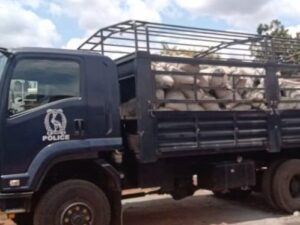
Investigators alleged that the operators mixed fine quarry dust with genuine cement before repackaging and distributing the product across Tororo, Northern Uganda, Central Uganda, and parts of the Democratic Republic of Congo.
According to investigators, genuine cement was allegedly mixed with dust to produce a much larger quantity of substandard material.
Security officials warned that such practices could significantly weaken concrete structures and potentially contribute to building failures if the adulterated cement entered legitimate construction projects.
The suspects arrested during the operation were identified as Swaib Semakula, Henry Senfuka, Sayyid Rashid, Joseph Wabale, and Frank Ainebyona.
Investigators also alleged that some corrupt local government officials and security personnel had accepted bribes to protect the illegal operation. Those allegations have not been publicly concluded in court.
Uganda has experienced several building collapses over the years, with investigations frequently pointing to a combination of factors, including poor workmanship, weak enforcement of building standards, use of substandard materials, inadequate supervision, and failure to follow approved engineering designs.
Construction professionals note that ensuring structural safety requires strict quality control throughout the supply chain—from manufacturing and transportation to storage, testing, and actual construction.
The latest allegations have therefore renewed calls for stronger market surveillance and more frequent inspections of construction materials.
Consumer protection advocates argue that the controversy signals the importance of regular quality assurance checks and transparent communication from manufacturers whenever concerns arise.
If laboratory tests confirm that cement bags are underweight, regulators could require corrective measures and compensation for affected consumers.
If the allegations are disproved, official findings would help restore public confidence and counter misinformation circulating online.
Until then, the viral video remains an unverified claim.
The responsibility now lies with regulators, particularly UNBS, to conduct independent inspections and publicly communicate their findings to reassure consumers and maintain confidence in Uganda’s construction industry.
ENDS.












 English