









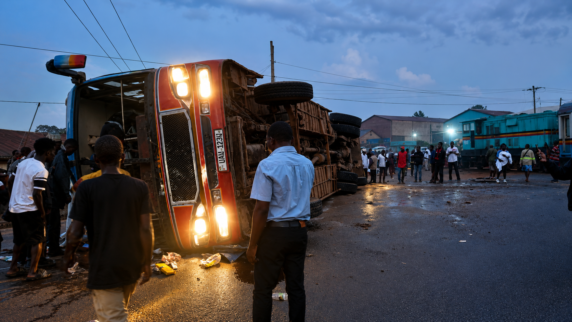
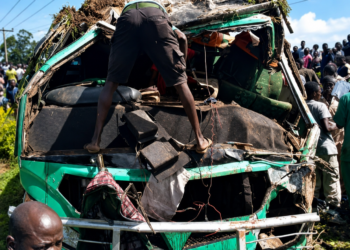
The fatal collision between a train and a bus transporting students of Mwebaze High School to Jinja for an educational trip should mark a turning point in Uganda’s approach to railway crossing safety.
A teacher lost her life. Several students remain admitted to hospital nursing injuries. What began as a day of learning ended in tragedy that could have been prevented.

The bus involved in the crash had been hired from Friendship Company to transport the students. While investigations will establish exactly what happened in the moments before the collision, it would be a mistake to reduce this incident to the actions of one driver. Such an approach has followed many previous crashes, yet similar accidents continue to occur.
The uncomfortable truth is that Uganda’s railway crossings remain among the weakest links in the country’s transport safety system.
One of the first things anyone notices at the Namumira railway crossing is the poor visibility of warning signs. Motorists unfamiliar with the area can easily miss the crossing until they are dangerously close to the railway line. Some signs are faded, poorly positioned or obscured, while road markings provide little advance warning that a railway crossing is ahead.
Railway crossings are not ordinary road junctions. Unlike motor vehicles, trains cannot stop within a short distance. Once a locomotive approaches a crossing, avoiding a collision is almost impossible. That is why countries with mature railway systems rely on engineering solutions rather than expecting motorists to make perfect decisions every time.
Uganda should urgently begin installing automated railway crossing barriers at high-risk locations.
These systems detect approaching trains and automatically lower gates across the road while activating flashing lights and audible alarms. They physically prevent vehicles from entering the railway line until the train has safely passed. Such technology removes much of the uncertainty that drivers face, especially during poor weather, in heavy traffic or at unfamiliar crossings.
Busy crossings along routes connecting Kampala, Mukono, Wakiso, Jinja and other rapidly growing urban centres should be prioritised. These roads carry school buses, commuter taxis, cargo trucks, motorcycles and private vehicles every day. As road traffic increases, relying only on static warning signs becomes increasingly inadequate.
Improving signage should be the second priority. Every railway crossing should have highly reflective advance warning signs placed far enough from the tracks to give drivers adequate time to reduce speed. Road markings should be repainted regularly, rumble strips installed to alert inattentive drivers, and vegetation cleared to improve visibility. Solar powered flashing warning lights could also provide an affordable safety improvement at crossings where full automation may not yet be possible.
The Namumira crossing demonstrates why these relatively simple measures matter. If warning signs are difficult to see, particularly for drivers who rarely use the road, valuable seconds are lost. At a railway crossing, those seconds can determine whether people live or die.
The responsibility also extends beyond infrastructure. Government agencies responsible for roads and railways should conduct regular safety audits of all railway crossings and rank them according to traffic volume, accident history and visibility. Crossings identified as high risk should receive immediate upgrades rather than waiting until another fatal crash occurs.
Transport companies also have a role to play. Drivers hired to transport schoolchildren should receive regular refresher training on railway crossing safety and defensive driving. School administrators should ensure that transport providers meet high safety standards before entrusting them with the lives of learners and teachers.
Public awareness campaigns should become routine rather than reactive. Many motorists underestimate how quickly trains approach or overestimate their ability to cross safely. Educational campaigns through schools, driving schools, the media and community leaders can help change attitudes before they contribute to another tragedy.
Some may argue that automated railway barriers are too expensive. But the question should be whether Uganda can continue to afford the cost of inaction. Every serious railway collision brings loss of life, permanent injuries, medical expenses, damaged property, disrupted transport and emotional trauma that families carry for years.
No amount of compensation can replace a teacher who leaves home to supervise students and never returns. No infrastructure project can erase the trauma experienced by children whose educational trip suddenly became a scene of fear and loss.
As Uganda modernises its transport network and seeks to revive railway transport, safety cannot remain an afterthought. Every kilometre of railway should be matched by investments that protect the people who cross it daily.
The Namumira tragedy should not become another headline that fades with the next news cycle. It should become the moment when Uganda commits to modern railway crossing safety through automated barriers, highly visible signage, better road markings, regular maintenance, stronger enforcement and continuous public education.
Lives depend on these decisions. The teacher who died cannot be brought back, but the lessons from this tragedy can still save countless others. That will be the true measure of whether Uganda has honoured those affected by this devastating crash.
The writer, Ivan Kimbowa, is a senior journalist and public affairs analyst. Contact: +256 701 584 195 or ivankimbowa7@gmail.com.







 English