
















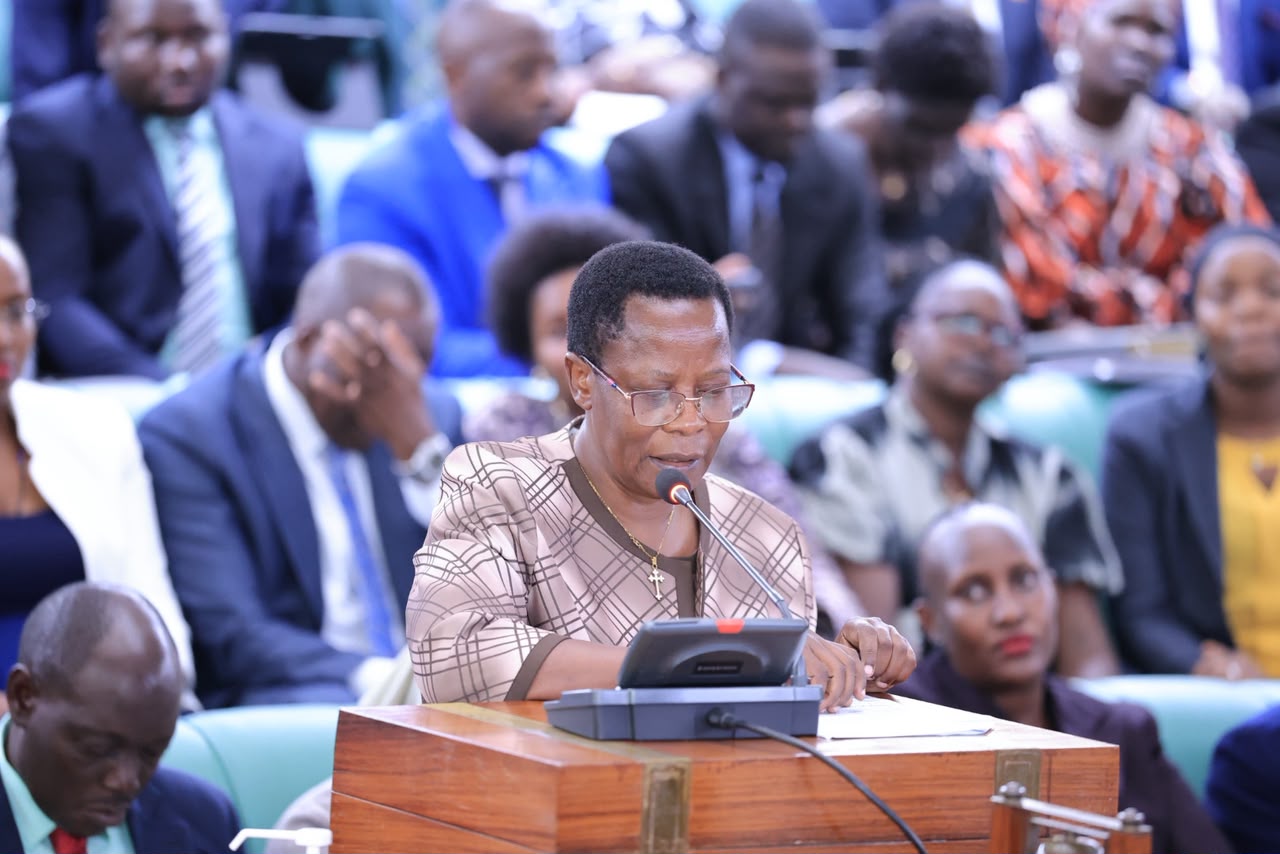
Mukono Municipality Member of Parliament Betty Nambooze has called on the government to provide Parliament with an update on investigations into the alleged diversion of millions of dollars meant to service Uganda’s international loans.
Speaking during Wednesday’s plenary sitting, Nambooze questioned the progress of an inquiry ordered by President Yoweri Museveni following reports that funds earmarked for repaying external creditors were fraudulently redirected to private companies abroad.
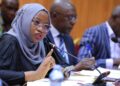
The legislator referred to a presidential directive dated June 14, 2026, in which President Museveni instructed the Minister of Finance, Planning and Economic Development, Henry Musasizi, to investigate allegations contained in a report by the Financial Intelligence Authority (FIA).
According to the President’s letter, the FIA report, dated September 12, 2025, indicated that more than USD 14 million intended for servicing Uganda’s debts to the World Bank and the African Development Bank had instead been transferred to MJS International Limited in London, United Kingdom, and Roadway Company Limited in Tokyo, Japan.
In the directive, Museveni ordered a comprehensive investigation into the fate of the funds, demanding that those responsible for diverting the money and the ultimate beneficiaries be identified.
Nambooze argued that Parliament has a constitutional responsibility to oversee public expenditure and should therefore be informed about the status of the investigations.
In response, Finance Minister Henry Musasizi confirmed that he had received the President’s directive and said his ministry was compiling the requested report.
He told Parliament that once the report is completed, it will be submitted to the President as instructed. However, Musasizi declined to discuss details of the allegations, noting that the matter is currently before the courts.
Deputy Speaker Thomas Tayebwa ruled that the report should first be presented to President Museveni, who commissioned the inquiry, before Parliament considers its contents.
The parliamentary exchange comes as criminal proceedings continue against several officials from the Ministry of Finance over the alleged diversion of public funds.
The Anti-Corruption Court recently committed former Accountant General Lawrence Ssemakula and eight other ministry officials to the High Court to face fresh corruption-related charges.
The Director of Public Prosecutions approved additional charges against Ssemakula, Commissioner for Treasury Services Jennifer Muhuruzi, and seven other officials over their alleged involvement in manipulating the Ministry of Finance’s Integrated Financial Management System (IFMS) and the Bank of Uganda’s payment systems. Prosecutors allege the actions resulted in the loss of approximately UGX 60 billion.
The accused also include systems IT officer Paul Nkalubo Lumala, senior accountant Deborah Dorothy Kusiima, accountant Judith Ashaba, research assistant Bettina Nayebare, IT systems officer Mark Kasiiku, senior IT officer Tonny Yawe, and Assistant Commissioner for Accounts Pedison Twesigomwe.
The nine officials were initially charged in 2024 with 11 offences, including corruption, abuse of office and causing financial loss. On Tuesday, prosecutors filed eight additional charges, among them money laundering and electronic fraud, bringing the total number of charges to 19.
According to the indictment, the accused allegedly failed to put in place adequate safeguards to protect public funds under Vote 130, enabling payments intended for Uganda’s loan obligations to the International Development Association of the World Bank and the African Development Fund of the African Development Bank to be fraudulently diverted.
Court documents state that between September 12 and September 30, 2024, electronic payment files generated through the IFMS were allegedly altered before being encrypted and transmitted to the Bank of Uganda, resulting in more than USD 14 million being redirected to Roadway Company Limited in Japan and MJS International Limited in the United Kingdom instead of the intended lenders.
Prosecutors further allege that administrator-level access was used to install executable scripts that altered payment beneficiaries, while email communications used for payment reconciliation were intercepted, manipulated and deleted to conceal the transactions.
Investigators also claim that an earlier attempt to divert more than USD 6.6 million to a company in Poland was blocked after the World Bank raised concerns over a missed loan repayment, prompting the SWIFT payment system to halt the transaction.
By the end of 2024, investigators had questioned at least 21 officials from the Ministry of Finance, the Bank of Uganda and the Office of the Accountant General, while computers and mobile phones were seized for forensic analysis as investigations continued.





 English