


















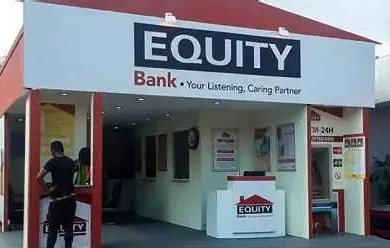
The High Court of Uganda sitting in Kampala, Commercial Court Division, has dismissed an application by Equity Bank Uganda Limited seeking to set aside an ex parte order and reopen proceedings in a commercial dispute against Stevo Traders Limited.
The ruling was delivered by Hon. Lady Justice Dr. Ginamia Melody Ngwatu in Miscellaneous Application No. 1848 of 2025, which arose from Civil Suit No. 0650 of 2024.


The underlying case stems from a commercial disagreement in which Stevo Traders Limited sued Equity Bank Uganda Limited, seeking remedies including refund of a purchase price and/or specific performance.
The matter progressed through the filing of pleadings and scheduling, with both parties submitting their respective documents before the court set the matter down for hearing.
However, on June 25, 2025, when the main suit came up for hearing, Equity Bank failed to appear in court. The respondent proceeded in the absence of the applicant, and the court ordered that the matter proceed ex parte.
Dissatisfied with the ex parte proceedings, Equity Bank returned to court seeking to have the order set aside and the case reopened so that it could present its defence.
Through an affidavit sworn by legal officer Mr. Isiko Charles, the bank argued that its failure to attend court was due to “inadvertent and unfortunate circumstances.”
It further contended that it had a pending miscellaneous application seeking leave to issue a third-party notice against one Mugerwa Frank, who allegedly had possession of the disputed property.
The bank maintained that it had a genuine intention to defend the suit, that no prejudice would be suffered by the respondent, and that justice would be best served by allowing the matter to be heard on its merits.
Stevo Traders Limited opposed the application, insisting that Equity Bank had no sufficient cause for failing to attend court.
Through affidavit evidence by Mr. Bogere Stephen, the respondent argued that the bank had prior knowledge of the hearing date and that its counsel failed to provide a satisfactory explanation for non-attendance.
The respondent further pointed out a history of missed court appearances by the bank, including earlier hearings in October 2024 and April 2025.
It also argued that by the time the application was filed, it had already closed its case and filed submissions awaiting judgment, meaning reopening the matter would cause significant prejudice.
In her ruling, Justice Dr. Ngwatu noted that the application had been improperly anchored under Order 9 rule 23 of the Civil Procedure Rules, which relates to setting aside dismissals rather than ex parte proceedings.
However, the court emphasized that citing the wrong provision of law is not fatal where the interests of justice require consideration of the merits.
The court observed that on June 25, 2025, Equity Bank had failed to appear despite being aware of the hearing date, and the respondent was therefore entitled to request that the matter proceed ex parte under Order 9 rule 20 of the Civil Procedure Rules.
On the bank’s claim regarding a pending miscellaneous application for third-party notice, the court found that although the application appeared on the Electronic Court Case Management Information System (ECCMIS), the applicant had failed to serve it, set it down for hearing, or demonstrate any active steps to prosecute it. As such, the court concluded that it had effectively been abandoned administratively.
The judge also rejected the explanation for non-attendance, noting that the assertions of “inadvertent circumstances” were not supported by any evidence, and counsel did not deny awareness of the hearing date.
The court further observed that developments had overtaken the application, as judgment in the main suit had already been delivered on March 25, 2026. In light of this, the judge stated that the proper recourse for the applicant would be to pursue post-judgment remedies, if dissatisfied.
Accordingly, the High Court dismissed Equity Bank’s application to set aside the ex parte proceedings and reopen the case. Each party was ordered to bear its own costs.












 English