












Concerns have emerged within opposition circles over the continued detention of supporters of the National Unity Platform, with some party members and activists accusing both the state and sections of the opposition leadership of allowing political prisoners to “rot away” in Ugandan prisons without trial.
The concerns intensified after NUP supporter Baker Sebatindila posted a public appeal directed at the party Secretary General David Lewis Rubongoya on his X account, questioning the continued detention of Mugumya Gaddafi, commonly known among supporters as “Gen Gaddafi.”
“Dear SG @DavidLRubongoya what happened to Gen Gaddafi, it’s now two years, he has never been produced to court. It is my request that you create a situation for him also to be produced before court together with the rest,” Sebatindila wrote.
The statement has since sparked debate among NUP supporters and human rights activists, many of whom say several opposition supporters arrested during political operations and mobilization campaigns have effectively been forgotten in detention facilities across the country.
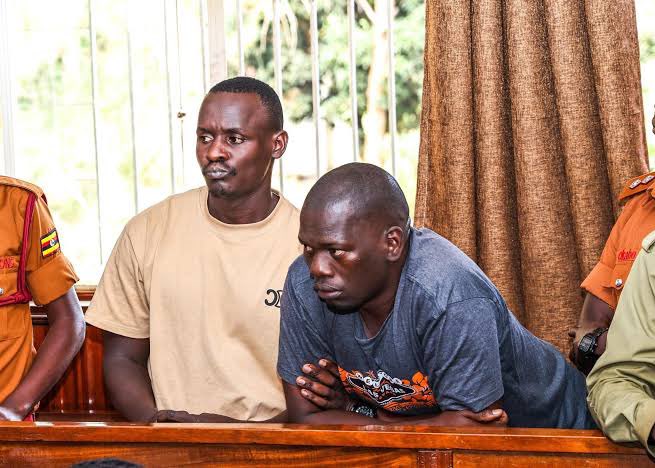
Attention has particularly turned to a bail application reportedly filed before the High Court in Masaka on October 23, 2025 involving four accused persons; Kivumbi Achileo, Mugumya Gaddafi, Wakabi Grace and Ssebufu Edward, also known as Eddie Mutwe.
According to copies of the application circulated online by supporters and activists, the accused sought release on bail pending trial in Criminal Case No. AA-53/025/025 of 2025. The applicants were charged with aggravated robbery, four counts of simple robbery and assault occasioning actual bodily harm.
The application was filed under Articles 23(6) and 28 of the Constitution, Sections 14 and 15 of the Trial on Indictments Act, as well as the 2022 Bail Guidelines for Courts of Judicature.
However, activists claim that despite repeated follow-ups, the matter has never been allocated a hearing date.
Jonathan Elotu shared parts of the application online and questioned what he described as prolonged silence from the justice system.
“This is the bail application we filed at Masaka High Court. However to date, there is no date yet given by the court despite follow ups,” he posted.
The issue was later amplified on official NUP communication platforms, where party officials accused both the judiciary and state prosecutors of frustrating the liberty of opposition supporters through delayed proceedings.
“On the Gaddafi Mugumya, Kivumbi Achileo, Wakabi Grace and Ssebuufu Edward (Eddie Mutwe) Masaka case, our legal team filed a bail application way back on October 23rd, 2025 but there has not been a date allocated for the hearing,” part of the statement read.
“Even the trial itself has not commenced due to the fact that the state prosecution has no case in the first place. They have not adduced any evidence to support their trumped up case.”
The party further alleged institutional bias within Uganda’s criminal justice system.
The continued detention of opposition supporters has remained one of the most contentious political issues in Uganda since the violent 2020 and 2021 election period, during which hundreds of NUP supporters were arrested in security operations targeting supporters of party president Robert Kyagulanyi Ssentamu.
Human rights organisations have repeatedly raised concerns about prolonged remand periods, delayed trials and allegations of torture involving political detainees. While government officials have consistently maintained that suspects are processed according to the law, critics argue that the justice system is increasingly being used as a political weapon against dissent.
Within NUP itself, the latest complaints have reopened internal debate about whether the party’s parliamentary leadership has done enough to secure the freedom of jailed supporters.
Some supporters argue that the opposition’s participation in parliamentary business, including committee appointments and legislative activities, signals a willingness to coexist politically with the same government they accuse of persecuting their supporters.
A section of party supporters now believes the opposition leadership should directly negotiate with government authorities to secure the release of political detainees.
“If legislators accepted to be sworn in and formed parliamentary committees, then the party should also negotiate for these people to return home to their families,” one supporter wrote during online discussions surrounding the Masaka case.
Others, however, insist that negotiations would legitimise what they describe as politically motivated arrests and weaken the broader struggle for democratic reforms.
The debate highlights growing frustration among grassroots supporters who feel that while political leaders continue public mobilisation and parliamentary engagement, ordinary activists arrested during demonstrations and campaign activities continue to languish in prison with little public visibility.
Families of detainees are also said to be struggling financially and emotionally as court processes drag on without resolution. Some supporters claim several detainees have spent years on remand without substantive hearings, worsening perceptions that the judicial process is selectively applied against opposition supporters.
Political analysts say the continued imprisonment of opposition supporters risks deepening mistrust in public institutions and fueling anger among young people aligned to opposition politics.
They argue that prolonged pre-trial detention, especially in politically sensitive cases, creates an impression that punishment begins long before conviction.
At the same time, analysts note that the opposition also faces pressure from supporters demanding practical solutions rather than symbolic condemnation.
For many grassroots activists, the central question is no longer about political rhetoric, but whether those arrested in the struggle are being abandoned once media attention fades.
The controversy surrounding the detention of NUP supporters exposes a wider crisis within Uganda’s political and judicial systems. While the government maintains that suspects face legitimate criminal charges, the prolonged delays in hearing bail applications and commencing trials inevitably raise questions about due process and equal protection under the law.
In politically charged cases, justice delayed quickly becomes justice denied. Even where the state eventually fails to secure convictions, years spent on remand effectively become punishment without trial.
The issue also reveals a difficult balancing act for NUP. As a parliamentary opposition party, it must engage state institutions to remain politically relevant. However, that same engagement creates resentment among radical supporters who believe institutional participation has produced little relief for imprisoned activists.
The growing calls for negotiations with government reflect exhaustion among supporters and families who have endured years of arrests, disappearances and delayed justice. Yet such negotiations carry political risks because they may be interpreted as compromise or surrender by sections of the opposition base.
Ultimately, the continued detention of opposition supporters without timely hearings damages confidence not only in the judiciary but also in democratic governance itself. Regardless of political affiliation, courts are expected to remain independent arbiters of justice. When citizens begin to believe that legal outcomes depend on political loyalty rather than evidence and procedure, institutional legitimacy suffers.
The challenge for Uganda’s political leadership, both government and opposition, is whether they can rebuild trust in lawful processes before frustration among supporters evolves into deeper political alienation.



 English