


















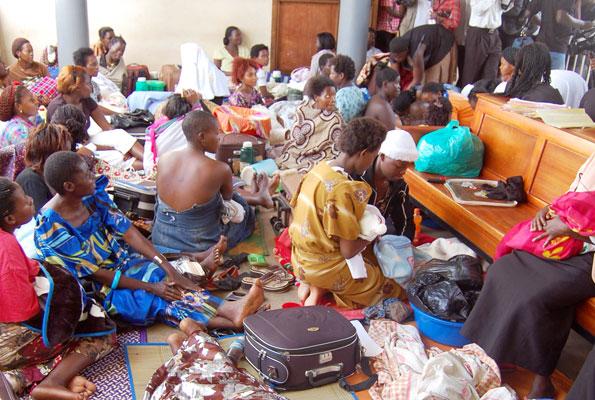
The world is still unlikely to meet the health-related targets under the Sustainable Development Goals (SDGs) by 2030, even though global health outcomes have improved in several areas, according to the latest World Health Statistics 2026 released by the World Health Organization.
The report, published on Wednesday evening, paints a mixed picture of global health: while progress continues in key areas such as infectious disease control and access to essential services, gains are being undermined by widening inequality, environmental threats, financial strain, and persistent weaknesses in health systems.


Over the past decade, notable achievements have been recorded. New HIV infections fell by about 40 percent between 2010 and 2024, while the number of people requiring treatment for neglected tropical diseases reduced by 36 percent over the same period.
The report also highlights major improvements in access to basic services between 2015 and 2024, with nearly one billion people gaining access to safely managed drinking water. In addition, 1.2 billion people obtained sanitation services, 1.6 billion accessed basic hygiene facilities, and 1.4 billion gained access to clean cooking solutions.
Progress in some regions has been particularly strong. The African region recorded faster-than-average declines in both HIV and tuberculosis cases, with HIV infections dropping by 70 percent and tuberculosis cases falling by 28 percent.
Despite these gains, WHO warns that progress is uneven and increasingly fragile. Malaria cases, for instance, have risen by 8.5 percent since 2015, pushing the world further away from global elimination targets. Other preventable health risks remain widespread.
The report shows that anaemia affects about 30.7 percent of women of reproductive age globally, while overweight cases among children under five reached 5.5 percent in 2024. Violence against women also remains a major concern, with one in four women worldwide experiencing intimate partner violence.
The Director-General of WHO, Tedros Adhanom Ghebreyesus, said the findings highlight both encouraging progress and deep inequalities that continue to affect women, children, and marginalized populations. He called for stronger and fairer health systems, supported by reliable data, to close persistent gaps in care and accountability.
The report also shows that progress toward Universal Health Coverage has slowed significantly. Between 2015 and 2023, the global coverage index increased only marginally, from 68 to 71.
At the same time, financial hardship linked to healthcare costs remains widespread, with about one quarter of the global population experiencing economic strain due to medical expenses. In 2022 alone, 1.6 billion people were pushed into poverty because of out-of-pocket health payments.
Maternal and child health indicators continue to improve but remain off track for global targets. Maternal mortality has declined by 40 percent since 2000, yet it is still nearly three times higher than the SDG target of fewer than 70 deaths per 100,000 live births. Under-five mortality has dropped by 51 percent, although many countries are still not progressing fast enough to meet 2030 goals tied to the Sustainable Development Goals.
Environmental and lifestyle risks remain a major driver of premature deaths. Air pollution alone was responsible for an estimated 6.6 million deaths in 2021, while poor water, sanitation, and hygiene conditions caused around 1.4 million deaths in 2019.
Yukiko Nakatani noted that many of these deaths are preventable, urging greater investment in primary healthcare, disease prevention, and sustainable financing systems to strengthen resilience in national health sectors.
The report also revisits the impact of the COVID-19 pandemic, stating that it exposed deep vulnerabilities in global health systems. Between 2020 and 2023, the pandemic was associated with about 22.1 million excess deaths—more than three times the officially reported COVID-19 fatalities worldwide—and reversed years of progress in life expectancy in many regions.
Concerns were also raised about weaknesses in global health data reporting. By the end of 2025, only 18 percent of countries were submitting mortality data within a year, while nearly a third had never reported cause-of-death statistics. Alain Labrique warned that these gaps limit countries’ ability to track health trends accurately and respond effectively to emergencies, calling for stronger investment in digital health and data systems.
In conclusion, the WHO report emphasizes that while global health continues to improve in several areas, the pace of progress remains too slow and uneven to achieve the 2030 health targets under the SDGs.











 English