















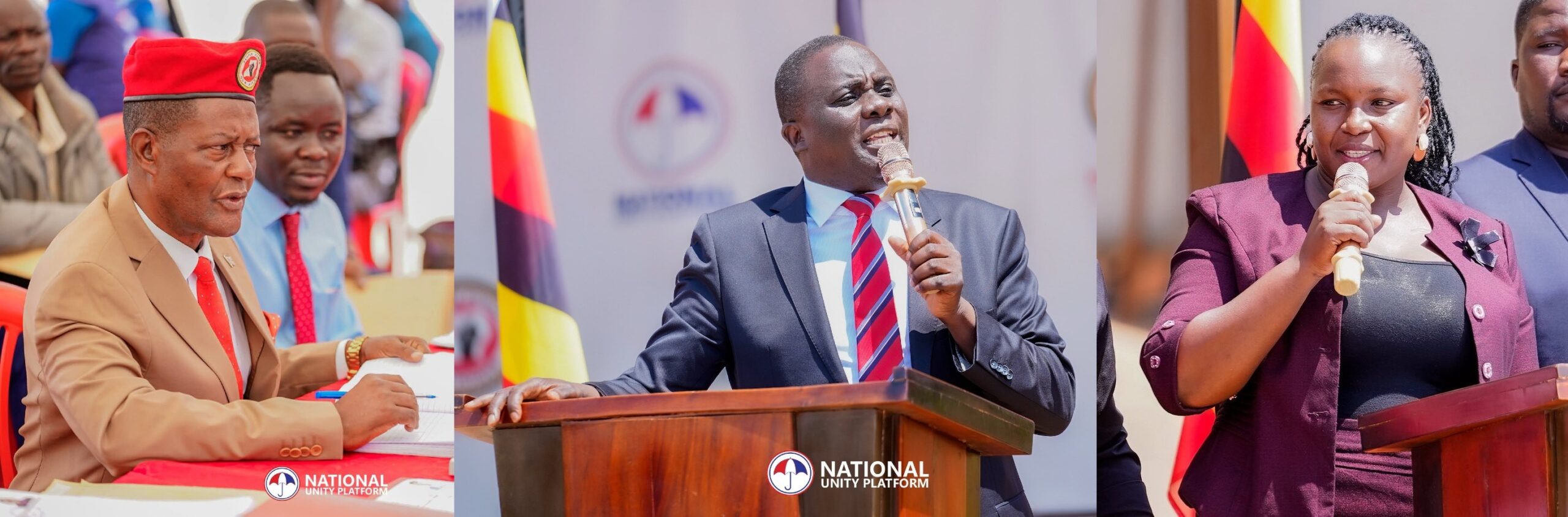
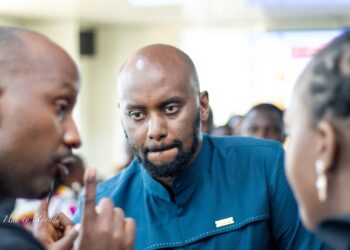
The National Unity Platform’s (NUP) Election Management Committee (EMC), Harriet Chemutai has publicly condemned the growing practice of declaring preferred candidates by prominent politicians before the conclusion of the official selection process.
Speaking during the ongoing vetting session at Mukono, Chemutai cautioned party members that such early endorsements undermined fairness and transparency, creating a perception that the process was already predetermined.


“It does not mean that if one person is mentioned, then the rest have no chance,” she said. “If a few people can come out and say, ‘since this one has been harmonized, the other automatically becomes the flag bearer,’ then we are not doing the right thing.”
Her warning comes in the wake of controversial remarks by NUP’s Buganda region deputy president, Muwanga Kivumbi, who recently told supporters in Nakifuma that Johnson Muyanja Ssenyonga would switch from vying for the Mukono South parliamentary seat to contesting for LC5 chairperson.
Kivumbi further hinted at a “young and new entrant” in the Mukono South race—widely interpreted as former Makerere University Guild President, Robert Maseruka.
These statements have unsettled aspirants still undergoing vetting, many of whom see them as premature endorsements that risk alienating candidates and supporters.
Chemutai likened the process to an examination, warning candidates against trying to “cram” what others were asked in their interviews.
“Different commissioners will ask different questions. If you bring small notes on your expression of interest forms, we shall disqualify you automatically,” she said, adding that the vetting exercise accounts for 40 percent of the decision-making, with the remaining 60 percent determined by grassroots input.
The tensions have also been inflamed by Mukono Municipality MP and NUP district chairperson, Betty Nambooze, who has openly supported moving away from incumbent LC5 chairperson Rev. Peter Bakaluba Mukasa, accusing him of drifting from party principles and aligning with the ruling government.
Bakaluba hit back, saying no one from the party had formally engaged him over any concerns and accused leaders of making decisions “behind closed doors.”
Other aspirants have accused Nambooze of manipulating the process to sideline certain contenders—a claim she has rejected, insisting her approach is strategic rather than personal.
“Leadership choices are not always about personal popularity,” Nambooze said. “What we are seeing is politics of frustration.”
As the party navigates growing divisions, Chemutai reminded candidates that NUP’s goal is unity and selecting the most capable flag bearers.
“All of you are equally good, but at the end of the day, we can only have one flag bearer per position,” she stressed.
With the 2026 general elections looming, political observers warn that if NUP fails to resolve its internal disputes in Mukono, its electoral standing in the region could be significantly weakened.








 English