
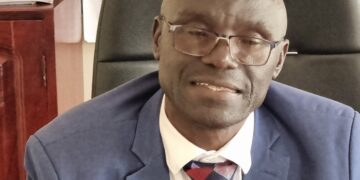

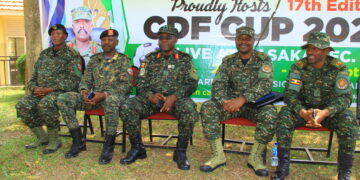
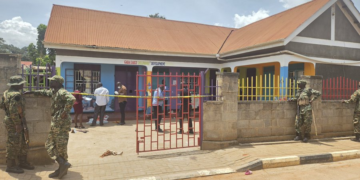







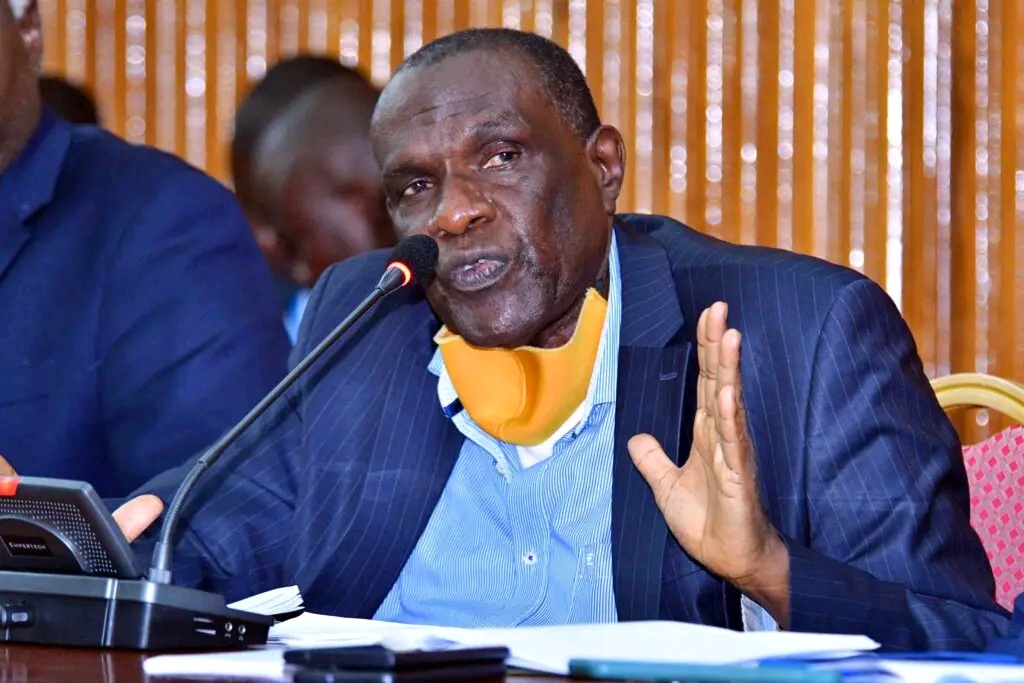
The Secretary in the Office of the President, Hajji Yunus Kakande, has admitted that unknown security operatives interfered in the conduct of the January general elections in parts of the country, after both army and police commanders in certain areas denied knowledge of the forces deployed on the ground.
Kakande made the remarks while appearing before Parliament’s Public Accounts Committee to respond to issues raised in the December 2025 Auditor General’s report.

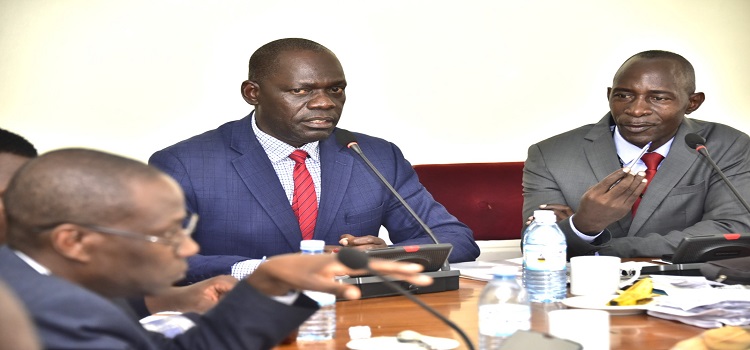
The session quickly turned into a broader scrutiny of the conduct of Resident District Commissioners during the elections, with legislators accusing some RDCs of overstepping their mandate and undermining the authority of electoral officials.
In his submission, Kakande revealed that in some districts, security deployments could not be clearly accounted for.
He said that when he sought explanations from senior security officials in affected regions, some distanced themselves from the forces that had taken control of polling processes.
“You cannot allow impunity to go on in elections,” Kakande told the committee, explaining that he had to make direct calls to security commanders and RDCs after receiving reports of confusion and intimidation at polling stations.
He said in certain instances neither the army commander nor the regional police leadership could clearly identify the personnel deployed.
The admission shocked several MPs, who questioned how elections could be managed by security actors whose command structures were unclear.
Kakande also disclosed that he personally intervened in specific constituencies where RDCs were reportedly hesitant to declare winning candidates.
He cited the case of Patrick Nsamba of the National Unity Platform, saying he directed the responsible officials to ensure that the candidate who had secured more votes was duly declared.
“If someone is winning, what is the problem? The returning officer must declare the winner,” Kakande said, adding that he kept his phone on around the clock because he believed he was in a position to prevail over RDCs who might attempt to influence outcomes.
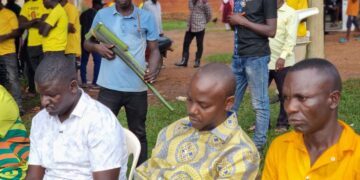
Nsamba, who attended the meeting, welcomed the revelation, thanking Kakande for what he described as a decisive intervention.
Beyond individual cases, Kakande acknowledged broader weaknesses in the election management system at district level. He questioned why returning officers appointed by the Electoral Commission would allow themselves to be directed by RDCs and proposed reforms to strengthen accountability.
He suggested that Chief Administrative Officers be mandated to act as returning officers, arguing that as accounting officers answerable to central government and subject to legal scrutiny, they would be less vulnerable to intimidation.
“I have always said chief administrative officers would be better placed because they are accountable and can be taken to court,” he told the committee, while attributing part of the problem to structural weaknesses within the Electoral Commission.
Kakande further admitted that not all of the country’s 146 RDCs performed to expectation during the elections. He confirmed that some had been summoned to explain their conduct, while others were earmarked for transfer or had already been interdicted.
However, several MPs rejected the idea of transferring problematic RDCs to new districts, arguing that such moves merely relocate the problem.
Susan Mugabi, the Woman MP for Buvuma District, delivered a strong submission opposing the redeployment of controversial RDCs.
She cited the example of Hajjat Hawa Ndege Namugenyi, saying that while serving in Buikwe, the RDC had clashed with a minister over alleged land grabbing, yet instead of being dropped, she was transferred to Buvuma.
“Hajjat Hawa Ndege Namugenyi who is now in Buvuma, she was in Buikwe and they rubbed shoulders with the minister because of land grabbing. And instead of you taking action of dropping her, you transferred her, you brought a problem to Buvuma,” Mugabi said.
She added, “Such people should be dropped because no one needs such people who are very careless about their roles and responsibilities.”
Gorreth Namugga also raised concerns about what she termed the militarisation of elections, questioning the role played by the army, including the Special Forces Command, in several districts.
She alleged that heavy security deployment discouraged some citizens from voting and blurred the line between maintaining order and directly managing the electoral process.
“We cannot compromise governance. We are a democratic country,” Namugga said, urging the Office of the President to clarify the exact mandate of security agencies during elections.
For his part, Nsamba argued that some RDCs operate under the belief that they are the ultimate voice of the President in their districts, which, he said, fuels overreach.
He urged the Office of the President to exercise firmer oversight and avoid transferring controversial officials to other areas.
The exchanges before the Public Accounts Committee underscored mounting parliamentary concern over the role of security agencies and RDCs in elections, with lawmakers pressing for clearer command structures, stronger accountability and reforms aimed at protecting the credibility of Uganda’s electoral process.




 English