






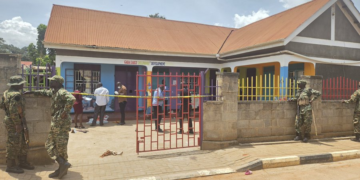











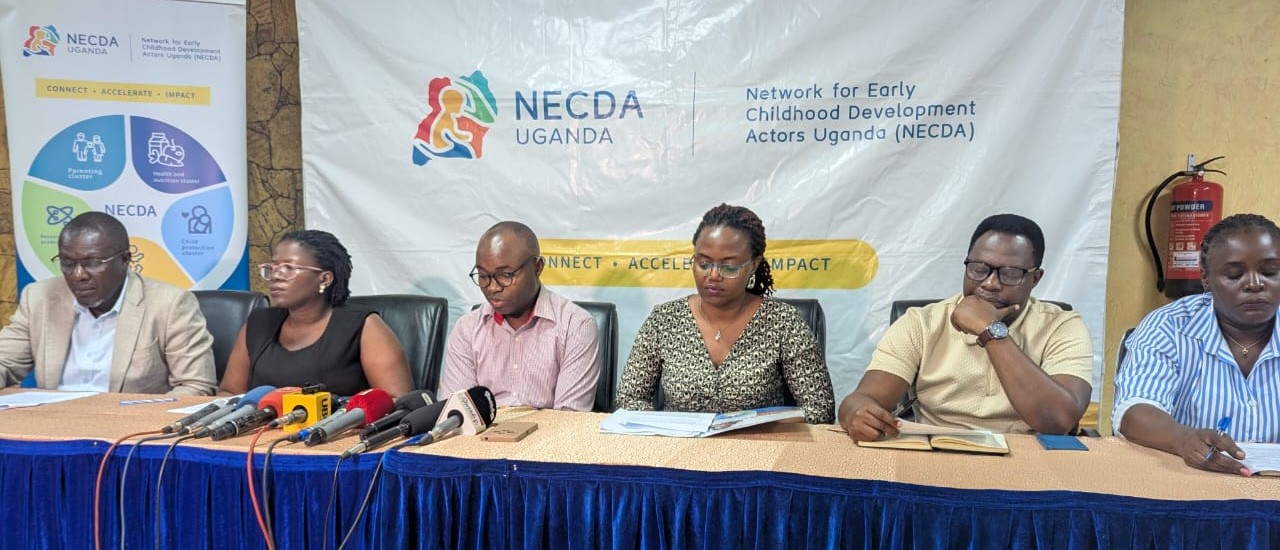
Civil society organisations under the Network of Early Childhood Development Actors (NECDA) have issued a strong call for immediate government action to tighten safety, regulation, and oversight of early childhood centres following the killing of four children at a daycare facility in Ggaba on April 2, 2026.
Addressing journalists at Hotel Africana, NECDA Chairperson Hellen Grace Namulwana condemned the incident as tragic and preventable, reaffirming the network’s commitment to supporting government efforts to protect young children. She urged the Ministry of Education and Sports to urgently issue a circular to all early childhood education providers, reminding them of existing policies and enforcing compliance with national standards.


Namulwana stressed that all stakeholders must not only be aware of the Early Childhood Care and Education (ECCE) policy but must also fully implement its provisions in the establishment and management of childcare centres.
She further called on the Ministry of Gender, Labour and Social Development to fast-track the rollout of the long-awaited multisectoral strategy on early childhood development. According to her, coordinated action across key sectors including Health, Education, and Internal Affairs is essential to ensure children’s safety and wellbeing.
NECDA also appealed for a nationwide audit of all early childhood development centres, including informal and home-based facilities, to establish their operational status, identify gaps, and guide targeted interventions.
“We need to establish what exists, where we are as a country, and how best we can support these centres to meet the required standards,” Namulwana said, adding that local governments must strengthen supervision and enforcement mechanisms.
Timothy Opobo, Executive Director of the Africa Child Policy Forum, described the Ggaba killings as a stark failure in enforcing child safety and protection standards. He noted that many of the issues raised, including unauthorized access to the facility, are already addressed within the ECCE framework.
“The biggest concern is the breach of safety and protection. The policy is clear, but implementation remains the challenge,” Opobo said, calling for accountability among duty bearers.
Offering a community perspective, Eunice Musubika, Program Lead at Sunshine Urban Foundation, highlighted the realities faced by informal childcare providers, particularly in underserved communities. She explained that while demand for childcare services continues to rise, many centres operate without adequate training, knowledge, or facilities.
“Caregivers are committed, but they often lack the skills and support needed to guarantee children’s safety and development,” Musubika said, urging increased investment in training and capacity building.
Dr. Jemba Michael Senkoole of NECDA described the incident as a national tragedy that exposes systemic weaknesses in child protection systems. He emphasized that early childhood development, health, and protection must be treated as a unified national priority.
“Four parents left their children expecting to see them again. Instead, they lost them in a place that should have been safe,” he said. “This is not just a government issue, it is a collective responsibility.”
He called for the urgent implementation of the multisectoral strategy and greater youth involvement in child development efforts, warning that inaction could lead to more preventable tragedies.
The organisations concluded by demanding a thorough investigation into the Ggaba incident, alongside the development of clear, coordinated measures to prevent similar occurrences. They also urged the media to sustain attention on early childhood care and education issues.
The Ggaba daycare killings have triggered nationwide concern over the safety of childcare centres, intensifying calls for stricter enforcement of regulations to protect Uganda’s youngest and most vulnerable citizens.





 English