

















Parents, students, and education stakeholders have welcomed the government’s planned review of public university sponsorship programmes, saying the current system has for years favoured learners from privileged backgrounds at the expense of bright students from poor families.
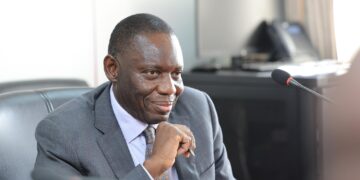
The proposed review was confirmed by Dr Denis Mugimba, the spokesperson for the Ministry of Education and Sports, who said the government wants to establish a more equitable and targeted sponsorship system.

In 2005, the government expanded the number of sponsorship slots in public universities to 4,000 annually. Under the arrangement, 3,000 slots are awarded based on national merit using Uganda Advanced Certificate of Education (UACE) performance, while the remaining 1,000 are allocated under affirmative action categories such as the district quota system, sports talent, learners with disabilities, and other special considerations.
The district quota scheme was introduced to help students from disadvantaged and rural districts that historically struggle to compete on national merit. However, critics say the arrangement has been exploited by children from affluent families who register under rural districts despite studying in well-funded urban schools.
Over the years, concerns have grown that the government sponsorship programme has widened inequality instead of reducing it, with reports indicating that students from a few elite schools continue to dominate the available slots. Deputy Speaker of Parliament Thomas Tayebwa has previously called for reforms, arguing that the system has been manipulated by the well-connected rather than benefiting the intended vulnerable learners.
Parents and students interviewed supported the review, describing it as necessary and overdue. Murshid Ssekandi, a parent, said a properly implemented reform would address long-standing injustices faced by bright learners from rural and underfunded schools.
Derrick Lwanga shared similar views, saying the current arrangement increasingly benefits students whose families can already afford university tuition. He proposed giving additional consideration to students who perform well in rural or less privileged schools.
Rachael Nantayi, a student at Makerere University Business School, said many learners from poor backgrounds feel excluded under the current policy. She urged the government to fast-track the review process.
At Kampala International University, student Trevor Ssewanyana defended merit-based sponsorship but acknowledged the wider inequalities affecting education. He said scholarship beneficiaries often excel academically and deserve support, but noted that the government should also improve facilities and staffing in secondary schools across the country to create equal opportunities for learners.
University lecturers and administrators have also backed the review, describing it as long overdue. Prof Anothy Muwagga Mugagga, Principal of the Makerere University College of Education and External Studies, said he has personally observed government scholarships going to students from financially stable families.
Prof Mugagga called for a detailed, evidence-based review covering several years to assess admission trends, beneficiaries, completion rates, and graduate outcomes. According to him, such an analysis would help identify weaknesses in the current system and guide the development of a transparent and fair sponsorship model aligned with the country’s skills needs.
Dr Mugimba said the government intends to strengthen the district quota system to improve fairness and inclusion. He added that the increasing number of students completing Senior Six every year has intensified competition for the limited sponsorship opportunities.
He also revealed that discussions are ongoing about increasing the number of government-sponsored students, although he cautioned that expanding the programme would have major financial implications in the long term.
Prof Mugagga further argued that the review should extend to the student loan scheme, saying it too has largely benefited students from wealthier families. He proposed introducing stricter repayment mechanisms, including national service options, noting that many beneficiaries fail to repay the loans.
Another parent, Henry Joseph Ssegawa, said the planned reforms could restore public confidence and improve access to higher education for talented but disadvantaged students.
However, not everyone is convinced the review will lead to meaningful change. Kassim Musiya expressed doubt, saying the government has often announced reforms in the past that were never fully implemented.









 English