
















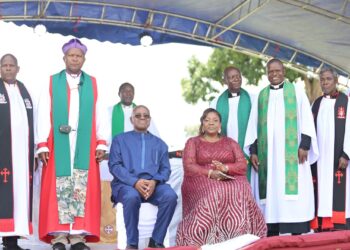
The Church of Uganda has raised alarm over non-Anglicans donning clerical robes and colours similar to those of its bishops and clergy, warning that such practices are creating confusion among believers and undermining the sanctity of church vestments.
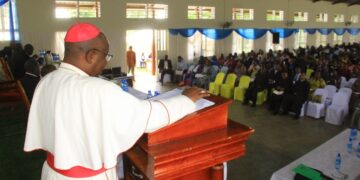
Speaking at the All-Clergy Conference at Uganda Christian University, the Provincial Secretary, Rev. Canon William Ongeng, confirmed that the Church is already taking steps to legally protect its official attire.


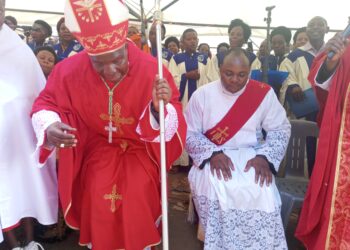
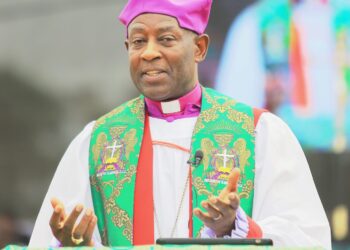
He revealed that the Provincial Chancellor, working with members of the House of Bishops, has completed the registration process for bishops’ robes and the church now awaits their gazettement.
“You may think it is taking long, but I must assure you that the process is lengthy and very expensive,” Rev. Ongeng explained. “The bishops’ robes have already been registered. Once the gazette is done, we shall move on to those of the clergy.”
Rev. Ongeng clarified that while the National Identification and Registration Authority, which took over the functions of the former Uganda Registration Services Bureau, does not gazette colours, it does register patterns.
This means that although purple shirts, commonly associated with Anglican bishops, may appear among other denominations, the distinctive patterns of Anglican vestments will remain legally safeguarded.
“If you see someone in the same colour, that is not a problem. But if the pattern of our bishops’ attire is copied, then that is where we can raise a concern,” he emphasized.
Beyond legal protection, Rev. Ongeng also called for discipline among Anglican clergy in adhering to official dress codes, cautioning that deviations weaken unity and create unnecessary confusion among the faithful.

“The colours for our ministry attires are black and gray shirts, with either a dog collar or a standing pushing collar,” he reminded. “Many times, we have jumped out of our normal into patterns of our own choice, and this does not give us the unity we desire. The flock begin to doubt our oneness in ministry when they see such differences.”
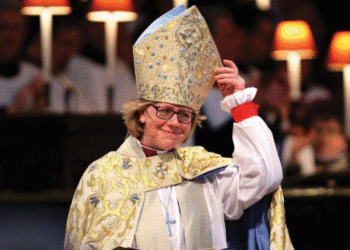
He further underscored the symbolic value of cassocks, surplices, and stoles in preserving Anglican liturgical identity. For example, he noted that the current Trinity season is represented by green, while black stoles remain appropriate throughout all liturgical seasons.
Rev. Moses Muwulya, Acting Parish Priest of Kikungwe Parish in Masaka Archdeaconry under West Buganda Diocese, warned that misuse of Anglican vestments by outsiders not only creates identity confusion but also risks associating the church with false teachings.
“When these robes are misused, people think those wearing them are Anglicans or bishops,” Rev. Muwulya said. He added that in today’s digital era where sermons and events are easily recorded and shared online, the risks are magnified.
“There is wrong theology preached by some of these people, but when it is recorded and circulated, those who see the attire, especially the purple shirts, assume it is Anglican teaching. Our people are less discerning, and without verifying, they may believe these voices speak for our church.”
Rev. Muwulya also pointed out the irony of groups that once dismissed Anglican liturgical dress as unbiblical now adopting similar robes. “One needs to wonder why those who once said clerical clothes were unnecessary and only meant to draw attention are now eager to wear them,” he remarked.
Echoing the concern, Rev. David Obonet of Kachede Parish in Kumi Diocese said legal protection of vestments is a vital step in preserving Anglican identity.
“We as clergy must also hold ourselves accountable and remain faithful to the traditions of our attire. Internal discipline ensures unity, while legal protection safeguards our heritage from external misuse. Both approaches complement each other.”
The Church of Uganda has in recent years grappled with challenges of identity and discipline among its clergy. The latest move to register and protect its official vestments is viewed as a crucial step toward preserving Anglican heritage and ensuring that the faithful can clearly distinguish its clergy from other religious groups.







 English