

















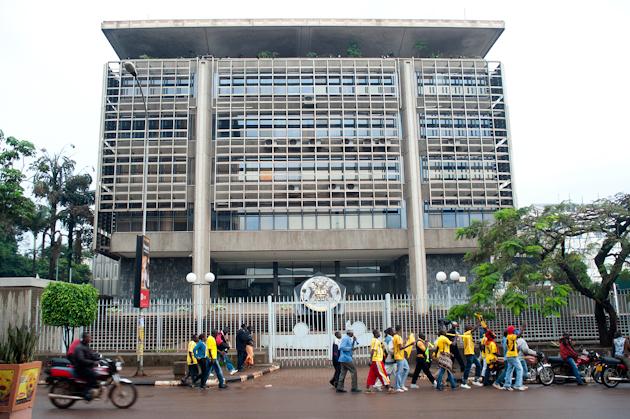
Only seven of an estimated 90 large Savings and Credit Cooperative Societies (SACCOs) have secured licences from the Bank of Uganda, raising concerns over the sector’s readiness for tighter financial regulation ahead of the September 30, 2026 deadline.
The slow progress comes as the central bank prepares to take direct supervisory responsibility for SACCOs that meet the threshold for enhanced regulation. Eligible institutions that fail to submit their licence applications by the deadline could face sanctions provided for under the law, including possible closure.


State Minister for Finance in charge of Microfinance, Shartsi Kutesa Musherure, said seven SACCOs had so far completed the licensing process, while 15 others had applications under consideration.
According to the minister, the government and the Bank of Uganda estimate that about 90 SACCOs are required to obtain licences because of the volume of members’ savings and the size of their institutional capital.
The licensing requirement applies to SACCOs with voluntary savings of more than Shs1.5 billion and institutional capital exceeding Shs500 million.
Voluntary savings refer to funds members place with a SACCO for saving and other financial purposes, rather than deposits made specifically to qualify for loans.
The Bank of Uganda says the reforms are intended primarily to strengthen the protection of members’ funds, particularly in SACCOs holding billions of shillings in savings.
Under the new arrangement, qualifying SACCOs will move from the Tier Four microfinance regulatory framework, previously overseen through the Microfinance Regulation Department under the Ministry of Finance, to direct supervision by the central bank.
This will subject them to stricter requirements covering governance, financial management, risk control and protection of depositors.
The new framework also provides for access to the Deposit Protection Fund and centralised credit referencing, bringing qualifying SACCOs closer to other financial institutions supervised by the Bank of Uganda.
Aomu Mackay, the Director of Non-Bank Financial Institutions at the Bank of Uganda, said the scale of money held by some SACCOs requires stronger oversight than self-regulation alone can provide.
He warned that the collapse of a SACCO holding billions of shillings in members’ savings could have consequences beyond the institution itself.
“If a large SACCO with billions in savings collapses, it can trigger widespread financial panic and destabilize the broader financial sector,” Aomu said.
However, the proposed regulatory changes have attracted criticism from sections of the cooperative movement, which fear that direct central bank supervision could increase operating costs and ultimately raise the cost of financial services for members.
SACCOs are initially registered as cooperative societies by the Ministry of Trade, Industry and Cooperatives under the Cooperative Societies Act. Cooperative leaders therefore argue that subjecting some SACCOs to direct Bank of Uganda licensing risks creating an additional layer of regulation.
Ivan Asiimwe, the Executive Director of the Uganda Cooperative Alliance, warned that SACCOs could be forced to adopt costly compliance systems associated with commercial financial institutions.
He said higher regulatory costs could weaken the community-based model that has allowed SACCOs to serve people who may have limited access to conventional banking services.
“It also takes away the unique form of financial inclusion SACCOs provide as community-based initiatives and turns them into commercial and profit-oriented entities,” Asiimwe said.
The Uganda Co-operative Savings and Credit Union has similarly questioned the proposed licensing arrangement.
Its Chief Executive Officer, Sylvester Ndiroramukama, pointed to the possibility of overlapping mandates and conflicting provisions among the laws governing the different institutions responsible for regulating SACCOs.
He has instead called for a single regulatory framework specifically designed for SACCOs and tailored to the way cooperatives operate.
The government, however, maintains that the reforms are necessary to safeguard the financial stability of the sector while ensuring that SACCOs continue serving their members.
Minister Kutesa said the government supports regulation that protects members’ money without undermining the cooperative principles that distinguish SACCOs from commercial banks.
Some institutions that have already obtained Bank of Uganda licences say the new regulatory regime is improving their operations rather than threatening their cooperative model.
EBO Financial SACCO in Mbarara, which became the first SACCO to receive a Bank of Uganda licence in March 2026, says the licensing process has strengthened its governance and increased members’ confidence.
Its Executive Director, Julian Tumusiime, said protecting members’ savings was among the key reasons the SACCO sought the licence.
“We are the first SACCO in the history of Uganda to obtain this licence from the Bank of Uganda, and our reason for this is to ensure that we protect our members’ deposits, build their confidence and enable financial inclusion,” Tumusiime said.
Since obtaining the licence, EBO Financial SACCO has expanded its operations to seven branches across districts in western Uganda.
The Bank of Uganda initially set March 31, 2026, as the licensing deadline but later extended it to September 30 to allow eligible SACCOs additional time to prepare their applications and enable the central bank to conduct further sensitisation.
During the extension, regulated financial institutions were advised to continue providing services to eligible SACCOs as they work towards compliance.
The Bank of Uganda has also directed regulated financial service providers not to deny eligible SACCOs access to financial services before the September 30 deadline.










 English