


















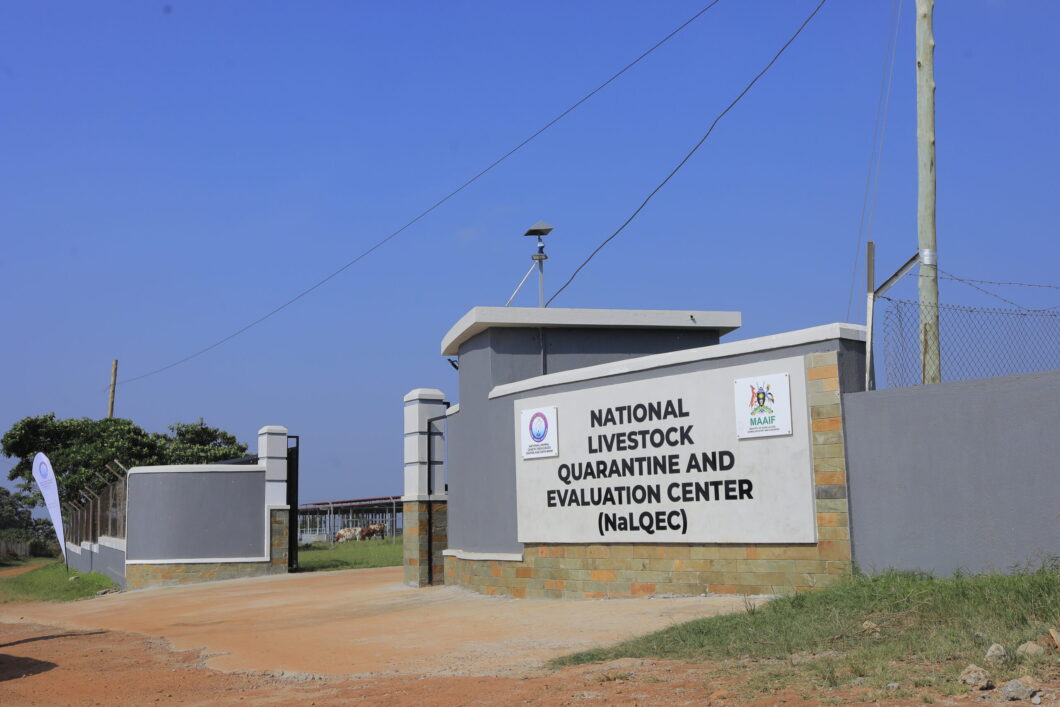
ENTEBBE — The National Animal Genetic Resources Centre and Data Bank (NAGRC&DB) has tightened its accountability and service delivery requirements, setting specific timelines for responding to farmers, livestock breeders and other clients as part of a new five-year institutional framework.
Under the new Client Charter and Service Delivery Standards, clients visiting NAGRC&DB service points are expected to be attended to within five minutes of arrival, while written correspondence should receive a response within five working days.


The agency has also committed to acknowledging complaints within 48 hours. Complaints requiring investigation are expected to be resolved within 14 days, giving farmers and other clients clearer benchmarks against which to assess the agency’s performance.
The commitments are contained in the NAGRC&DB Client Charter and Service Delivery Standards for 2025/26 to 2029/30, which were among five key institutional documents launched at the agency’s headquarters in Entebbe.
Launching the documents, Minister of State for Animal Industry, Hon. Bright Kanyontore Rwamirama, said their value would depend on whether the commitments were translated into practical improvements in the way the agency serves farmers.
He challenged NAGRC&DB staff, management, the Board and its partners to use the new framework to improve service delivery, raise livestock productivity and expand the adoption of modern animal breeding technologies.
The Client Charter outlines the services offered by the agency, the rights and responsibilities of clients and channels through which farmers can provide feedback or lodge complaints. The Service Delivery Standards, in turn, establish measurable targets intended to make performance easier to monitor.
The two instruments form part of a broader five-year framework intended to strengthen Uganda’s animal breeding sector while improving NAGRC&DB’s responsiveness to the farmers who depend on its services.
Also launched were the Uganda National Animal Breeding Strategy and Action Plan (NABSAP), the Strategic and Investment Plan for 2025/26 to 2029/30, and the Communication and Knowledge Management Strategy for 2026/27 to 2030/31.
Taken together, the five instruments seek to connect Uganda’s animal breeding priorities with investment, service delivery, accountability and communication.
The Strategic and Investment Plan places particular emphasis on supporting farmers under the Parish Development Model (PDM), including through access to affordable, high-performance breeding stock for dairy, piggery and poultry enterprises.
NAGRC&DB farms and ranches are expected to serve as breeding, multiplication and technology-transfer centres, working with local governments, farmer organisations and PDM structures to take improved genetics and breeding technologies closer to farmers.
However, the agency’s new framework also acknowledges longstanding constraints in Uganda’s animal breeding sector. NABSAP identifies low genetic productivity, inadequate breeding infrastructure, limited access to quality breeding materials, uncontrolled cross-breeding and weak animal identification and traceability systems among the challenges that must be addressed.
The strategy further promotes the use of climate-resilient genetics while strengthening the conservation and utilisation of Uganda’s indigenous animal genetic resources.
For farmers to benefit from these interventions, access to information will also be critical. The Communication and Knowledge Management Strategy seeks to improve the availability of timely and reliable information on NAGRC&DB programmes, technologies, products and services.
Eng. Robert Ssenozi, a NAGRC&DB Board member representing farmers in the Central Region, described the launch as an opportunity to move beyond policy formulation and focus on practical results.
“The launch is not just about unveiling documents. It is about launching possibilities,” he said.
Dr Israel Mugezi, Senior Planner for Agriculture at the National Planning Authority, urged stakeholders to build an animal industry that is competitive, sustainable and driven by high-yielding, affordable and climate-resilient genetics.
He linked improvements in livestock productivity to Uganda’s broader ambitions for value addition and exports, including the expansion of processed dairy products such as milk powder.
The new framework consequently raises the standard by which NAGRC&DB will be judged. While the agency has previously been assessed largely on its programmes and investments, the new service standards create specific expectations around how quickly and effectively clients should be served.
For farmers, the ultimate measure of the five-year plan will therefore be whether the commitments are felt beyond policy documents and at the point of service through faster responses, accessible information, affordable and quality breeding materials, transparent handling of complaints and, ultimately, more productive livestock enterprises.









 English