















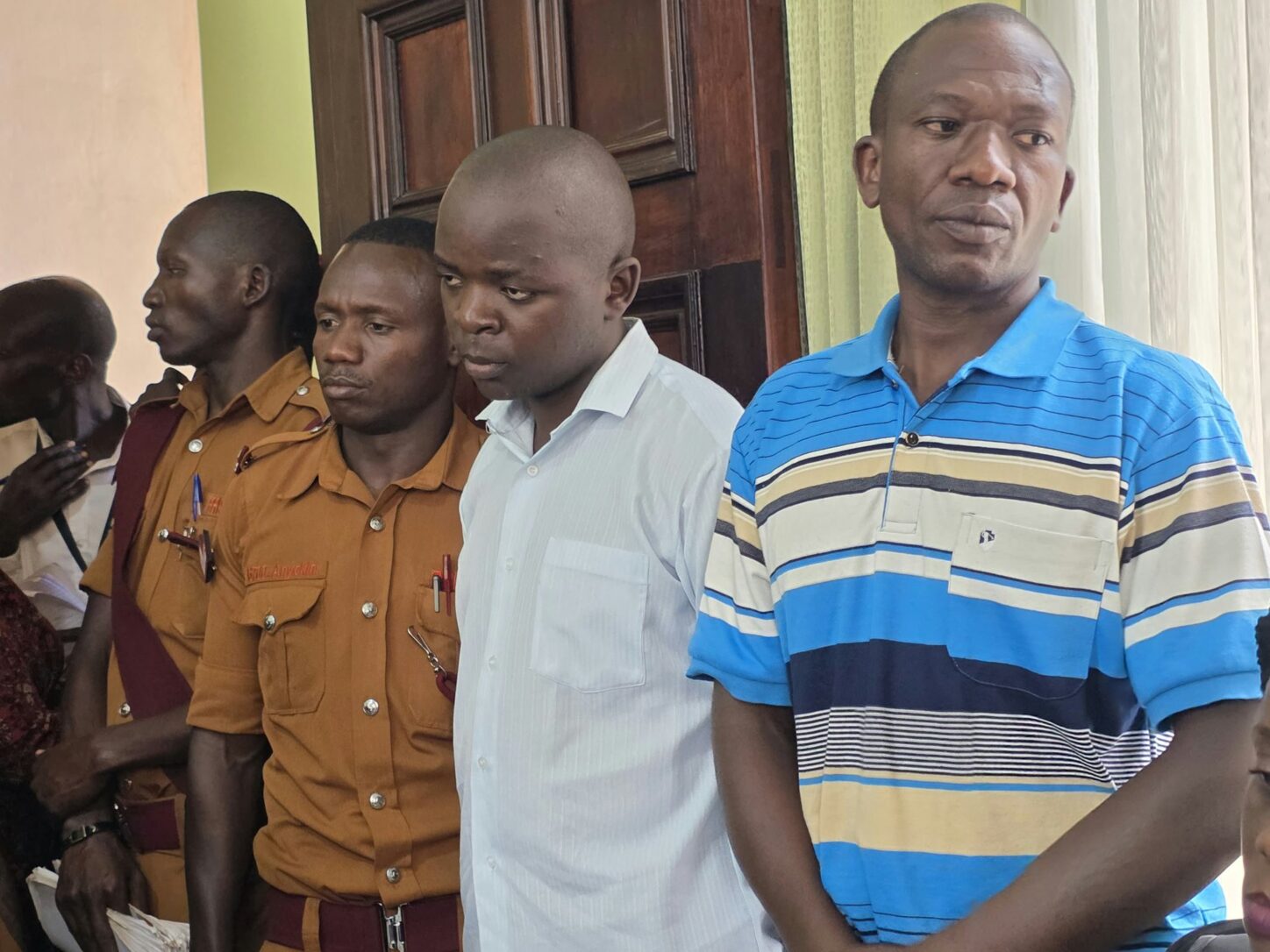
The High Court Criminal Division in Kampala has sentenced two men to death for the murder of Ndiga Clan leader Engineer Kakeedo Bbosa Lugya, whose killing was linked to a long-running dispute over the leadership of the clan.
Justice David Matovu handed down the sentence on Thursday to Lugya Bbosa, alias Tabula, and his relative Noah Lugya, alias Fake, after weighing the aggravating circumstances against the mitigating factors presented by both sides.


The two men pleaded guilty to murder and were convicted earlier in the day after admitting the prosecution’s account of events surrounding the killing of Engineer Bbosa on February 25, 2024, in Kikandwa, Lungujja, a Kampala suburb.
In sentencing them, Justice Matovu acknowledged that both were first offenders, had admitted responsibility, expressed remorse and saved the court considerable time and resources by pleading guilty.
The judge, however, ruled that those factors could not outweigh the seriousness of the offence, which involved what the court found to be a deliberate and carefully planned attempt to eliminate the clan leader.
The court heard that the murder arose from a longstanding disagreement over the leadership of the Ndiga Clan.
Chief State Attorney Joseph Kyomuhendo asked the court to impose the maximum penalty, describing the case as among the most serious forms of murder because of the alleged planning and circumstances surrounding the killing.
According to the prosecution, meetings were held between November and December 2023 to discuss ways of killing Engineer Bbosa. The court was told that the plans included poisoning him.
Despite having opportunities to abandon the plot, the prosecution said the accused continued monitoring the deceased until the day the attack was carried out.
On February 25, 2024, Engineer Bbosa returned from Katosi after presiding over a clan function. He was travelling home with his wife, Gladys Kakeedo, and a househelp.
As the Toyota Prado approached his home in Lungujja, Bbosa reportedly noticed two people on a motorcycle and slowed down.
One of the motorcycle occupants allegedly got off, approached the vehicle and shot him at close range.
The gunfire caused severe injuries to his jaw and skull, killing him instantly. His wife, who was seated beside him, survived despite being exposed to the gunfire.
Prosecutors told court that Tabula was at the centre of the plan and that Noah was among those recruited to participate in its execution.
The court further heard that Tabula supplied the firearm used in the attack, which he had reportedly kept in his garden. The motorcycle allegedly used by the attackers was also fitted with a disguised registration number.
An AK-47 rifle was later recovered during investigations, and ballistic tests reportedly linked it to cartridges recovered from the murder scene.
Investigators also relied on CCTV footage, telephone call records and forensic evidence to establish the circumstances surrounding the killing.
Justice Matovu said the murder had consequences beyond the immediate family of Engineer Bbosa, affecting the Ndiga Clan, the Buganda Kingdom and the wider public.
The judge noted that the perpetrators appeared determined to eliminate the clan leader while concealing their identities and leaving authorities to establish both the killers and the motive.
He also used the sentencing to condemn mob justice, warning members of the public against taking the law into their own hands.
The court was told that one of the suspects, Enock Sserunkuma, alias Munaku, was killed by a mob, while Noah was rescued and taken to Mulago Hospital for treatment.
Justice Matovu observed that had Noah also been killed, crucial information about the circumstances surrounding Engineer Bbosa’s murder might never have emerged.
Defence lawyer Richard Kumbuga had asked the court to spare the two men’s lives, describing them as remorseful first offenders whose guilty pleas should attract leniency.
Kumbuga told the court that Noah was 21 years old when the offence was committed and was working as a shamba boy, making him vulnerable to influence from older people.
He also argued that Tabula was a father whose children still required his care and guidance.
The lawyer asked the court to impose a lengthy custodial sentence of about 25 years instead of the death penalty, arguing that the convicts could still make a positive contribution to their families, the clan and the Buganda Kingdom.
In his own plea, Tabula told court that he had been angered by the earlier killing of his father, whom he said had also been shot before Engineer Bbosa took over the leadership of the Ndiga Clan.
He said he had petitioned several people, including President Yoweri Kaguta Museveni, over his grievances but claimed that his concerns had not been resolved.
Tabula further told the court that he had tried to engage officials of the Buganda Kingdom, including Kabaka Ronald Muwenda Mutebi, in an effort to resolve the leadership dispute.
He broke down in court as he sought forgiveness, saying unresolved grievances surrounding the clan leadership had contributed to his actions. He apologised to the Kabaka and the family of the deceased.
The prosecution rejected the plea for leniency, arguing that the guilty pleas and expressions of remorse did not outweigh the brutality, preparation and motive behind the killing.
Kyomuhendo also asked the judge to consider victim impact statements from Engineer Bbosa’s widow, daughter and an LC chairperson, which he said illustrated the lasting effects of the murder.
Gladys Kakeedo told the court that she continues to experience nightmares and difficulty sleeping following her husband’s death and has had to cope with the loss of the family’s main breadwinner.
At one point, she told the court: “I also pray for death,” while describing the psychological suffering she had endured since the attack.
The prosecution argued that a severe sentence was necessary to punish the offenders proportionately, deter organised criminal activity and reinforce public confidence in the justice system.
Kyomuhendo also cited the prevalence of homicide and gun-related offences in Uganda, arguing that the punishment should send a strong warning to those contemplating similar crimes.
Justice Matovu subsequently sentenced both Tabula and Noah to death, directing that the punishment be carried out in accordance with the law.
Tabula had gone into hiding following the murder and was arrested about five months later, on August 19, 2024, in Namulonge, Wakiso District. Investigators later reported recovering 17 human skulls from his shrine in Mpigi.
Three other suspects, Harriet Nakiguli, Joseph Nakabake and Ezra Mayanja, have denied the murder charge and remain before the High Court awaiting trial.
The conviction and sentencing of Tabula and Noah therefore concludes the case against the two men, while proceedings against the three remaining accused persons are yet to begin.
The two death sentences also increase the number of prisoners on Uganda’s death row to 98, based on the latest publicly reported prison figures.
As of last Friday, Uganda Prisons spokesperson Senior Commissioner of Prisons Frank Baine said the death row population stood at 96 inmates, comprising 93 men and three women.




 English