

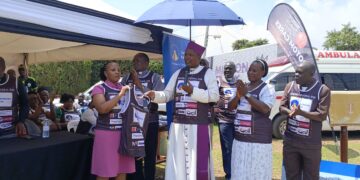

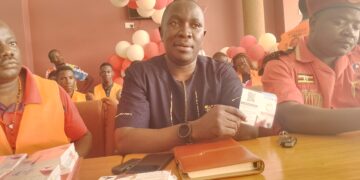


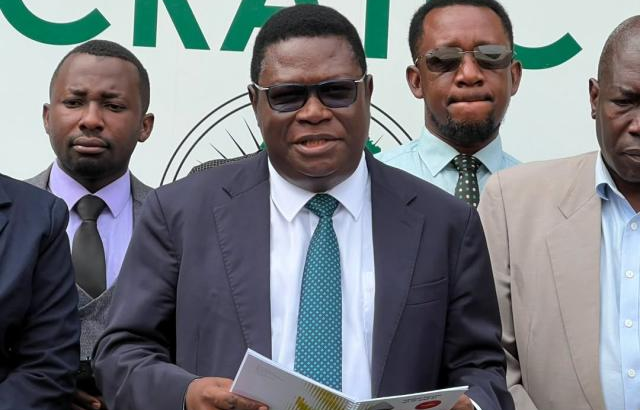
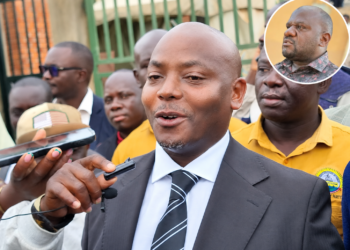
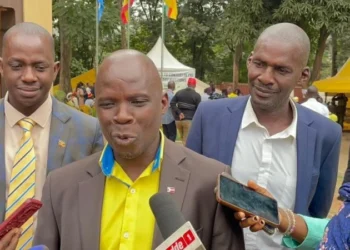
Democratic Party (DP) President Norbert Mao has outlined a fresh agenda to revitalise the party, strengthen grassroots mobilisation and promote adherence to the rule of law, marking his first address at the party headquarters since the race for Speaker of Parliament.
Addressing party leaders and supporters, Mao said rebuilding unity within the Democratic Party will be his immediate focus as preparations intensify for the upcoming Local Council One (LC1) elections.

He announced plans for a leadership retreat aimed at restoring cohesion among party members, reviewing the party’s direction and developing a five-year strategic plan. The retreat will also fill vacant positions on the National Executive Committee (NEC), including representatives to the Women’s Council.
Mao urged party members intending to contest in the LC1 elections to remain loyal to the Democratic Party, cautioning against standing on the tickets of other political organisations with the expectation of rejoining the party later.
He described the DP as the “conscience of government,” saying the party remains committed to peaceful political participation and rejects violence as a means of gaining or retaining political power.
According to Mao, Uganda’s political history has been shaped by conflict, and the country should instead embrace dialogue, tolerance and democratic competition as the foundation for resolving political differences.
Turning to the broader political landscape, Mao said the Patriotic League of Uganda (PLU) has become an emerging force whose influence cannot be ignored. He also alleged that hardline elements within the ruling National Resistance Movement (NRM) had in the past frustrated some of his political activities by preventing him from holding meetings in certain areas.
He further criticised sections of the opposition, arguing that Uganda needs leaders willing to pursue constructive engagement rather than deepen political divisions.
On the proposed national dialogue, Mao said momentum for the initiative continues to grow, claiming that the Leader of the Opposition and some National Unity Platform (NUP) leaders have expressed support for the process. He said he remains ready to facilitate the dialogue but questioned the absence of the People’s Front for Freedom (PFF) from the initiative.
Mao also addressed concerns surrounding alleged unlawful arrests, prolonged detentions and ongoing criminal cases involving opposition politicians.
While declining to comment directly on the reported arrest of NUP Deputy President for Buganda, Muhammad Muwanga Kivumbi, citing insufficient information, Mao stressed that every suspect is entitled to constitutional protections.
“Every accused person has the right to a fair and speedy trial and the opportunity to apply for bail,” he said, adding that respect for the Constitution and the rule of law must remain central to Uganda’s justice system.
Mao also highlighted his responsibilities as Chairperson of the Cabinet Human Rights Committee, saying the multi-sectoral committee is mandated to monitor and promote compliance with human rights standards across government institutions.
He said protecting fundamental rights and ensuring accountability remain critical to strengthening public confidence in state institutions.






 English