


















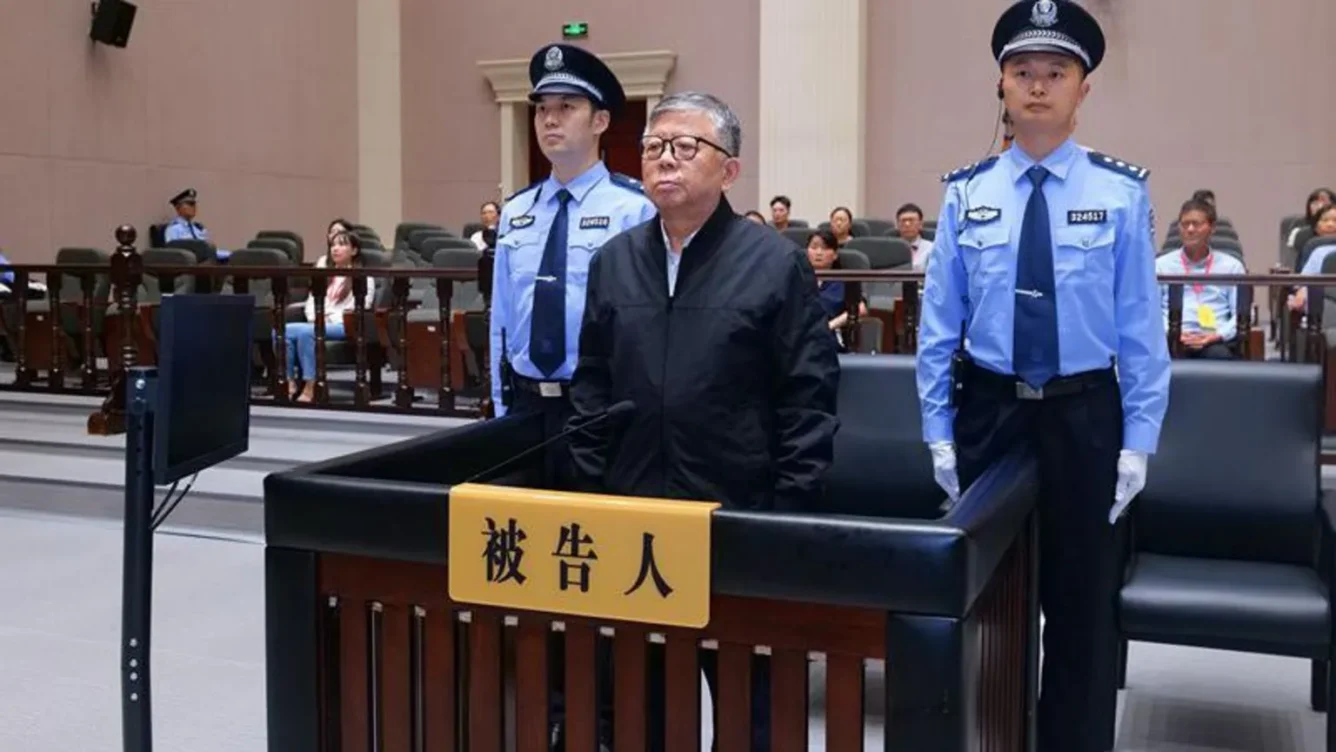
A court in eastern China has sentenced a former city official to death for accepting more than 2.2 billion yuan ($325 million; £243 million) in bribes over a 30-year period.
Yang Youlin, who served in various positions in Nanjing from 1993 to 2023, was also convicted of embezzlement, abuse of power, and money laundering. Authorities said his illicit gains rank among the largest uncovered in recent years.


The 69-year-old exploited his official positions to help others secure engineering contracts, land transfers, and financing in exchange for cash and other valuables, according to state media.
Yang was investigated as part of President Xi Jinping’s sweeping anti-corruption campaign, which has targeted officials in the military, banking, and several other sectors.
A court in Changzhou said on Monday that Yang, who spent much of his career overseeing economic and technological development in Nanjing, had committed offences “of an extremely serious nature” and had “caused exceptionally heavy losses to the interests of the state and the people.”
Since taking office, President Xi has launched multiple anti-corruption campaigns that critics argue have also been used to eliminate political rivals.
Death sentences for white-collar crimes remain rare in China, although they are occasionally imposed in cases involving exceptionally large sums, typically exceeding 1 billion yuan.
For example, former finance executive Lai Xiaomin was executed in 2021 after being convicted of accepting 1.8 billion yuan in bribes over a 10-year period.
Similarly, Li Jianping, a former official in Inner Mongolia, was executed in 2024 after being found guilty of embezzlement and accepting bribes totaling more than 3 billion yuan.
In many other corruption cases, courts have imposed prison terms or suspended death sentences, which are often commuted to life imprisonment after a specified period.
Chinese courts have also reduced sentences in some cases where convicted individuals cooperated with authorities by providing information about other offenders.
However, although Yang also assisted investigators, the Changzhou court ruled that his crimes were so “grave” that his cooperation “was insufficient to warrant a more lenient punishment.”
According to state media, Yang pleaded guilty and “expressed remorse in his final statement.”













 English