
















The Ugandan government has confirmed that three of its citizens were killed during the recent wave of anti-immigrant violence in South Africa, as efforts continue to evacuate nationals seeking to return home.
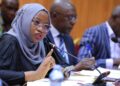
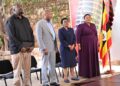
Acting Minister of Foreign Affairs Haruna Kyeyune Kasolo announced the deaths while receiving the first group of evacuees at Entebbe International Airport in the early hours of Friday.

He said the government is working closely with South African authorities to facilitate the return of the victims’ bodies and provide support to their bereaved families.
“Our thoughts are with the families who have lost their loved ones,” Kasolo said, adding that the government remains committed to ensuring that the deceased are repatriated with dignity.
Addressing the returnees, the minister acknowledged the emotional toll of leaving South Africa under such difficult circumstances and assured them that government would support their reintegration.
“We understand that returning home under these circumstances is not easy. Your request to meet His Excellency President Yoweri Museveni has been received,” Kasolo told the evacuees.
The first group of Ugandans arrived aboard a special evacuation flight as part of a government-led repatriation exercise launched in response to the escalating violence targeting foreign nationals in parts of South Africa.
Officials said another group of 32 Ugandans was expected to arrive later on Friday, while a further 265 people are scheduled to return on Saturday as the evacuation operation continues.
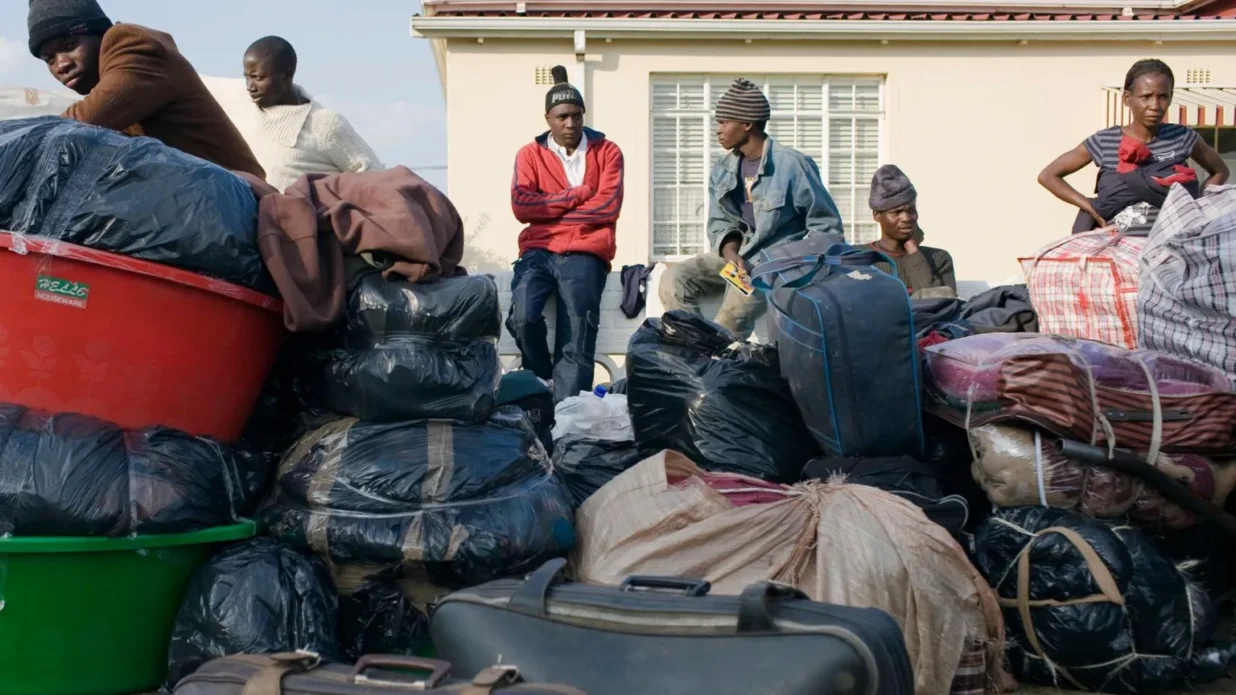
The exercise was initiated after weeks of unrest in several South African communities, where anti-immigrant demonstrations turned violent, forcing hundreds of foreign nationals to flee their homes and businesses.
Many affected migrants reported attacks on properties and commercial establishments believed to belong to foreigners, leaving several communities displaced and in fear.
Uganda’s High Commissioner to South Africa, Paul Amoru, emphasized that the recent violence should not be interpreted as a breakdown in relations between the two countries.
He said Uganda and South Africa continue to enjoy strong diplomatic and economic ties despite the isolated incidents of violence that prompted the emergency evacuation.
According to government officials, the repatriation programme initially targeted 771 Ugandan nationals who had registered to return home voluntarily. However, the number of people requesting assistance has continued to rise as the security situation remains uncertain.
Authorities said reception arrangements have been put in place to provide immediate humanitarian assistance to the returnees before helping them reconnect with their families and communities.
South Africa has experienced repeated outbreaks of xenophobic violence over the past two decades, with migrants from several African countries frequently bearing the brunt of attacks during periods of economic strain, rising unemployment and social unrest.
Foreign nationals from countries including Uganda, Zimbabwe, Mozambique, Ethiopia, Somalia and Nigeria have repeatedly been targeted through looting, assaults and destruction of businesses in previous waves of violence.
The latest unrest has once again raised concerns over the safety of migrant communities, prompting several African governments to organize emergency evacuations for their citizens.
For Uganda, the ongoing operation represents one of the country’s largest government-assisted repatriation efforts from South Africa in recent years.
Officials say the evacuation will continue until all Ugandans who have registered for voluntary return are safely brought home.
The government has also pledged to maintain close engagement with South African authorities to protect Ugandan nationals who choose to remain in the country while extending support to families affected by the loss of loved ones.



 English