












In a push to further strengthen Uganda Development Bank (UDB), the government has allocated an additional Shs442.2 billion to the bank in the 2026/27 financial year, raising the development finance institution’s cumulative capitalization to Shs1.6 trillion.
The capital boost is viewed as a necessary policy measure at a time when the gap in investment capital needed to fuel Uganda’s transition into its next development phase continues to widen amid shrinking official development assistance.

The government is banking on UDB to deliver affordable and patient capital for private and public investment.
Whereas Uganda’s private sector credit grew by 12.0 percent, from Shs25.5 trillion in 2024 to Shs28.6 trillion in 2025, according to the Bank of Uganda, this remains below the 16.6 percent target set under the Third National Development Plan.
It also trails regional peers such as Kenya, whose private sector credit grew by 14.1 percent, and Tanzania, which recorded 16.6 percent growth in 2023.
In 2025, UDB’s total assets grew by 27 percent to Shs2.26 trillion, up from Shs1.78 trillion at the end of 2024.
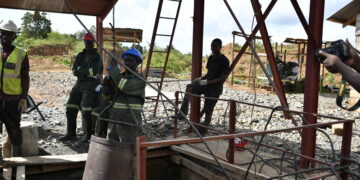
During the year, UDB approved Shs518.4 billion in new funding to support 120 projects across the country. Shs261 billion (50 percent) was directed towards primary agriculture, agro-industrialization, and manufacturing, while Shs60 billion (12 percent) went into supporting the services sector.
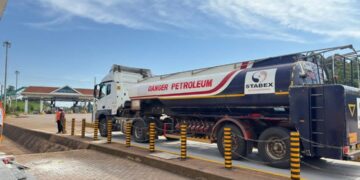
Shs124.2 billion was allocated as working capital for indigenous Ugandan contractors involved in infrastructure projects, with the bank participating in co-financing the East African Crude Oil Pipeline (EACOP) project alongside other financiers.
UDB disbursed Shs502.2 billion, representing a 29 percent increase from Shs388.7 billion in 2024, and expanded its footprint to 689 active clients across 105 districts, up from 524 clients in 92 districts in 2024.
The bank’s gross loan portfolio rose from Shs1.67 trillion to Shs1.77 trillion, of which up to 60 percent (Shs1.1 trillion) was invested in supporting primary agriculture, agro-industry, and manufacturing enterprises.
By December 2025, the bank’s direct beneficiaries had reached 83,428 individuals and 886 enterprises, with 112,405 beneficiaries financed either directly through projects or through innovative financial solutions such as fintech platforms, farmer group models, and specialized interventions, including electricity and water connection initiatives.
In 2025, jobs created and sustained by enterprises supported by UDB reached 69,202, representing an increase of 13,649 jobs, or 25 percent, from 55,553 in 2024. These jobs were financed through the mainstream lending portfolio and special programmes targeting inclusive growth segments such as youth, women, and small and medium-sized enterprises (SMEs).
Enterprise profitability among supported projects rose from Shs314 billion in 2021 to Shs1.16 trillion in 2025, while tax contributions increased from Shs84 billion to Shs387 billion over the same period.
The government has positioned UDB as a critical vehicle in its effort to expand the economy tenfold by 2040, from $50 billion to $500 billion.
The latest capital injection comes at a time when UDB has entered the second year of implementing its five-year business strategy, which is anchored on expanding the bank’s role in transaction structuring, advisory services, and mobilizing development finance.
UDB is expected to focus on developing and preparing catalytic programmes, linking funders to investors, supporting domestic and international resource mobilization for projects, providing project development and project finance advisory services to both the government and the private sector, building a pipeline of bankable projects and programmes, identifying potential investors, and actively stimulating credit demand.






 English