


















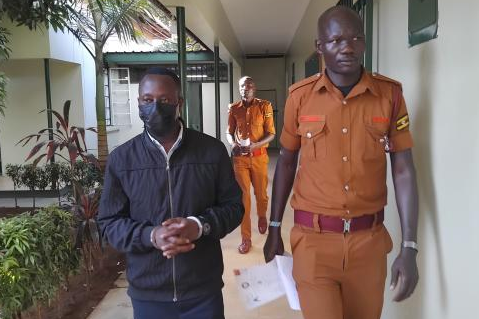
A staff member of the National Identification and Registration Authority (NIRA) has been sent on remand over accusations that he misused access to sensitive citizen records to aid a human trafficking ring targeting Ugandan women for exploitation abroad.
Douglas Kaaya, also known as Kasozi, a 40-year-old resident of Buziga in Makindye Division, was arraigned before Grade One Magistrate Asuman Muhumuza at the Standards, Utilities and Wildlife Court in Makindye after a probe by the Kampala Metropolitan Police.


Prosecution alleges that during his tenure as a Registration Assistant at NIRA, Kaaya illegally accessed and handled National Identity Card data, which he is said to have passed on to individuals connected to a trafficking syndicate.
He has been charged with unlawful disclosure and processing of personal data under the Data Protection and Privacy Act.
The investigations gained momentum following a widely publicised BBC documentary that highlighted the exploitation of Ugandan women in Dubai.
The report detailed how victims were allegedly deceived with promises of legitimate jobs, only to end up trapped in forced labour and prostitution.
Authorities subsequently launched inquiries into whether insiders within government systems were facilitating the illegal movement of victims.
According to investigators, Kaaya is suspected to have worked with accomplices still at large to fast-track identity verification processes required for travel, thereby enabling traffickers to move victims out of the country.
Court records indicate that the alleged offences took place on December 4, 2024, at NIRA offices in Makindye. The case is being handled by Detective Assistant Superintendent of Police Stella Chepcumba.
Kaaya denied the charges when he appeared in court. Although he expressed intention to seek bail, his application could not be considered after the court found his documentation incomplete, citing the absence of his National ID and a recommendation letter from his local council chairperson.
He was remanded until May 18, 2026, when he is expected to return to court for a fresh bail application as proceedings begin.
Prosecutors maintain that the accused’s conduct represents a grave violation of data protection laws designed to safeguard personal information. Upon conviction, he risks a prison sentence of up to 10 years, a fine, or both.
The case has intensified scrutiny on the safety of Ugandan migrant workers, especially women seeking employment in the Middle East.
Government agencies and civil society groups have long warned about trafficking networks exploiting weak regulatory controls and gaps in documentation processes to traffic vulnerable individuals.









 English