




The prosecution in the treason trial involving Kizza Besigye has accused him and his co-accused of attempting to intimidate state witnesses, as court proceedings continue on an application to conceal the identities of key prosecution witnesses.
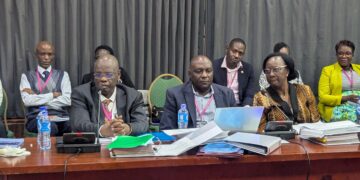
The claims surfaced during Wednesday’s cross-examination of Chief State Attorney Joseph Kyomuhendo, who filed an affidavit backing a request to shield six out of ten witnesses expected to testify against Besigye, his aide Hajji Obeid Lutale, and Captain Denis Oola.
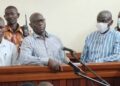
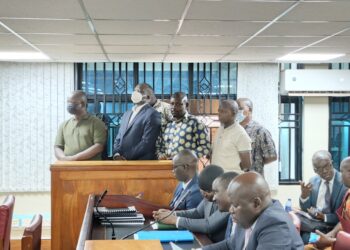
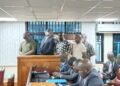
Presiding over the matter, Criminal Division Judge Emmanuel Baguma heard Kyomuhendo allege that the accused, working through an alleged associate identified as Frank Kihehere, issued threats targeting prosecution witnesses.
He told court the threats were real and existed in electronic form, but declined to disclose the identity of the forensic expert who reportedly helped verify them.
According to Kyomuhendo, Kihehere is said to have directed threats at all six witnesses the state now seeks to protect. He argued that the alleged actions amount to interference with the judicial process and warned that the accused could endanger both the witnesses and their families.
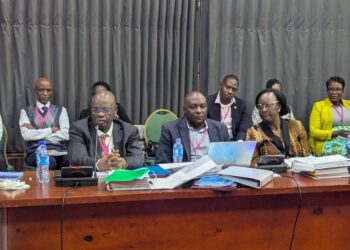
However, under sustained questioning from defence lawyers including Erias Lukwago, Bayan Turinawe, and Ernest Kalibala, Kyomuhendo struggled to provide specifics about the source and handling of the alleged threats.
He declined to explain how the electronic evidence was obtained, stored, or processed, and refused to identify those involved in managing it.
Pressed to produce the alleged threatening material, the prosecution maintained that revealing such details could compromise its sources. Kyomuhendo said his knowledge was based on information contained in the police file and briefings from superiors at the Office of the Director of Public Prosecutions.
He further told court he was uncertain whether any of the purportedly threatened witnesses had formally reported the matter to police, or whether they were currently in hiding. He also questioned whether the defence intended to trace and locate the witnesses if their identities were disclosed.
The prosecution insisted that withholding such information was necessary to safeguard witnesses and preserve the integrity of the case.
Kyomuhendo added that, to his knowledge, no other accomplices were involved beyond Kihehere, maintaining that the alleged threats were connected to the accused persons.
In a notable moment, he suggested that even Besigye himself could potentially qualify for witness protection, though he did not elaborate.
On protective measures, Kyomuhendo outlined options available to the state, including testimony via video link, use of screened witness stands, voice alteration technology, and physical shielding in court. He added that witnesses could also be relocated to secure facilities, assigned security personnel, and placed under strict movement guidelines.
The defence, however, challenged both the timing and substance of the application. Lawyers argued that although the alleged threats date back to 2025, the prosecution only sought witness protection orders in March 2026, weeks after a court directive requiring disclosure of evidence.
Kyomuhendo responded that the witnesses had remained safe until then, but was unable to clearly explain why alternative protection methods could not be applied without concealing their identities. Turinawe also faulted the prosecution for delays in setting the application down for hearing, noting that the court had to intervene to fast-track the matter.
Defence lawyers further described the delay as negligent and criticised the absence of an investigator’s report to substantiate the claims of intimidation. They also questioned Kyomuhendo on international standards and United Nations guidelines governing witness protection.
During the session, the prosecutor added that arms trafficking could constitute part of a treason offence, in response to queries about the charges facing the accused.
The cross-examination, which resumed mid-morning on Wednesday, was still ongoing by the time of filing this report. Lawyer Major Simon Nsubuga, representing Captain Oola, is expected to continue the questioning after submissions by counsel for Besigye and Lutale.
Wednesday marked the second day of Kyomuhendo’s testimony under cross-examination. The prosecution team includes Assistant Director of Public Prosecutions Thomas Jatiko, Chief State Attorney Richard Birivumbuka, and Senior State Attorney George Bigirwa.
Besigye, Lutale, and Captain Oola face joint treason charges over allegations that they conspired to overthrow the government. Prosecutors claim the trio held meetings in Geneva, Athens, Nairobi, and Kampala to mobilise resources, procure weapons, and coordinate paramilitary activities.
The state further alleges that Besigye engaged a Kurdish intelligence operative identified as Andrew Wilson and received 5,000 US dollars to facilitate the transport of 36 Ugandans to Kisumu, Kenya, for military training, a plan that was reportedly foiled before execution.
Additional claims include attempts to acquire surface-to-air missiles, ricin poison, and counterfeit currency, as well as an alleged plot to deploy drone technology in an assassination targeting President Yoweri Museveni.
Prosecutors say they have assembled a body of evidence including audio and video recordings, digital communications, immigration records, and call data linking the accused to the alleged scheme.
The case has been adjourned to May 28, 2026, when cross-examination of Kyomuhendo is expected to resume.





 English