


















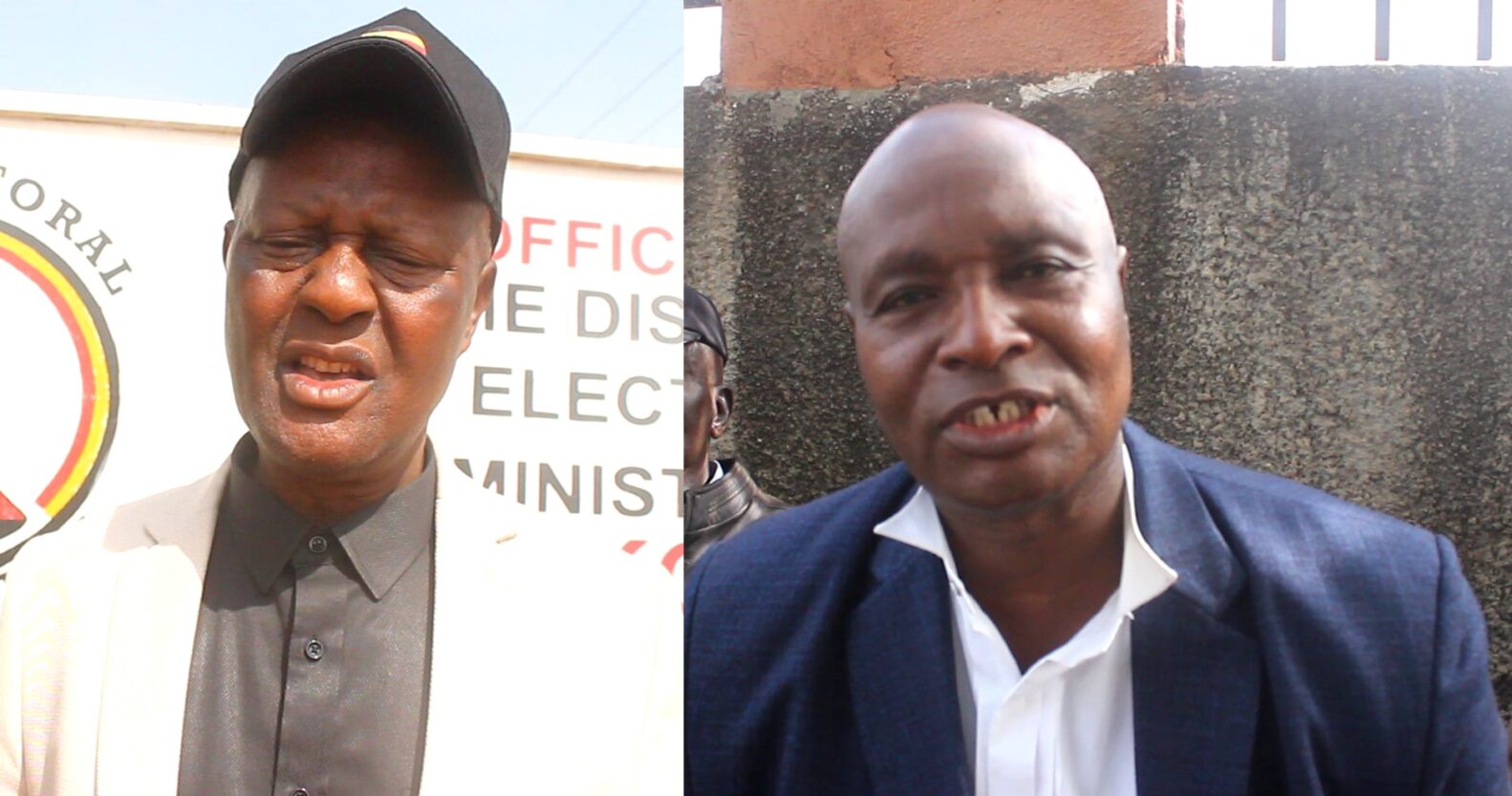
The highly contested Mukono District LC5 chairperson election has entered a decisive legal phase after Johnson Muyanja Ssenyonga successfully traced and formally served his rival, Francis Lukooya Mukoome, with an election petition.
Filed at the High Court in Mukono under the provisions of the Local Governments Act and the Electoral Commission Act, the petition challenges the controversial declaration of Lukooya as the winner of the 2026 district chairperson race.


According to court documents, Muyanja, the petitioner, accuses Lukooya and the Electoral Commission of irregularities surrounding the final declaration of results. The notice of presentation of the petition requires the respondents to file their defence within ten days of service or risk the matter proceeding in their absence.
The service of the petition marks a critical step in a case that has gripped national attention following dramatic scenes at the Mukono tally centre on election day.
The dispute stems from an unprecedented reversal by Mukono District Returning Officer Emily Amongin. Earlier on election day, Amongin officially declared Muyanja the winner after he polled 51,686 votes, narrowly defeating Lukooya, who had secured 50,254 votes. Independent candidate Reuben Ssenyonjo trailed with 2,995 votes.
However, shortly after the announcement, confusion engulfed the tally centre. Supporters of the ruling National Resistance Movement (NRM) celebrated, insisting their candidate, Lukooya, had won despite the official declaration in favour of Muyanja.
Eyewitness accounts indicate that Muyanja’s attempts to access the Returning Officer’s desk to obtain the Declaration of Results (DR) form were blocked by security personnel. In contrast, Mukono District NRM Chairperson Haruna Ssemakula reportedly accessed the Returning Officer’s office and held a closed-door meeting that lasted nearly two hours.
Following the meeting, the Returning Officer reportedly left the tally centre for about an hour. Upon her return, and without offering a detailed explanation, she overturned the initial results and declared Lukooya the winner.
The revised results showed Lukooya with 52,523 votes, while Muyanja had 52,105 votes. Ssenyonjo’s tally was adjusted to 3,095 votes.
Lukooya has consistently maintained that the final declaration reflects the true outcome of the election. He argues that the earlier announcement in favour of Muyanja was a clerical error that was quickly corrected. He further claims to possess Declaration of Results forms from various polling stations to support his victory.
Muyanja, on the other hand, contends that the reversal was unlawful, opaque, and contrary to established electoral procedures. His petition is expected to challenge both the process and the legality of the final declaration.
With the petition now formally served, Lukooya and the Electoral Commission have ten days to file their responses. Failure to do so could see the court proceed to hear and determine the case in their absence.
Legal experts note that election petitions are time-sensitive and often hinge on both procedural compliance and the credibility of evidence presented by both sides.
A Test Case for Electoral Credibility
The Mukono election dispute is shaping into more than just a local political contest. It is rapidly becoming a litmus test for Uganda’s electoral integrity and the independence of election management bodies.
At the heart of the case are fundamental questions: Can a declared result be reversed without a transparent audit trail? What role should security forces play at tally centres? And how much discretion does a returning officer have once results are announced?
The court’s handling of these questions will likely set an important precedent for future electoral disputes, especially in tightly contested races.
Beyond Mukono, the outcome could influence public confidence in the Electoral Commission and the broader democratic process. For many observers across the country, this case is not just about who won a district seat, but whether electoral outcomes in Uganda can withstand scrutiny when challenged.
As the legal battle unfolds, all eyes will be on the High Court in Mukono to determine whether the final declaration reflected the will of the voters or whether the process was compromised.







 English