









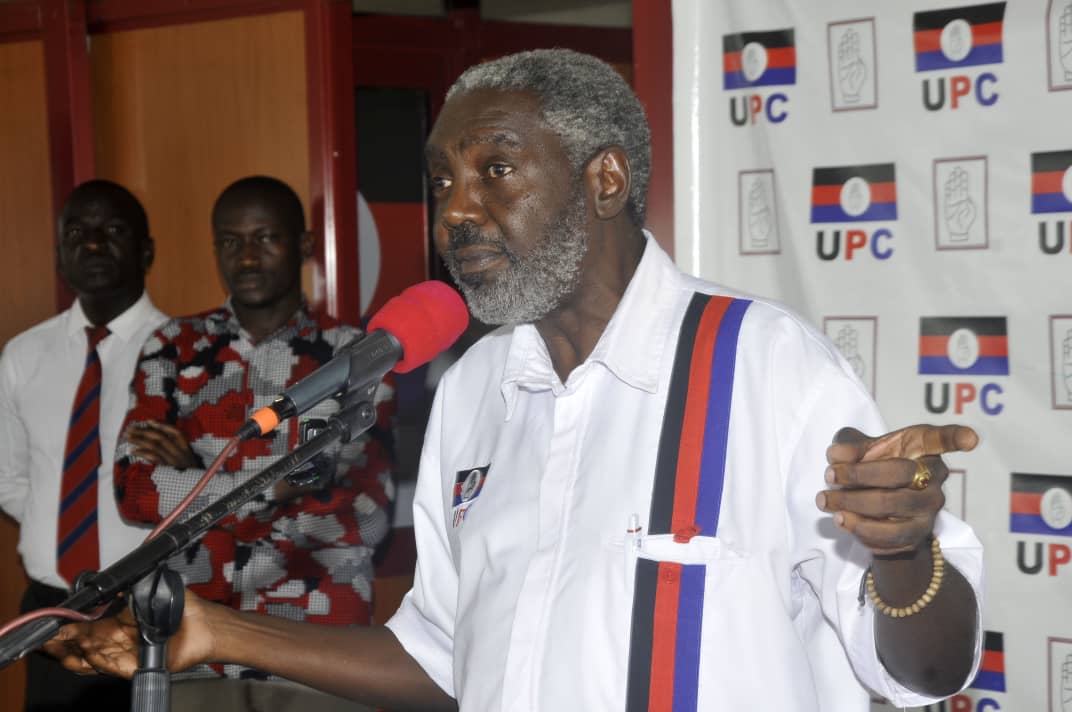
The President of the Uganda People’s Congress, Jimmy Akena, has criticised ongoing demolition of roadside businesses in parts of Kampala, urging authorities to adopt a more humane, organised, and transparent approach when enforcing urban regulations.
Speaking at the party’s national headquarters, Akena said he recently encountered security personnel escorting heavy machinery as it demolished structures along the Najjera, Buwate, and Kyanja corridor.


The incident, he noted, raised serious concerns about how such operations are planned, communicated, and executed.
He questioned whether affected traders had been given sufficient notice prior to the demolitions, warning that abrupt evictions risk destroying livelihoods for thousands of small-scale entrepreneurs.
“There are people doing the right thing in the wrong place, but you do not remove them in the wrong way,” Akena said, stressing the need for enforcement that balances urban order with economic survival.
Akena emphasised that many roadside vendors and small business owners rely entirely on such enterprises to sustain their families. According to him, these businesses are often the primary source of income used to pay school fees, service loans, and meet daily household needs.
He cautioned that without proper planning and engagement, enforcement exercises could deepen poverty and economic vulnerability, especially among low-income earners already struggling with rising living costs.
Beyond the demolitions, Akena raised alarm over high interest rates in Uganda’s financial sector, arguing that many entrepreneurs are weighed down by expensive loans. He called for reforms to make borrowing more affordable and accessible, particularly for small and medium-sized enterprises.
He noted that many traders affected by demolitions are still servicing loans, making sudden loss of business infrastructure even more devastating.
On governance, Akena criticised what he described as growing corruption and weak accountability systems. He questioned how large sums of money allegedly circulate within political systems without sufficient scrutiny.
According to him, there is a troubling imbalance where ordinary citizens face strict financial monitoring, while significant transactions involving political actors appear to go unchecked.
Turning to Uganda’s political landscape, Akena expressed dissatisfaction with the country’s recent electoral processes, which he described as flawed. He said opposition parties, including UPC, continue to face financial constraints due to delays or lack of public funding.
In contrast, he argued, the ruling National Resistance Movement appears well-resourced during election cycles.
He called for greater transparency in political financing and urged the media and oversight institutions to investigate the sources of campaign funding.
Akena also criticised the effectiveness of the Inter-Party Organisation for Dialogue, saying it has been weakened by mistrust among stakeholders and a lack of genuine commitment to constructive engagement.
Despite the concerns, Akena reaffirmed UPC’s commitment to policies aimed at improving the welfare of ordinary Ugandans. He emphasised the need for structured economic planning, inclusive growth, and policies that support both businesses and families.


 English