

















Dozens of former staff of the Dairy Development Authority (DDA) remain in uncertainty months after the agency was rationalised, with some receiving hefty terminal packages while others have been left waiting, and in two cases, unpaid altogether.
According to the latest report by the Office of the Auditor General, a total of 88 staff were on the Authority’s payroll at the time of closure on December 31, 2024. Of these, 55 were absorbed into the Ministry of Agriculture, Animal Industry and Fisheries (MAAIF), while 33 were not.


Auditors noted that UGX 9.079 billion was computed and approved as terminal benefits. However, payment has been uneven and, in some cases, delayed.
Out of the 33 staff who were not absorbed, 31 were paid a total of UGX 3.73 billion in severance pay, transport refund, payment in lieu of leave and notice. Two former employees remain unpaid.
More strikingly, of the 55 staff absorbed into MAAIF, only four were paid terminal benefits totaling UGX 496.28 million.
The remaining 51 absorbed staff are yet to receive their claimed benefits amounting to UGX 4.67 billion, raising questions about equity and consistency in the rationalisation process.
Of the UGX 4.23 billion paid to 35 staff, UGX 3.18 billion was spent on severance pay, UGX 871.8 million on payment in lieu of notice, and UGX 145.3 million on payment in lieu of leave, with significant allocations also going toward transport refunds.
The Auditor General flagged discrepancies in some of the reported figures, pointing to weaknesses in financial reporting and reconciliation.
Beyond staff compensation, the audit paints a broader picture of institutional strain that could affect service delivery in the dairy sector.
Financial records showed inconsistencies in reporting Letters of Credit. While DDA declared LCs worth UGX 2.393 billion, only UGX 1.695 billion had been executed by the reporting date, leaving a correct outstanding balance of UGX 698 million.
In addition, financial statements reported total warrants of UGX 6.235 billion, yet the audited figure stood at UGX 6.458 billion.
Budget performance also reflected funding shortfalls. Of the UGX 10.95 billion appropriated to DDA for the 2024/2025 financial year, only UGX 6.46 billion was warranted, leaving UGX 4.49 billion unreleased.
Some of the unreleased funds were meant for activities still relevant to the Authority’s mandate. Of the funds received, UGX 6.21 billion was spent, leaving UGX 250 million unutilised and tied to six major activities rolled over to the subsequent year.
Out of 16 sampled activities worth UGX 4.41 billion, seven worth UGX 3.39 billion were fully implemented, while nine worth UGX 1.04 billion were only partially implemented — a sign of interrupted or slowed service delivery.
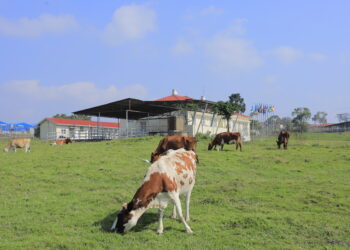
The impact is most visible on the ground. Several Milk Collection Centres (MCCs) across the country were found non-functional, abandoned or unoccupied, including facilities in Kitgum, Jinja, Busiu, Tororo, Busia, Pallisa, Kyegegwa, Kyenjojo, Mwenge and Kamwenge.
Some buildings were dilapidated and in urgent need of repair, with asbestos roofing sheets at Busiu and Tororo requiring replacement.
At border points, the audit found that Malaba and Busia posts were each staffed by only one officer responsible for testing milk and dairy products.
Neither station had a fully equipped laboratory for on-site testing, potentially compromising quality assurance and regulatory oversight.
Land management challenges further complicate the picture. Of 53 pieces of land owned by DDA, 27 remain untitled, with 11 encroached upon and seven under court dispute.
Even among the 26 titled properties, two are encumbered and three are before court. At the time of closure, the Authority had 19 outstanding court cases referred to the Attorney General under MAAIF.
The findings suggest that while the rationalisation of DDA was intended to streamline operations under MAAIF, unresolved staff compensation, stalled projects, disputed land and weakened inspection systems risk undermining confidence in the country’s dairy regulatory framework.
For farmers and dairy processors who rely on functional Milk Collection Centres, quality testing at borders and clear institutional leadership, the audit signals that the transition may have come at a cost to service delivery.









 English