






The National Unity Platform (NUP) has formally announced that it will no longer prioritize the election of representatives for persons with disabilities (PWDs) in Mukono, citing a long-standing dominance by the ruling National Resistance Movement (NRM) within that group.
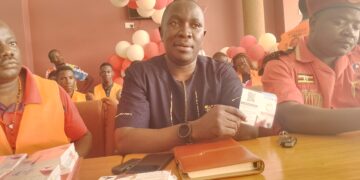
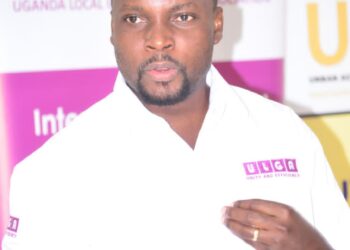
Speaking during the nomination of party aspirants in Mukono for the upcoming local elections, NUP Greater Mukono focal person Robert Peter Kabanda confirmed the party’s strategic withdrawal from the PWD electoral contest.

He stated that the party’s primary focus will now be on mobilizing the youths, a demographic he described as crucial since they make up nearly 70 percent of the electorate.
“Majority of the disabled persons were taken by Museveni long ago. When you look around, most of those participating in the political process are already brainwashed,” Kabanda said while addressing supporters at the party headquarters in Kavule, Mukono Central Division.
Kabanda’s remarks were made as the nomination period for candidates at the village level, including those representing the youth, elderly, and persons with disabilities, neared its June 10 deadline.
Although confirming the party’s reduced focus on PWD representation, Kabanda stressed the significance of the upcoming youth and elderly elections.
He noted that campaigning will run from June 12 to June 14, with voting scheduled to take place from June 16 to June 18.
Kabanda also used the gathering to caution party members against internal divisions, warning that such behavior could undermine NUP’s efforts to strengthen its presence at the grassroots level.
He explained that personal rivalries and gossip have allowed the NRM to take advantage and poach supporters.
“Infighting at a crucial time when the party seeks consolidation at the grassroots is dangerous. It only helps our opponents solidify their base while we waste energy fighting each other,” he said.
Herbert Kyasa, the NUP chairman for Mukono Municipality, echoed Kabanda’s concerns and encouraged party loyalists to prioritize the success of candidates for youth, elderly, and PWD positions.
He warned that defeat in these lower-level elections could negatively affect NUP’s broader performance.
“We must temporarily put aside individual interests to ensure victory for our grassroots aspirants. If the youth are beaten, NUP risks losing other positions too,” Kyasa said.
Kyasa also emphasized that party headquarters has high expectations from Mukono, alongside other key districts including Kampala, Jinja, Mpigi, and Wakiso.
Mukono, he noted, is seen as a leading district in strengthening and maintaining party support in central Uganda.
NUP’s decision to scale back its pursuit of PWD seats reflects a strategic shift driven by both demographic realities and political pragmatism.
While focusing on the youth may enhance the party’s influence among the majority voter base, critics may argue that this approach sidelines an already marginalized group.
Meanwhile, the call for unity within the party highlights growing concerns about internal discord.
With the grassroots elections fast approaching, NUP’s ability to mobilize effectively and maintain cohesion will be critical in countering the NRM’s deeply rooted political structure.
END.





 English