









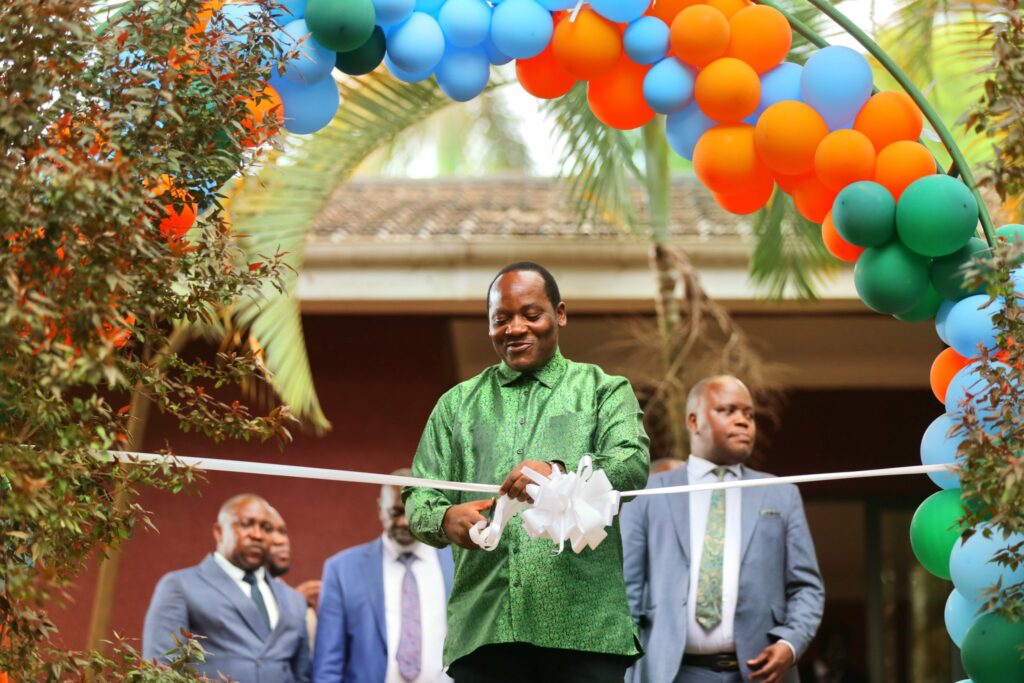
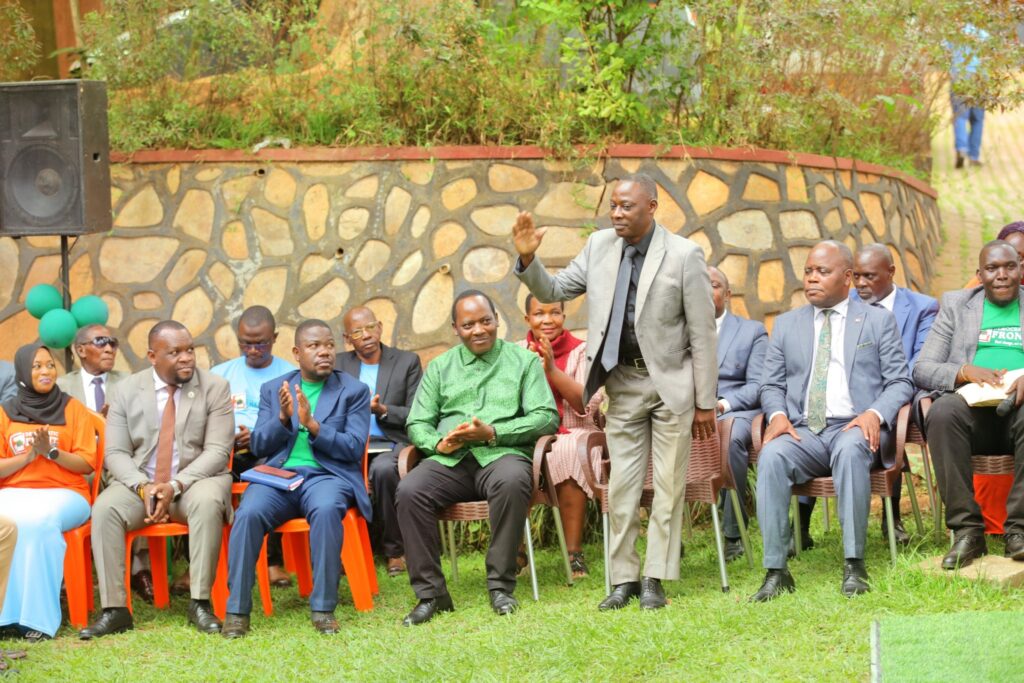
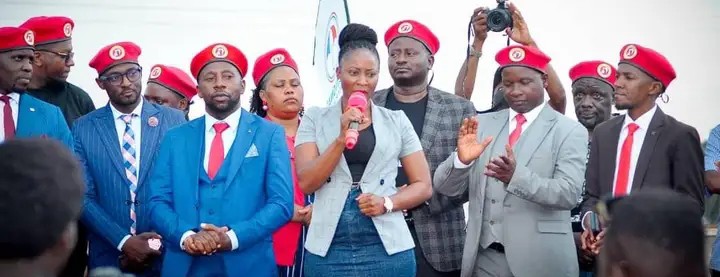
Nearly two years after parting ways with the National Unity Platform (NUP), former Leader of Opposition in Parliament and current Nyendo-Mukungwe MP, Mathias Mpuuga, has officially unveiled a new political party, the Democratic Front (DF)—a move that adds yet another layer of intrigue to Uganda’s evolving political scene.
Announcing the party’s formation on Tuesday, Mpuuga described the Democratic Front as a response to Uganda’s “need for meaningful transformation” and a break from what he called the “tired cycle of recycled ideologies.”


“It is born out of our motherland’s need for meaningful transformation that transcends the tired cycle of recycled ideologies,” Mpuuga noted.
The launch of the DF comes at a critical time, less than six months before Uganda enters full campaign season ahead of the 2026 general elections.
Though still in its infancy, the DF represents Mpuuga’s most decisive step yet toward establishing an independent political identity after a high-profile and often contentious exit from NUP.
From Fracture to Foundation
The cracks between Mpuuga and the NUP leadership widened in the wake of a controversial Shs500 million “service award” he received in 2022 while serving as Leader of the Opposition in Parliament.
The NUP accused him of benefiting from what they viewed as a misuse of public funds, demanding that he step down from his role as Parliamentary Commissioner. Mpuuga refused, maintaining that the award was legitimate and well-deserved.
The fallout set the stage for Mpuuga’s gradual political detachment from NUP, a party he once helped lead, and sowed the seeds for his latest political venture.
“The Democratic Front is not here to disrupt for the sake of it,” Mpuuga said. “It is born out of necessity—necessity born from the failures of the status quo. It is a home for logical thinkers, progressive minds, and those who believe in political ethics and disciplined service delivery.”
Not His First Attempt
This is not Mpuuga’s first attempt at rebranding his political path. In December 2024, he launched the Democratic Alliance (DA)—a loose political coalition where he took on the role of national coordinator.
The group’s most notable moment came during its glitzy launch in Kampala, when controversial musician Alien Skin was unveiled as its cultural ambassador.
However, the DA has struggled to gain traction, and Alien Skin has since been a no-show on the political front, never appearing again to promote the group’s agenda.
In many ways, the creation of DF can be seen as a fresh reboot—this time with legal grounding.
According to a certificate of registration issued by the Electoral Commission, the Democratic Front has been officially recognized as a political party under Uganda’s Political Parties and Organisations Act (Cap 178).
The certificate, dated May 5, 2025, also reveals that DF is a rebranded version of the Green Partisan Party, a lesser-known entity that has now been repurposed to serve Mpuuga’s broader political vision.
A Fresh Voice or Just Another Actor?
Political analysts are watching closely to see whether DF will offer something substantively new or simply fragment the opposition landscape further.
With the ruling National Resistance Movement (NRM) still firmly entrenched and opposition parties like NUP and the Forum for Democratic Change (FDC) contending with internal fractures, DF enters a crowded and contentious field. Yet, Mpuuga remains undeterred.
He insists that the Democratic Front is not built around personalities, but rather, “around principles and the promise of disciplined leadership.”
Whether that message will resonate with a population fatigued by political infighting and unmet expectations remains to be seen.
As the clock ticks toward the 2026 general elections, the Democratic Front will need to move swiftly to build a grassroots presence, attract credible candidates, and clarify its ideological path—if it is to avoid becoming just another footnote in Uganda’s complex political story.







 English