
















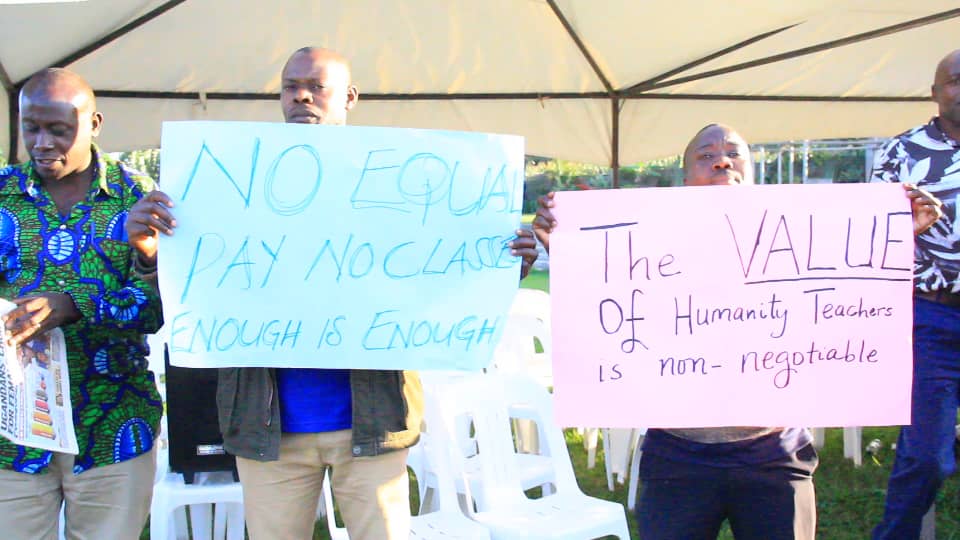
Humanities teachers in Greater Masaka have defied an appeal by the Minister of Education and Sports, Janet Kataaha Museveni, to end their ongoing strike over salary disparities.
The teachers, under their umbrella body, the Uganda Professional Humanities Teachers Union (UPHTU), insist they will not return to class unless the government commits to increasing their salaries by 300% (raised to four times the current amount) in the 2025/26 financial year.

During an inter-ministerial meeting held on June 19, 2025, at State House Nakasero, the education minister urged the Humanities Teachers’ National Executive Committee to suspend the industrial action in the interest of learners and national progress.
She reaffirmed the government’s plan to gradually raise arts teachers’ salaries by 25% each year over four years starting in 2026/27, or alternatively, offer a three-year accelerated package starting with a 50% increase in the first year.
However, in a consultative meeting held on June 23, 2025, in Masaka City, the Greater Masaka Humanities teachers unanimously rejected the government’s phased proposal, insisting that only a 300% salary increase in the upcoming financial year would be acceptable.
“We have outrightly rejected the Minister’s proposal. We are not returning to class,” said Robert Bwanika, Chairperson of UPHTU for Greater Masaka. “They increased salary for science teachers and discriminated against us, yet we perform the same tasks.”
Bwanika emphasized that since 2018, when science teachers’ salaries were enhanced, humanities teachers have waited patiently without any positive response from the government.
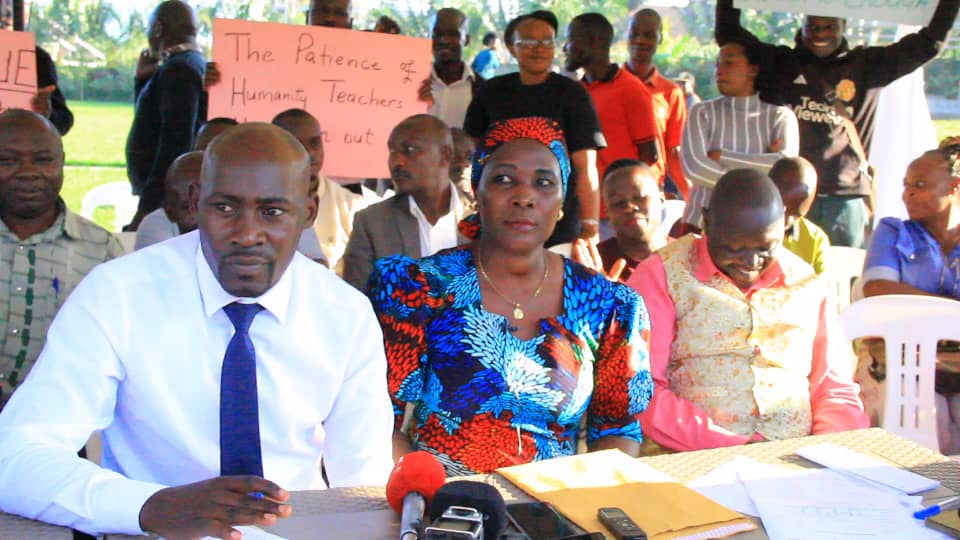
“What is good for the goose is good for the gander. If science teachers received it, why not us? Why is money suddenly unavailable when it comes to humanities teachers? We have unanimously rejected the First Lady’s proposals and we shall not call off the strike,” Bwanika added.
Asia Nassuuna Kamulali, a teacher at Kyotera Central Secondary School, described the salary disparities as unconstitutional, citing Article 40 (1b) of the Constitution, which guarantees equal pay for equal work.
“The government last reviewed our pay over ten years ago, yet the cost of living continues to soar. As a Christian, I remind the First Lady that this inequality is against both constitutional principles and biblical teachings,” Kamulali stated.
She further expressed that the pay gap has left humanities teachers psychologically distressed, adding that they are tired of repeated promises without tangible results.
“We are tired of being degraded, dehumanized, and discriminated against in front of our students,” she said firmly.
While it remains unclear whether other regions will adopt the same position, teachers in Greater Masaka have vowed not to resume work until their demands are met.
Across the country, humanities teachers laid down their tools earlier this month to protest the persistent wage disparities, leaving some government schools to rely on inexperienced student teachers to handle arts subjects.
The strike threatens to disrupt the academic calendar further, especially for candidates preparing for national examinations.








 English