
















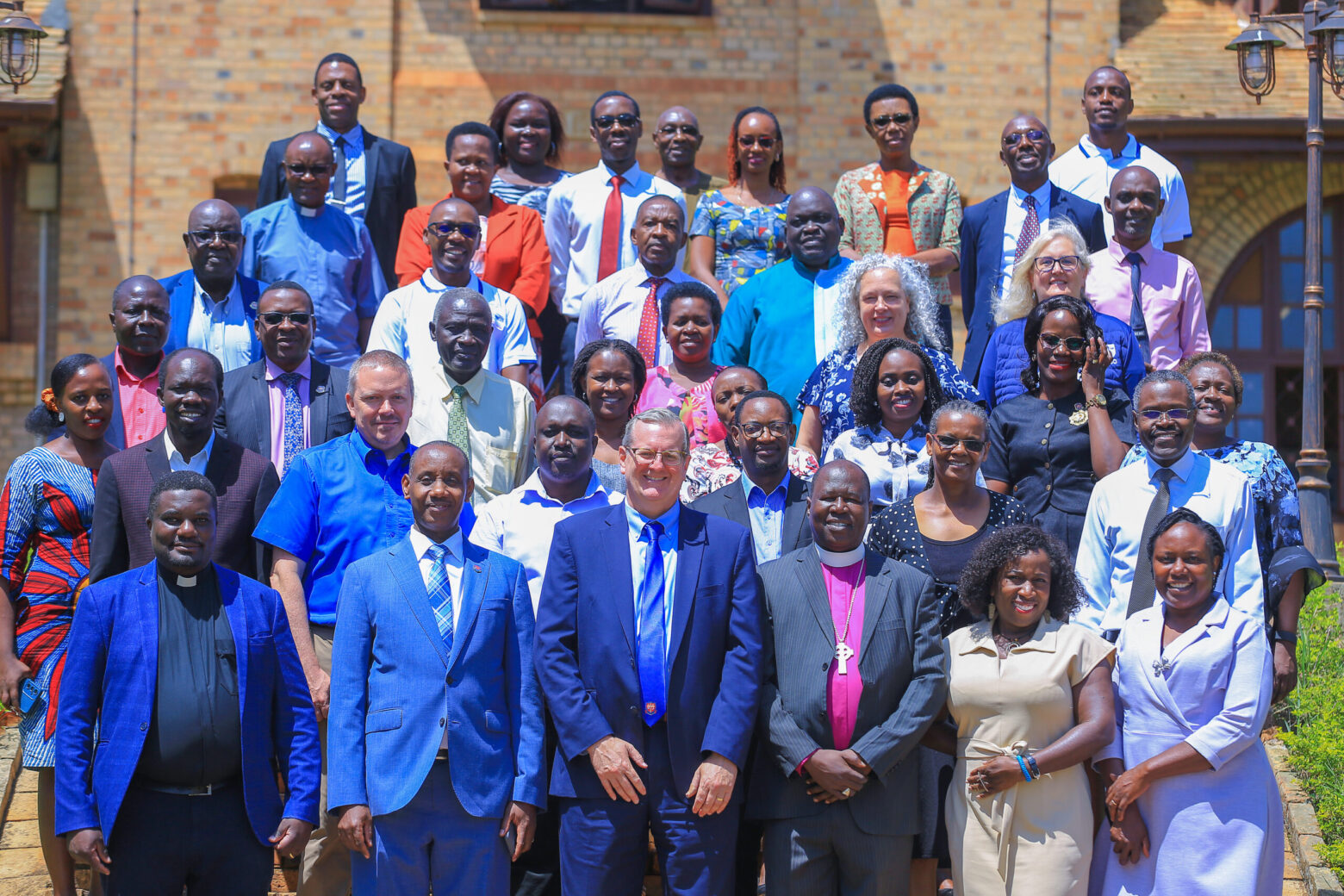
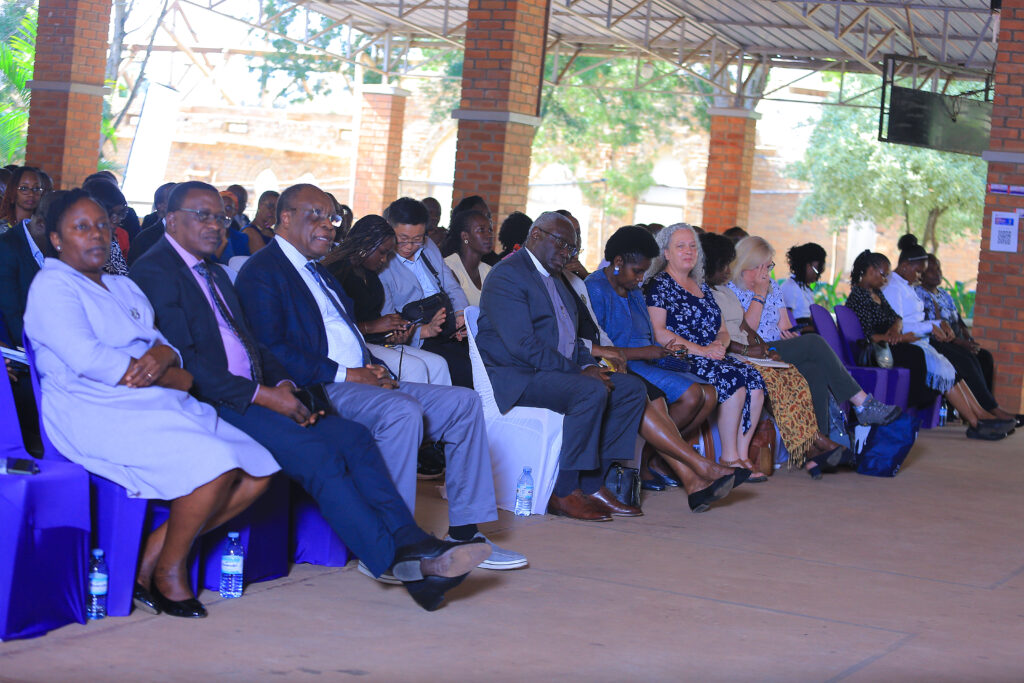
Dr Philip Ryken, President of Wheaton College in Illinois, USA, delivered a stirring public lecture at Nkoyoyo Hall, Uganda Christian University, offering both intellectual depth and spiritual vision on the enduring value of Christian higher education.
Under the theme A Home of Faith and Learning, Dr Ryken traced a historical journey of Christian scholarship from ancient Alexandria to modern-day Uganda.

He reminded the audience that Christian higher education is not a recent concept.
It began during the Roman Empire, when believers in cities like Antioch and Alexandria admired the knowledge of ancient Greece but sought to place it under the lordship of Jesus Christ.
He noted that the African continent was, and still is, fertile ground for the best that Christian education can offer.
Dr Ryken contrasted classical motivations for education with the Christian vision. While the Greeks pursued education to equip citizens for democracy, and the Romans used it to prepare leaders to expand their empire, Christians followed a higher calling.
They aimed to prepare servants for the kingdom of God. This deeper purpose, he emphasized, gave Christian education its distinct identity.
He walked the audience through the lives of historical figures who championed Christian learning in difficult times.
Among them was Cassiodorus, a Roman senator who withdrew from public service in the sixth century to establish the Vivarium, a monastic community where Scripture and classical knowledge were studied side by side.
Other figures included John Milton, John Amos Comenius, Sister Juana Inés de la Cruz, and C S Lewis. Their stories, Dr Ryken said, show that Christian higher education has not only endured through crisis but has often flourished.
He acknowledged that the present time is no exception. The global pandemic, economic pressure, cultural tension, and the rapid rise of artificial intelligence are changing the landscape of education.
Yet these challenges, he argued, are not barriers but opportunities for faith-based institutions to offer their most valuable contributions.
Dr Ryken described the integration of faith and learning as thinking Christianly about all of life. Faith, he said, includes the full content of Christian theology, not just personal piety.
Learning, in turn, includes the arts, sciences, humanities, and social disciplines. “True integration happens when faith and learning speak to each other, shaping both the knowledge and the knower.”
He pointed to Wheaton College as an example of this approach. New faculty members engage in regular seminars that explore how faith connects to their academic disciplines, and receiving tenure requires producing scholarly work that reflects this integration.
He also praised Christian institutions in Australia, Kenya, Indonesia, and Uganda that are advancing similar efforts.
“Christian higher education is always an expression of hope,” he said. “Hope that students can learn. That what they learn will make a difference in their lives and in the lives of others. That beyond earning a living, they will live with meaning. We need this hope to face today’s challenges and shape the future.”
Responding to the lecture, Rt Rev Prof Alfred Olwa, Bishop of the Diocese of Lango and Chairperson of the UCU Council, shared his reflections.
He called on universities to be seen not only as academic institutions but as homes of faith and learning.
He described such a home as a place where truth and purpose walk hand in hand, where knowledge grows alongside wisdom.
It is a space where respect and tolerance are nurtured, where character is built alongside competence, and where learning is guided by purpose rather than ambition.
“At UCU,” he said, “this is captured in our theme: A Complete Education for a Complete Person.”
He emphasized that in such a community, students are not only preparing for careers but also for life.
These institutions build a spirit of care, where students, faculty, and staff live out shared values such as humility, compassion, and integrity. Faith and learning, he noted, are not enemies but close allies.
He highlighted Christian thinkers like Augustine, C S Lewis, John Stott, and Festo Kivengere as individuals whose deep faith enriched their academic and cultural contributions.
He lamented the tendency of some scholars to chase personal gain rather than the common good, and he called for a renewed spirit of inquiry that seeks to uplift and transform.
“Let us reimagine our universities not just as places for lectures and exams,” he said, “but as living communities where faith and learning are woven into the whole of campus life.”










 English