
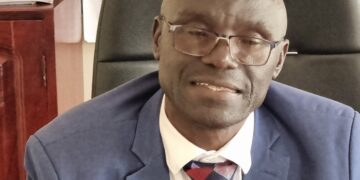


















The LC5 Chairperson, Rev. Peter Bakaluba Mukasa, has indefinitely banned the District Service Commission (DSC) over mounting allegations of corruption and bribery in the public recruitment process.
Rev. Bakaluba made the declaration during a thanksgiving service at Mukono Municipal Council.


He stated that he had received a wave of complaints implicating members of the DSC in a deeply rooted job-for-sale scandal.
According to the chairperson, reports from whistleblowers and victims suggest that commission officials demanded bribes ranging between UGX 30 to 40 million from desperate job seekers, promising them appointments in public offices.
“I have stopped them for an unstipulated period. I have received complaints from different people, and I call upon others who were conned, those who paid UGX 30, 40 million and above, to come forward,” Rev. Bakaluba told the congregation.
While his statement has been welcomed by some residents as a rare step toward cleaning up entrenched corruption, it has also raised eyebrows.
Others are questioning whether the chairperson’s actions are a genuine pursuit of justice or a strategic move to shield himself from scrutiny.
Despite making the announcement publicly, Rev. Bakaluba declined to clarify the allegations further when approached by journalists.
His evasiveness has drawn criticism from transparency advocates and fueled speculation about internal power struggles within the district’s governance structure.
Some locals and officials privately claim the move is a preemptive strike to divert attention from possible investigations into the LC5 chairperson himself.
They cite the precedent set in Mpigi District, where a similar corruption scandal led to the downfall of the entire service commission and implicated the LC5 chairperson.
“What is happening in Mukono seems like a repeat of what happened in Mpigi. This is not just about the commission. This might be much bigger,” said a civil servant who asked to remain anonymous for fear of retaliation.
Allegations against the DSC reveal a disturbing pattern of unethical behavior.
It is claimed that certain sub-county officials acted as intermediaries, connecting job seekers to commission members for a fee.
In some cases, when the promised job placements failed to materialize, desperate officials were reportedly forced to refund bribe money, sometimes in the tens of millions.
These claims, while largely unverified publicly, have circulated widely among civil servants and youth groups in the district.
Many of them have demanded a formal investigation by the Inspectorate of Government and the State House Anti-Corruption Unit.
Yet, when approached for comment, the DSC chairperson, Engineer Dr. Godfrey Kibuuka, dismissed the allegations and claimed he had not received any formal communication from the LC5 chairperson about the ban.
“If there is anything he has said, he should be able to defend it. I have not received any official letter,” Dr. Kibuuka said.
His response raised further doubt about whether proper administrative procedures are being followed.
Rev. Bakaluba later noted that the letter is still moving through the proper channels and would reach the commission in due course.
He rejected claims of blackmail and insisted his actions are in response to legitimate public outcry.
Mukono has long struggled with an underperforming or completely absent service commission.
For years, the district lacked a fully functional DSC, delaying critical public service processes such as recruitment, promotions, and disciplinary actions.
The reconstitution of the commission less than a year ago was meant to restore efficiency.
However, with the new ban in place, the district risks falling back into administrative paralysis.
Already, local departments report delayed recruitments and an increasing backlog of unresolved cases involving civil servants.
With the commission suspended indefinitely and no alternative body appointed, education, health, and administrative departments may soon feel the brunt of stalled staffing processes.
Civil society groups and legal analysts have called for immediate investigations by oversight bodies.
“This case should not be left to internal district politics. It requires external, impartial investigation to determine the extent of corruption and who is truly responsible,” a district official noted.
Residents and civil servants have also appealed to the Office of the President, the Public Service Commission, and the State House Anti-Corruption Unit to take up the matter without delay.
If proven true, the allegations may implicate not only the service commission but also senior district officials.
This could potentially unravel a wider web of corruption. On the other hand, if found to be politically motivated, the chairperson himself could face serious consequences.
Mukono’s service delivery hangs in the balance as the chairperson’s bombshell ban throws the district’s governance into uncertainty.
What was meant to be a mechanism for ensuring fair and transparent public appointments is now under a cloud of scandal.
Whether this moment will mark a turning point in the fight against corruption or yet another case of political maneuvering depends on how swiftly and thoroughly the relevant authorities respond.









 English