
















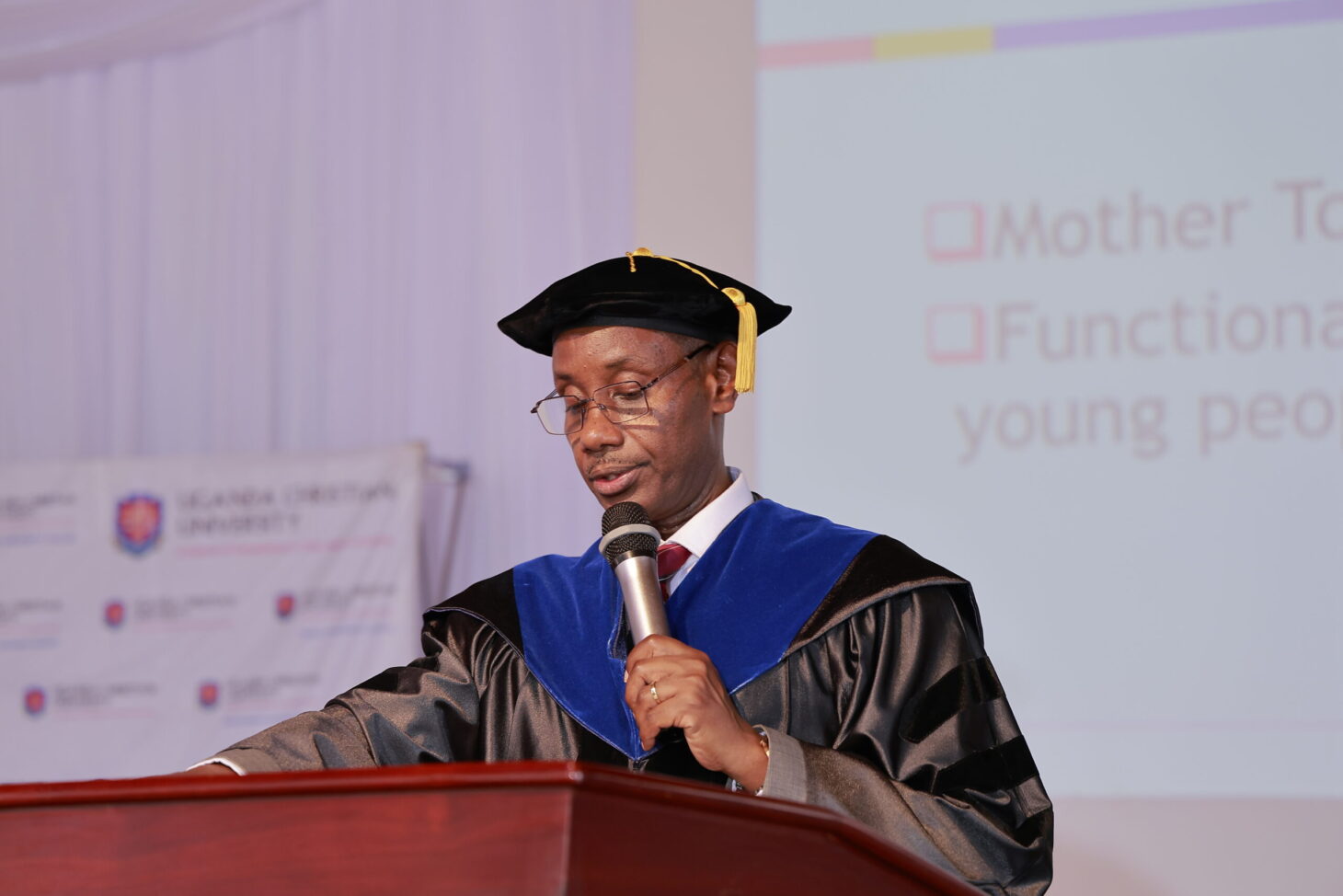
Uganda Christian University (UCU) Vice Chancellor Prof. Aaron Mushengyezi has called for a deeper integration of orature, culture, and digital media in shaping how young people communicate, learn, and preserve knowledge in an increasingly technology-driven world.
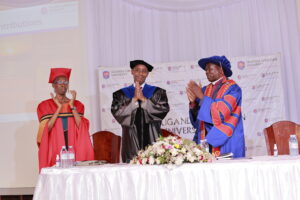
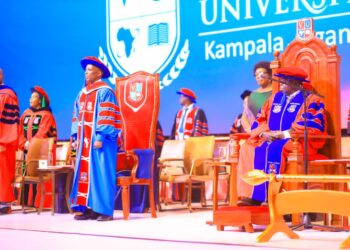
Delivering his inaugural professorial lecture titled “The Historiography of Orature and Media Culture for Young People in Uganda”, Prof. Mushengyezi reflected on the evolving nature of oral traditions in the age of digital transformation, arguing that communication among young people is now defined by hybrid, technology-mediated forms.

He noted that one of his long-standing academic convictions has been the need to link research and innovation to societal needs, pointing to earlier policy interventions such as Uganda’s Universal Primary Education programme, which created new demands for culturally relevant educational materials.
Today, he said, society is witnessing a shift from traditional orality to what he described as “digital orality” — a hybrid communication form that blends spoken, written, audiovisual and digital expressions.
“This kind of hybrid form combines oral, textual, audiovisual and other digital formats to capture more effectively the oral communication moment,” he observed, adding that platforms such as X and other social media networks increasingly shape how young people interact and consume information.
Orature in a Digital Ecosystem
Prof. Mushengyezi stressed that communicators targeting young audiences must rethink how cultural content is transformed across platforms. He raised key questions about how oral genres can be translated into digital and textual formats without losing their cultural meaning and performance context.
Citing scholars such as Ruth Finnegan and other orature theorists, he emphasized that oral communication remains central even in the digital era, noting that “secondary orality” through television, the internet, and social media continues to rely on both verbal and written codes.
He argued that orature must now be expanded to include digital media, which he described as essential tools for preserving cultural knowledge that would otherwise be lost with the passing of traditional custodians.
“With the technologies available, many young people can even take on this task,” he said, while warning that not all elements of oral performance can be fully captured through transcription, translation, or even artificial intelligence.
He highlighted what he termed “untranscribables and untranslatables” — cultural, linguistic, and paralinguistic elements that resist full digital or textual reproduction.
Language, Education and Policy
Turning to education, the Vice Chancellor underscored the importance of digital literacy and local language instruction in building functional literacy among young people. He referenced Uganda’s 1992 education White Paper, which promotes mother-tongue instruction in early primary education, particularly in rural areas.
He said the policy framework, including the development of local language advisory structures, remains critical to strengthening literacy and cultural identity.
However, he also noted the continued importance of English in higher levels of education and the growing emphasis on Kiswahili as a regional integrative language within the East African Community.
Prof. Mushengyezi called for stronger efforts to ensure that oral traditions are not only preserved in print but also adapted into accessible digital formats that can be shared across platforms.
He urged policymakers and institutions, including the Uganda Communications Commission and education bodies, to invest in digital solutions that preserve oral heritage while enhancing access to education.
A Call for Digital Inclusion
He further warned that while Uganda has made strides in expanding free primary and secondary education, more attention must be given to making education compulsory and ensuring equitable access to digital tools.
“What I see as a missing link in all these efforts is that promoting mass education for all children is still given lip service,” he said.
He added that education should empower young people not only to consume media but also to critically engage with it and become responsible content creators.
Universities and the Future of Knowledge
In his concluding remarks, Prof. Mushengyezi challenged universities to move beyond disciplinary silos and embrace convergence in teaching, research, and content creation.
He argued that the future university will be one that trains educators, communicators, and creators capable of working across digital, oral, and written platforms.
“The university that will move away from these silos to embrace the training of teachers, communicators and content creators… will be the university of the future,” he said.
Council and Academic Reflections
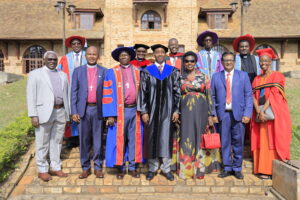
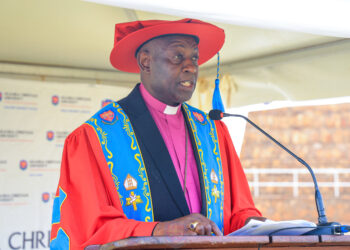
The lecture was followed by remarks from the University Council Chairperson, Prof. Bishop Alfred Olwa, who described the occasion as more than an academic milestone, calling it a reminder that societies are shaped by the stories they preserve.
He emphasized that universities exist not only to produce graduates but to cultivate wisdom, leadership, and moral responsibility.
“When a people lose their stories, they gradually lose their identity,” he said, adding that orature remains a vital bridge between generations and cultures.
Prof. Olwa also stressed the importance of integrating scholarship with faith, leadership, and service, noting that universities must shape society rather than merely respond to it.
Academic Perspective
Prof. Monica Chibita, delivering a scholarly reflection, described the lecture as a significant academic milestone, noting that inaugural professorial lectures serve to demystify research and connect academia with the public.
She said such lectures also humanize academic journeys and allow scholars to account to society for their work and contribution.
“This is not just a lecture,” she said, adding that it marked the formal recognition of Prof. Mushengyezi as an authority in orature and youth media studies.
A Celebrated Academic Journey
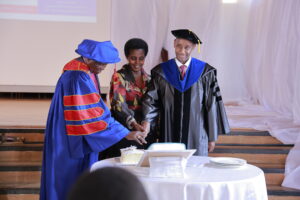
The lecture also reflected on Prof. Mushengyezi’s academic journey, including his education at Makerere University and the University of Connecticut, as well as his extensive research, publications, and leadership roles in academia.
Known for his work in literature, communication, and indigenous knowledge systems, he has contributed widely to scholarship on storytelling, youth culture, and media.
As Vice Chancellor, he has also championed research and innovation at UCU, strengthening institutional frameworks and expanding research funding.
ENDS.








 English