
















Uganda’s insurance sector has crossed a major milestone, with gross written premiums (GWP) surpassing the two trillion-shilling mark for the first time in 2025, reflecting strong growth across both life and non-life segments.
Data from the Insurance Regulatory Authority (IRA) shows that the industry collected 2.024 trillion shillings from policyholders, up from 1.764 trillion shillings in 2024—representing a 14.72 percent increase.


The regulator links this growth to intensified public awareness campaigns and the introduction of more diversified insurance products that have widened market participation.
The annual performance report further indicates that insurers paid out close to one trillion shillings in claims during the year, a development IRA says is helping to strengthen public trust in insurance services.
Officials say the sector remained stable and well-capitalised throughout the period, with total assets rising to 3.459 trillion shillings. Capital adequacy levels also remained comfortably above the regulatory threshold, underscoring the industry’s resilience.
A notable trend in 2025 was the strong performance of life insurance, which expanded by 39.2 percent. Its share of total industry premiums rose to 48.3 percent, nearly matching the non-life segment, which accounted for 49.49 percent.
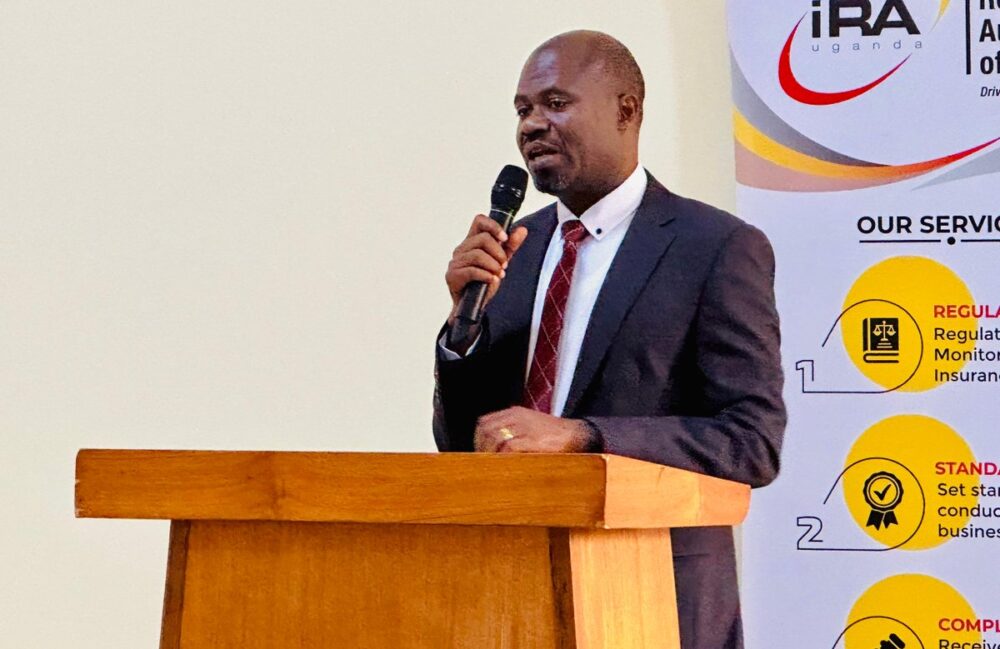
IRA Acting Chief Executive Officer Dr Protazio Sande noted that the growth signals a rising appreciation among Ugandans for insurance as a tool for financial planning, protection, and long-term security, including retirement and wealth building.
In the breakdown of performance, non-life insurance generated 1.054 trillion shillings in premiums, slightly higher than the 986.5 billion recorded in 2024, reflecting modest growth. Life insurance, however, posted a much sharper rise, climbing from 702.25 billion shillings in 2024 to 977.6 billion in 2025.
Health Membership Organisations (HMOs) recorded a significant drop, with premiums falling from 69.9 billion shillings to 30 billion shillings. The IRA attributes this decline to the restructuring of AAR into a non-life insurer, noting that the business remains within the broader industry under a different classification.
Microinsurance emerged as one of the fastest-growing segments, jumping from 1.64 billion shillings to 7.33 billion shillings—an increase of nearly 348 percent. Dr Sande attributed this surge to expanded uptake among low-income earners rather than changes in pricing.
The sector’s financial strength remained solid, with average capital adequacy ratios standing at 250 percent for life insurers and 266 percent for non-life insurers, well above the minimum requirement of 200 percent. According to the regulator, this indicates that companies are sufficiently capitalised to meet obligations and withstand potential economic shocks.
Looking ahead, the IRA expects continued expansion driven by broader economic growth, investment in oil and gas, and ongoing infrastructure development, all of which are likely to increase demand for insurance services.
The regulator is also pushing for government to insure public assets, arguing that this would both protect national investments and significantly expand the insurance market, given the size of the state’s asset base.
According to IRA’s Manager for Regulations, Drafting and Compliance, discussions with government are ongoing and implementation would begin gradually, starting with government vehicles.
Dr Sande added that even before a formal framework is finalised, some government infrastructure projects are already being insured.
On the policy front, the IRA remains optimistic that the National Health Insurance Scheme (NHIS) will eventually be approved. Although Parliament passed the National Health Insurance Scheme Bill in 2021, it was returned by the President over concerns related to cost implications for employers, labour unions, and the absence of a clear subsidy structure for vulnerable groups.
The Ministry of Health is now revising the framework to align it with Uganda’s Universal Health Coverage agenda. The IRA says it has been working closely with the ministry to address the outstanding issues, with officials indicating that the review process has now been completed and awaits further action.









 English