


















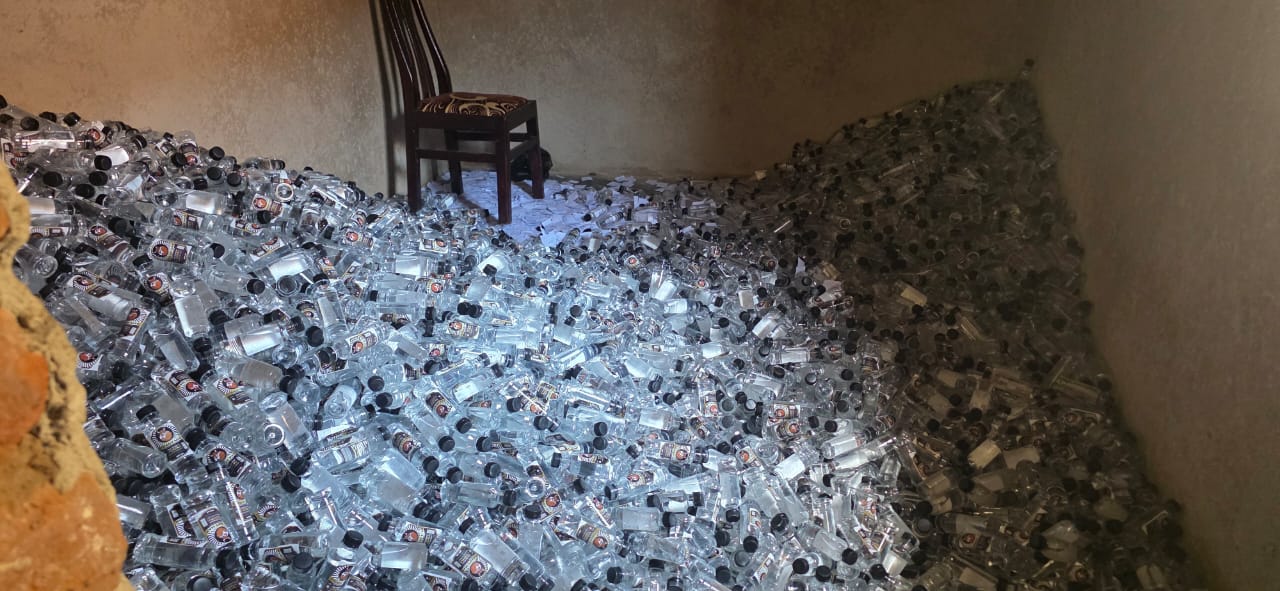
The Uganda National Bureau of Standards (UNBS) has intensified its fight against illicit alcohol following the discovery of a suspected illegal distilling operation in Kibuku District, raising fresh concerns over the growing circulation of uncertified alcoholic products on the Ugandan market.


According to Daniel Arorwa, the Manager of Market Surveillance at Uganda National Bureau of Standards, the operation was uncovered after authorities received a tip-off from members of the public regarding suspicious alcohol production activities in Kadama, Kibuku District.
Arora said investigators found individuals allegedly manufacturing alcohol under the brand name “Denzo Distilleries,” a company believed to operate from Kasese District.
Authorities are now investigating whether the factory in Kibuku has any legitimate connection to the original company or whether the suspects were fraudulently using the brand to deceive consumers.
“We found some unscrupulous individuals manufacturing alcohol using the brand name Denzo Distilleries. Denzo Distilleries is supposed to be in Kasese. Whether or not it is the same company is something investigations are yet to establish,” Arorwa said.
He noted that the use of packaging materials indicating Kasese as the place of manufacture while production was taking place in Kibuku was misleading and potentially criminal.
“You are in Kadama, Kibuku District, but packaging alcohol and calling it Denzo Distillers Kasese. That alone is misleading to consumers,” he added.
Authorities seized more than 200 cartons of 200-millilitre alcohol sachets during the operation.
The small packaging, commonly consumed in low-income communities, has increasingly become a target for counterfeiters and illegal brewers seeking quick profits.
UNBS officials say the suspects were also illegally using the Quality Mark (Q-Mark), a certification symbol issued by the standards body to products that have passed safety and quality assessments.
The misuse of the mark is considered a serious offence because it falsely assures consumers that the products have been tested and approved.
Arorwa warned that illicit alcohol continues to pose a major public health threat in Uganda, with several reported cases of blindness, organ failure and deaths linked to unsafe alcoholic drinks.
“This is the kind of alcohol that is on the market illegally, exposing consumers to high risks because quite often we are not sure of its composition. There have been cases where alcohol has made people blind, and there have also been cases where alcohol has killed consumers,” he said.
Health experts have repeatedly warned that illegally manufactured alcohol may contain dangerous substances such as methanol and industrial chemicals, which can cause permanent disability or death even when consumed in small quantities.
The latest seizure highlights the wider challenge facing regulators in controlling counterfeit and substandard products in Uganda’s informal manufacturing sector.
Business analysts say the proliferation of illicit alcohol undermines legitimate manufacturers who invest heavily in certification, taxation and compliance with health regulations.
Illegal alcohol producers often evade taxes and safety inspections, enabling them to sell products at cheaper prices and unfairly compete with compliant businesses. This not only affects government revenue collection but also damages consumer confidence in locally manufactured products.
The operation in Kibuku also exposes weaknesses in supply chain monitoring and the ease with which counterfeiters can access branded packaging materials to imitate established companies.
Arorwa said UNBS would prosecute the suspects once investigations are completed and called on the public to continue cooperating with authorities by reporting suspicious production activities in their communities.
“We rely on public support in this fight. Whenever you see somebody producing goods in your neighborhood and you are not sure whether they have been certified by UNBS, kindly give us information because you do not know whom you might save,” he said.
UNBS has in recent years stepped up market surveillance operations across the country as part of broader efforts to eliminate substandard goods from circulation.
However, experts argue that enforcement alone may not be enough unless accompanied by stronger consumer awareness campaigns and stricter penalties against offenders.
As investigations continue, the Kibuku case is likely to reignite debate on the effectiveness of Uganda’s regulatory systems in protecting consumers from dangerous counterfeit products that continue to find their way into communities despite repeated crackdowns.
ENDS.










 English