


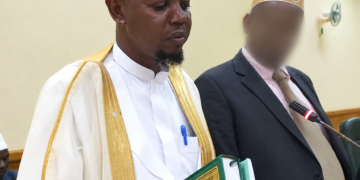











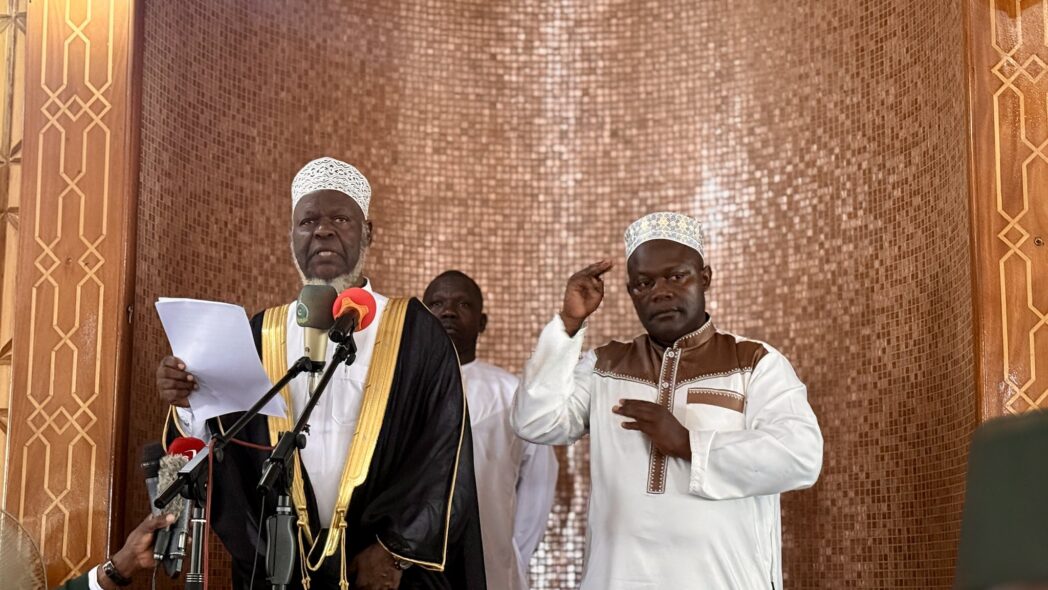
The High Court in Kampala has dismissed a judicial review application filed by four Muslim faithful who sought to nullify the re-election of His Eminence Sheikh Shaban Ramadhan Mubaje as the Mufti of Uganda.
The ruling was delivered via email by Justice Benard Namanya of the Civil Division. The judge held that the High Court lacks jurisdiction over religious disputes and that the applicants had failed to exhaust the internal mechanisms provided by the Uganda Muslim Supreme Council (UMSC).


The application, filed earlier this year by Swaibu Nsimbe, Byansi Twayibu, Musa Kalokola, and another, challenged Sheikh Mubaje’s eligibility and alleged procedural irregularities in the election process.
The petitioners wanted the court to declare his candidacy illegal, stop his swearing-in, and compel the UMSC to organize a fresh election in line with its amended Articles of Association.
They argued that Sheikh Mubaje, who turned 70 on March 12, 2025, had exceeded the constitutional age limit of 70 years for the office of Mufti. However, the UMSC amended its Constitution in 2022 to raise the age limit to 75.
The petitioners claimed the amendment was improperly applied and that the election violated several provisions of the UMSC Constitution.
The applicants were represented by lawyers Kizito Farouk Kamulegeya, Kamulegeya Rashid, Nsimbi John Mata, and Mubiru Nasser.
Their application was based on Sections 37, 40, and 42 of the Judicature Act and the Judicature Judicial Review Rules of 2009 as amended. It was supported by affidavits from Kasakya Musa.
The respondents, including the UMSC, Sheikh Mubaje, and 43 others, were represented by lawyers Musa Kabega, Kugonza Isaac, and Balikurungi Faisal. They defended the re-election process as having followed the proper procedures laid out in the amended UMSC Constitution.
According to court records, preparations for the leadership transition began in January 2025. On January 6, UMSC Secretary General Hajji Abbas S. Muluubya informed National Chairman Professor Muhammad Lubega Kisambira of the impending end of Sheikh Mubaje’s term in March.
On January 13, the Chairman directed the Director of Sharia, Sheikh Ziyad Swaleh Lubanga, to convene a special session of Majlis Al-Ulama, the highest council responsible for religious leadership.
On February 20, 2025, Majlis Al-Ulama re-elected Sheikh Mubaje. The decision was endorsed the same day by the UMSC Joint Session, thereby extending his leadership in accordance with the amended provision that allows him to serve until the age of 75.
The petitioners maintained that the process was flawed and contravened Articles 5, 7, 9, 17, and 29 of the UMSC Constitution. They alleged that the selection process lacked transparency, skipped vetting procedures, and did not involve proper consultation.
In his ruling, Justice Namanya dismissed the application on three main grounds. First, he held that the UMSC is a private institution that does not exercise governmental authority, and therefore is not subject to judicial review.
He stated there was no evidence to suggest that the powers exercised by the UMSC were governmental in nature.
Second, the judge cited the religious question doctrine, which prevents courts from adjudicating internal religious disputes.
He emphasized that matters such as the election of the Mufti are spiritual in nature and should be resolved by the religious community and its leaders.
Third, the judge pointed out that the UMSC Constitution provides for internal dispute resolution through the Muslim Arbitration and Conciliation Council as outlined in Article 28. He noted that the applicants should have first pursued this option before turning to court.
Justice Namanya concluded that the applicants were improperly before the court and dismissed the application in full. To promote harmony within the Muslim community, he ordered each party to bear its own legal costs.
The ruling reaffirms Sheikh Mubaje’s position as Mufti of Uganda, a role he has held since 2001. Under the amended Constitution, he is now eligible to serve until the age of 75.
The decision brings closure to a legal battle that reflected divisions within parts of the Muslim community regarding leadership and governance within the Uganda Muslim Supreme Council.






 English