


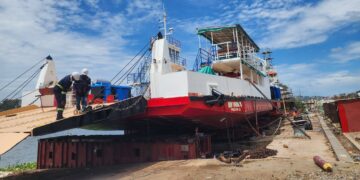
















Kasensero Landing Site, Kyotera District – Uganda
On the western shores of Lake Victoria lies Kasensero Landing Site, one of southern Uganda’s busiest fishing hubs and a critical gateway for traders from Tanzania and Kenya. But beneath the bustle of commerce, the lake is quietly claiming lives.


For years, fishermen have raised alarms over mysterious disappearances and violent deaths at sea. Interviews with survivors, widows, local leaders, and police reveal a grim pattern: armed attacks, delayed rescue responses, and a crippling lack of emergency services, factors that are silently turning Kasensero into a graveyard.
Steven Mulindwa, 38, bears scars from a pirate attack that nearly ended his life. “I was stabbed in the stomach and slashed on my head and hands. I lost so much blood that I fainted,” he recalls.
The pirates struck while he slept on his boat. By the time colleagues arrived, he was unconscious and drifting on the water.

Mulindwa explains that attacks happen at night in deep-water fishing zones like Gabbiro, Mmale, Kerebwe, and Masanda, which require at least seven litres of fuel to reach. “Once they hit you, you lose consciousness and fall into the water.
There is no network. Even when we alert police, they first start collecting money for fuel. By the time they reach, the pirates are gone, and we are left to look for dead bodies,” he says.
The single marine police boat assigned to Kasensero is often grounded due to fuel shortages. Mulindwa reports that since February alone, pirates have stolen 83 boat engines.
He has lost friends and family to the lake, including his brother Kamulali Muwonge, Gitta Kasirye, Jamada Sembago, Najib Galabuzi, Moses Kiggundu, Fred Ssuuna, and another fisherman known only as Ivan.
Uganda Police crime reports confirm the growing danger. In 2024, the Marine Department handled 190 maritime offences—an 8% increase from 176 cases in 2023. Drowning topped the list with 119 cases, followed by robbery on water (34), armed robbery, and boat capsizing. Lake Victoria alone accounted for 130 of these cases.
Peter Kaali, a fisherman with nearly 30 years’ experience, says pirates have become increasingly brutal. “They pour paraffin on your face so you can’t see,” he says. In November, men posing as Tanzanian security officers confiscated his boat, demanding one million Tanzanian shillings for its release. “If you fail to raise the money, they kill you and steal everything.”

Attempts by boat owners to organize private patrols were abandoned when fuel costs ballooned to an estimated 21,600 litres per year. Local councilor Joseph Kimera says Kasensero has 300 registered boats, yet only one marine police boat serves not just Kasensero, but also Kalangala and Mpigi districts.
Worse still, the vessel receives only 100 litres of fuel per month—barely enough for one day of operations. “This means for the remaining 29 days, there is no rescue capacity,” Kimera explains.
Lydia Nabulya, 32, lost her husband Jamada Sembago in a horrific attack. “He went fishing for two or three days. On the fourth day, rumors started that he was killed.
We later found his body floating in the lake,” she recounts. Colleagues had to raise five million shillings to retrieve and bury him. “It is painful to see someone hacked like that. Government must protect people. This situation is out of control.”
Kyotera Woman MP Rose Fortunate Nantongo says Parliament was petitioned over the killings, but nothing changed. Attempts by fishermen to hire private security were blocked by the District Security Committee.

“We used to pool money for fuel for marine police, but it is not sustainable. Parliament must appropriate funds for lake operations,” she says. East African Legislative Assembly legislator James Kakooza adds that lack of unified regional regulations and intelligence gaps allow pirates to escape arrest.
Greater Masaka Police spokesperson Twaha Kasirye says officers respond swiftly but admits delays occur when the marine boat is deployed elsewhere. He blames fishermen for late reporting, yet on the water, victims are often cut off from communication, bleeding, drifting with no rescue boat, no fuel, and no network.

During a recent visit to Kasensero, outgoing commander of the Fisheries Protection Unit (FPU), Lieutenant Colonel Mercy Tukahirwa, instructed her officers to arrest any Tanzanian nationals found fishing illegally on Uganda’s side of the lake.
She emphasized the FPU’s mandate to protect Ugandan citizens and warned against politicizing security operations, citing instances where Ugandan fishermen promised release of impounded Tanzanian boats.

Meanwhile, Tanzanian Minister of Fisheries and Livestock, Dr. Bashir Ally, declined to comment on allegations that Tanzanian nationals are behind the lake piracy, citing an “urgent high-profile meeting.”
Kasensero is more than a landing site; it is a regional trade artery for East Africa. But without emergency services, fuel for marine patrols, and coordinated Uganda–Tanzania security, the lake has become a killing field. Here, men do not just drown—they are hunted and abandoned.
Also watch video:
ENDS










 English