


















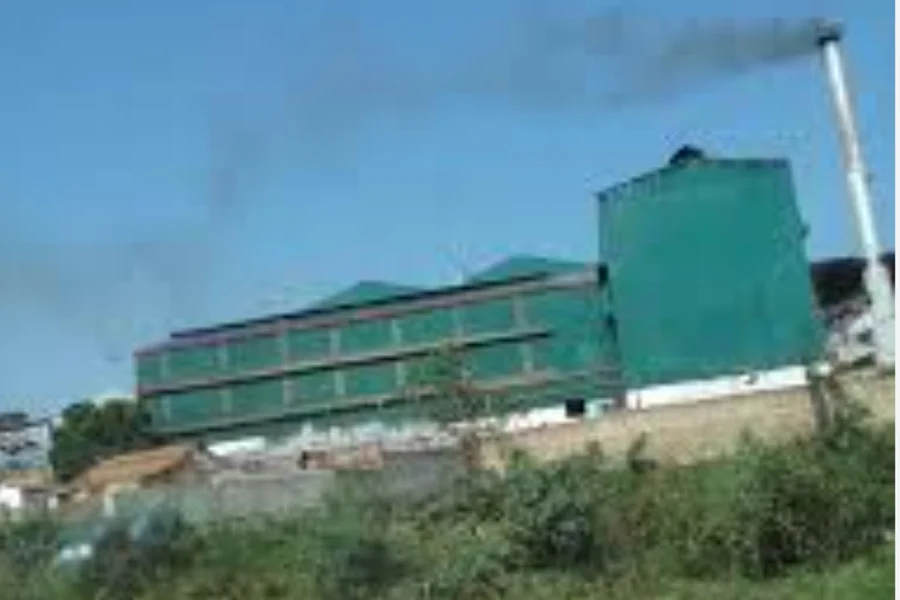
Beyond the humming machines and expansive cane fields of GM Sugar Factory, troubling allegations have surfaced about the living and working conditions of Indian nationals employed at the facility.
Sources familiar with operations at the factory claim that more than 100 foreign workers are housed in tightly controlled, overcrowded dormitories, raising concerns about labour rights, personal safety, and human dignity.

According to multiple internal sources, Indian workers recruited to tend factory gardens are transported daily in company vehicles from the factory premises to the fields and back.
Their movement, the sources allege, is heavily regulated. After work, the workers are reportedly provided supper and required to retire to shared dormitories within the factory compound, where access and oversight are tightly enforced.
One source claims that at least 117 Indian nationals are accommodated in the dormitories, sleeping on metallic beds placed close together.
Due to congestion, some workers are allegedly forced to share beds, a situation that has sparked wider concerns about hygiene, privacy, and safety.
More troubling are claims that the overcrowded environment has created conditions in which same-sex sexual activity allegedly occurs in secrecy within the dormitories.
A source alleged that some workers form covert relationships out of desperation and lack of alternatives, given the restrictive living arrangements.
“There are a number of couples, but they try to hide it because of the strict law in Uganda,” the source claimed. “These things allegedly happen late at night, between 4:00 a.m. and 5:00 a.m., and only a few people inside the company know about it.”
A worker who identified himself as a victim described a sense of helplessness, saying his situation is compounded by restrictions imposed by management.
“It has happened to me three times, but I have nothing to do because I don’t have my travel documents,” he said. “It’s not only me. All Indian nationals at our level are not allowed to keep their passports.”
The worker further alleged that the factory routinely confiscates workers’ passports, a practice that significantly limits their freedom of movement.
According to him, management justifies the policy by claiming that some workers have previously abandoned their documents in order to escape the factory and seek opportunities elsewhere.
“I am tired of being inside the factory, but there is nothing I can do,” he said. “The conditions we are living in are worrying. This factory must be brought to book.”
The allegations emerge against the backdrop of Uganda’s strict legal framework on same-sex relations.
In May 2023, President Yoweri Kaguta Museveni signed the Anti-Homosexuality Act into law, introducing harsh penalties for same-sex sexual activity.
Although the Constitutional Court in April 2024 struck out provisions on mandatory reporting and the criminalisation of renting premises for homosexual acts, most sections of the law remain in force.
Sources further allege that shortly after the law was enacted, an Indian supervisor attached to MMP Industrial Park, where GM Sugar Factory is located, was reportedly caught engaging in a same-sex act with a worker.
The matter was allegedly reported to the local council (LC1), but no official police or court records have been made public to substantiate the claim.
Labour rights advocates say the allegations, if proven, point to deeper structural problems involving migrant labour, workplace control, and inadequate oversight.
Confiscation of passports, they note, is widely recognised as a red flag for forced or coercive labour practices under international labour standards.
By the time of publication, authorities and management at GM Sugar Factory had not issued an official response to the allegations. Efforts to obtain comment from labour officials and security agencies were ongoing.
As questions continue to mount, the situation highlights the vulnerability of migrant workers operating far from home, dependent on employers not only for wages but also for shelter, food, and legal documentation.
For many observers, the case underscores the urgent need for stronger enforcement of labour laws and independent inspections to ensure that industrial growth does not come at the cost of basic human rights.











 English